
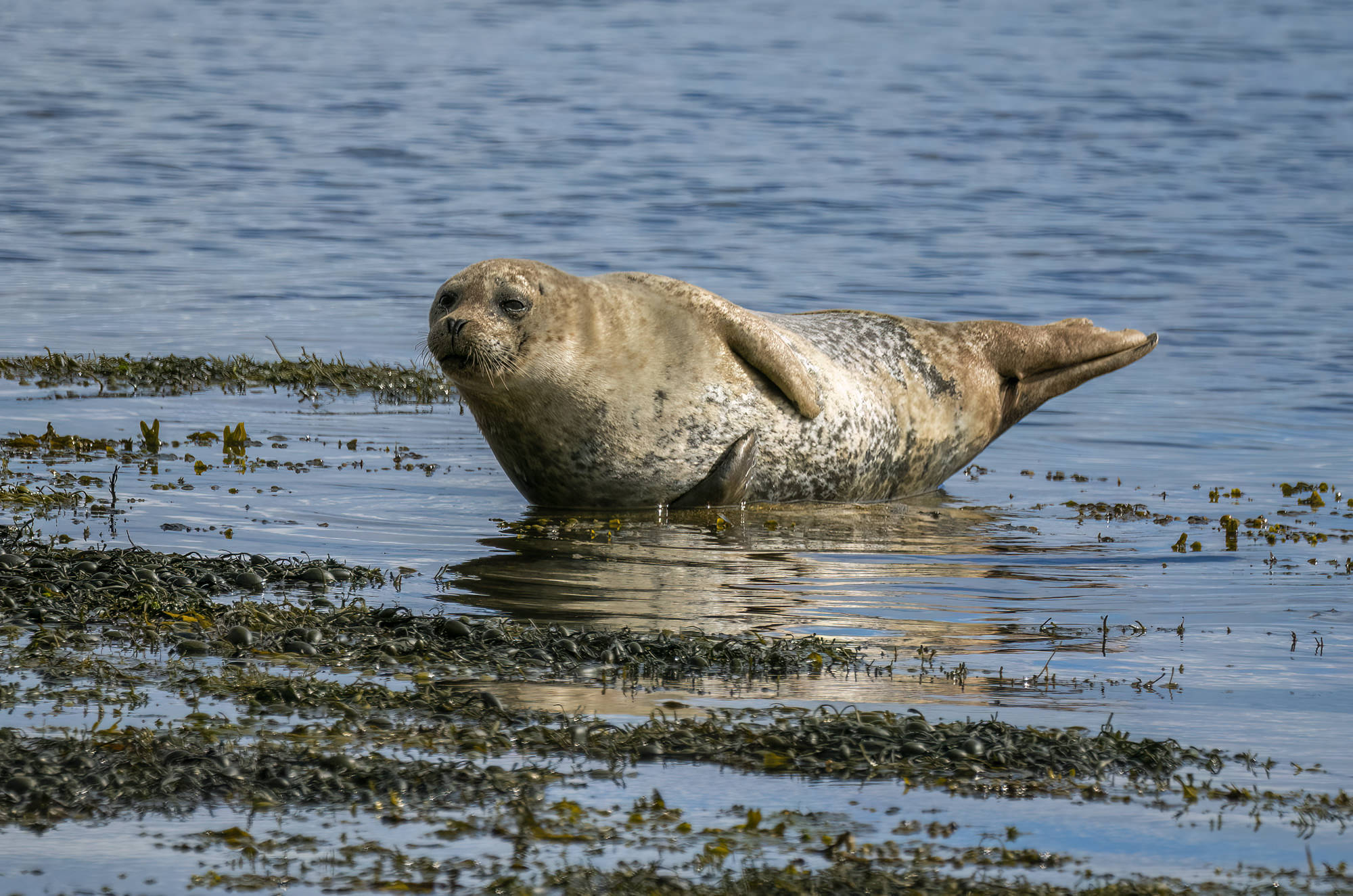
When you’re exploring Scotland’s diverse coastlines, few encounters match the privilege of observing harbour seals in their natural habitat. These charismatic marine mammals have long been a cornerstone of our coastal ecosystems – yet recent research reveals growing concerns about their future.
Harbour seal hangouts
The harbour seal, also known as the common seal, is one of Scotland’s two resident seal species. These adaptable mammals favour sheltered coastal waters, estuaries, and rocky shores. Unlike their grey seal cousins, harbour seals show a strong preference for nearshore environments, rarely venturing far from familiar haul-out spots.
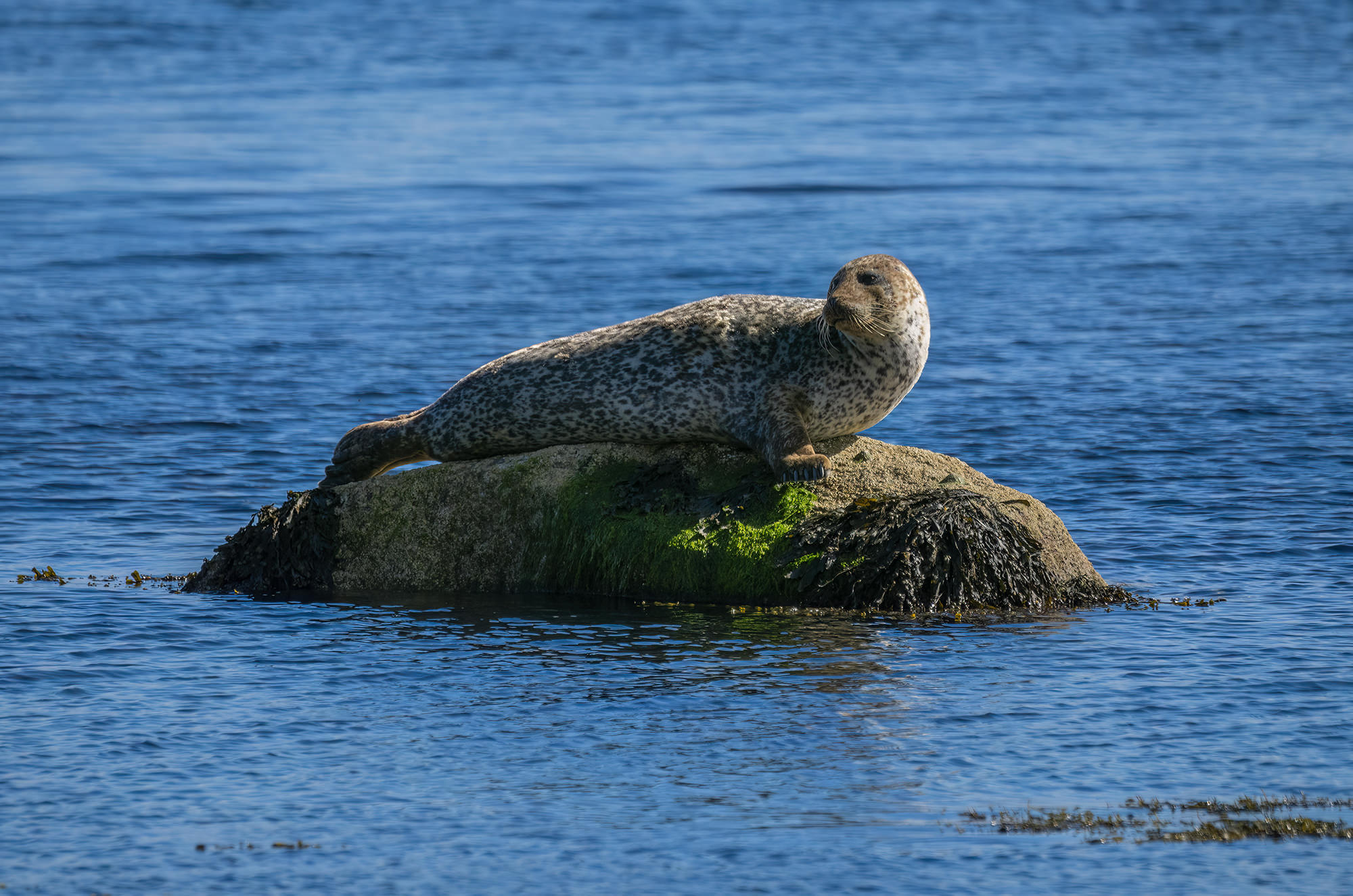
At Lunderston Bay, I experienced just how well these seals blend into their rocky environment. In the harsh sunlight and glare from the water, I nearly missed one entirely – perfectly content on a nearshore rock. Their distinctive spotted coat, ranging from pale grey to dark brown, creates a dappled effect that camouflages them beautifully. Watching this seal nod off in the afternoon sun underscored just how relaxed they can become in these familiar locations when we respect their space.
Spotting seal species
Distinguishing harbour seals from grey seals has become easier with experience – though I still double-check my images if it’s only been a fleeting encounter! The most obvious difference is size: grey seals are significantly larger. But from a distance, size can be misleading.
The real game-changer is learning to read their facial features. Harbour seals have a wonderfully stout nose and a more pronounced forehead, while grey seals sport a longer, flatter profile. From the side, the harbour seal’s face appears distinctly concave. Also, look out for v-shaped nostrils that appear to meet and large eyes on the front of their faces – all of which creates the harbour seal’s “doglike” appearance.
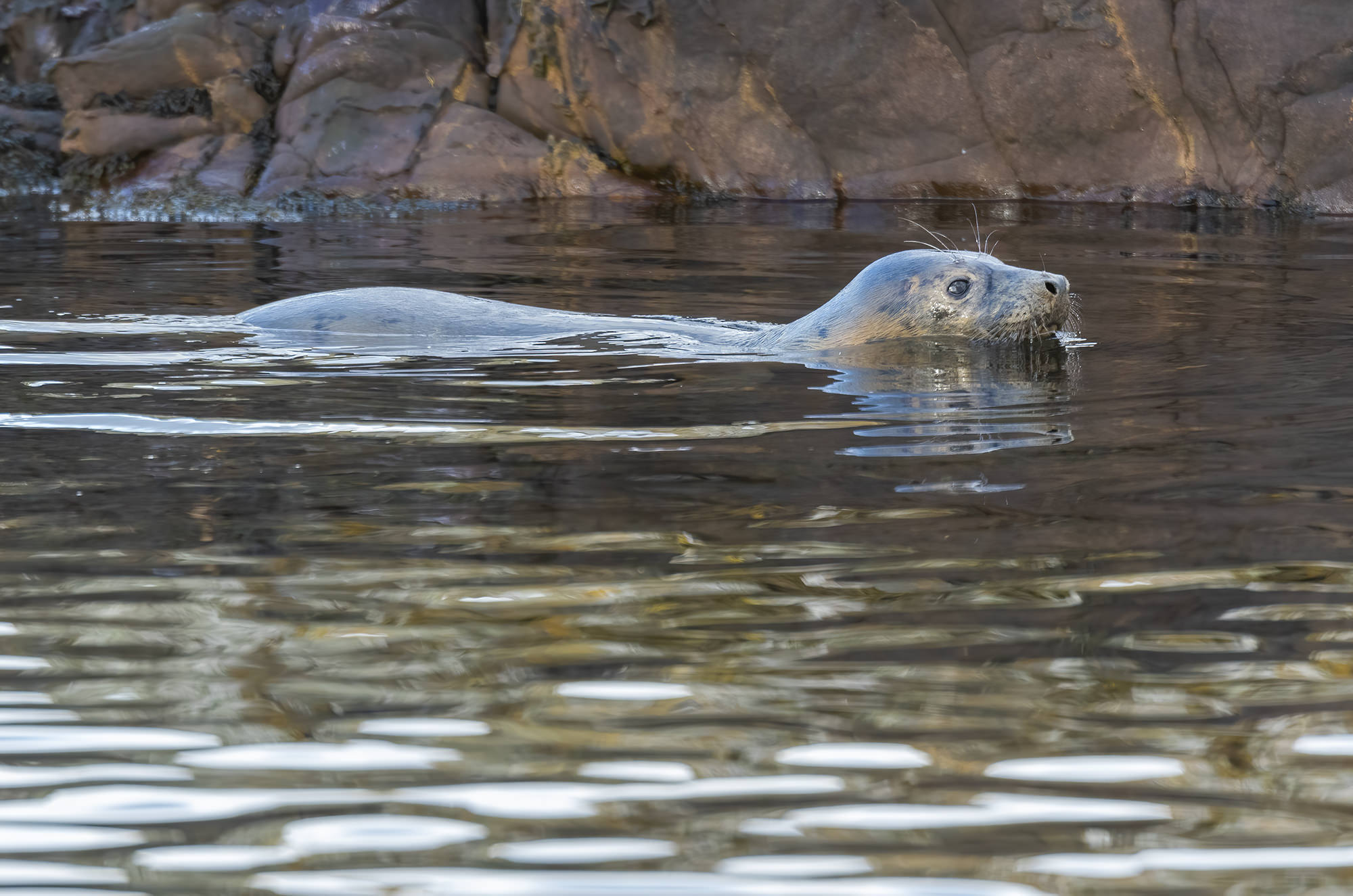
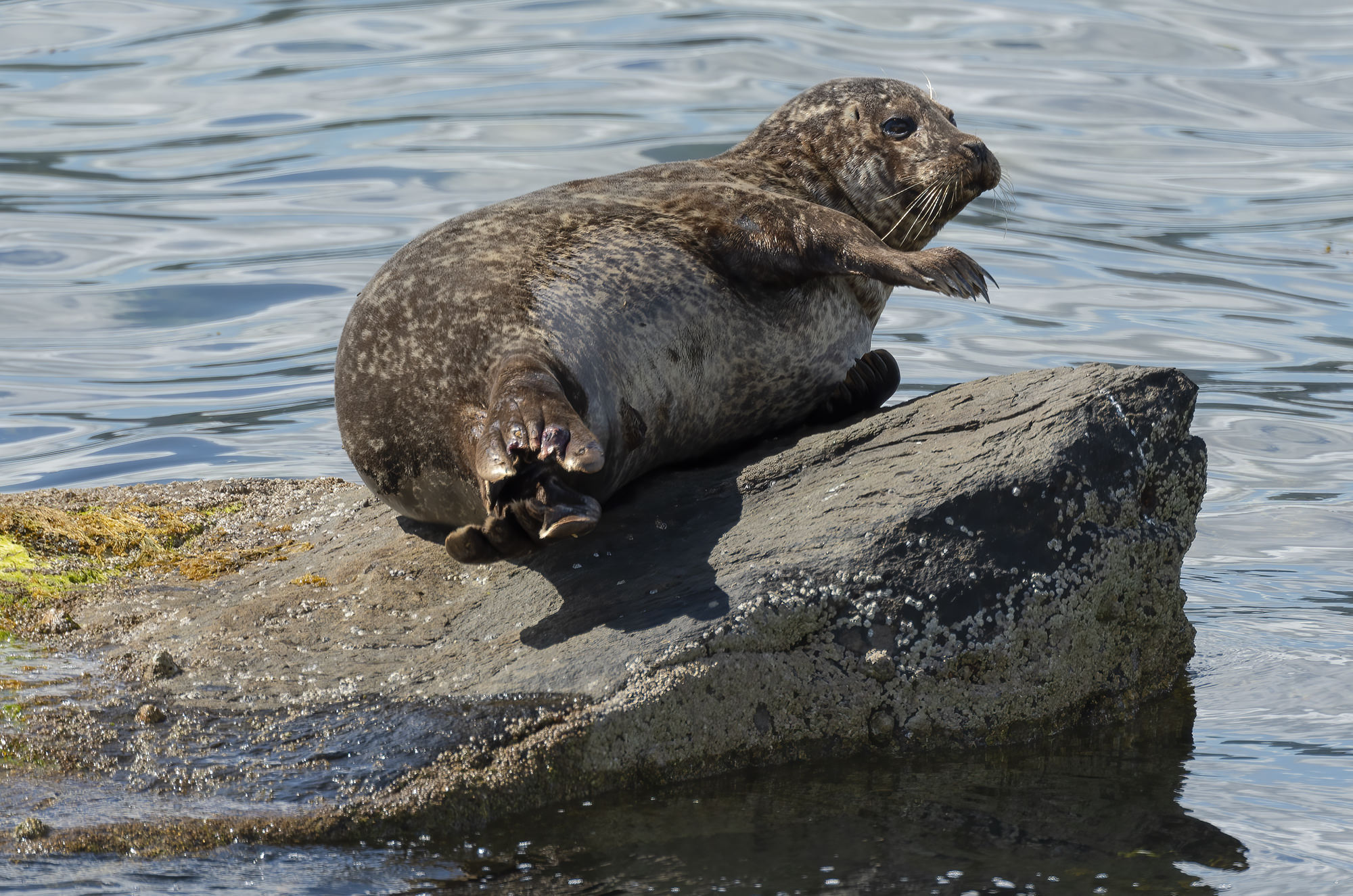
Coat patterns offer another clue. Harbour seals have sleek, heavily spotted coats, while the similar-looking female grey seals tend to be blotchier – often with dark backs and pale undersides. What’s fascinating is that harbour seal pups are born with adult-like markings, unlike the fluffy white coats of newborn grey seals.
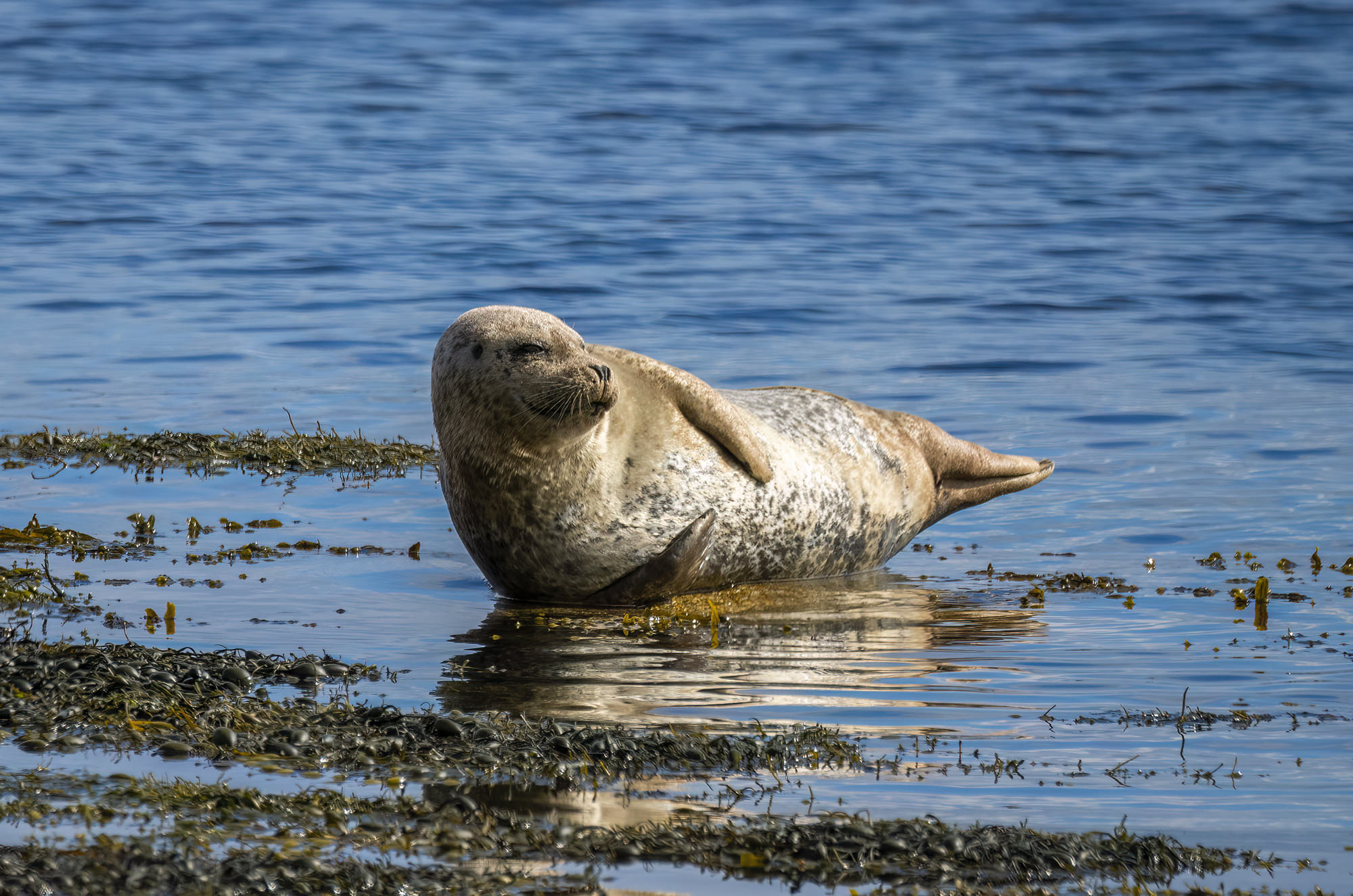
While photographing wildlife on the Isle of Arran, these differences became clear. I watched three harbour seals hauled out together, their doglike faces and spotted coats easily recognisable, even from a distance. Their preference for Arran’s sheltered shores stood in stark contrast to the exposed beaches typically favoured by grey seals.
Population plunge
Here’s where the story becomes more sobering. Recent research has revealed a 20% decline in harbour seal populations along Scotland’s west coast between 2018 and 2023 – the first significant decrease in decades for the region. This is especially alarming considering the west coast holds around 65% of the UK’s entire harbour seal population.
Researchers are working to pinpoint the causes. The decline likely stems from multiple, interacting factors – including food shortages, competition with grey seals, algal toxins, and disease.
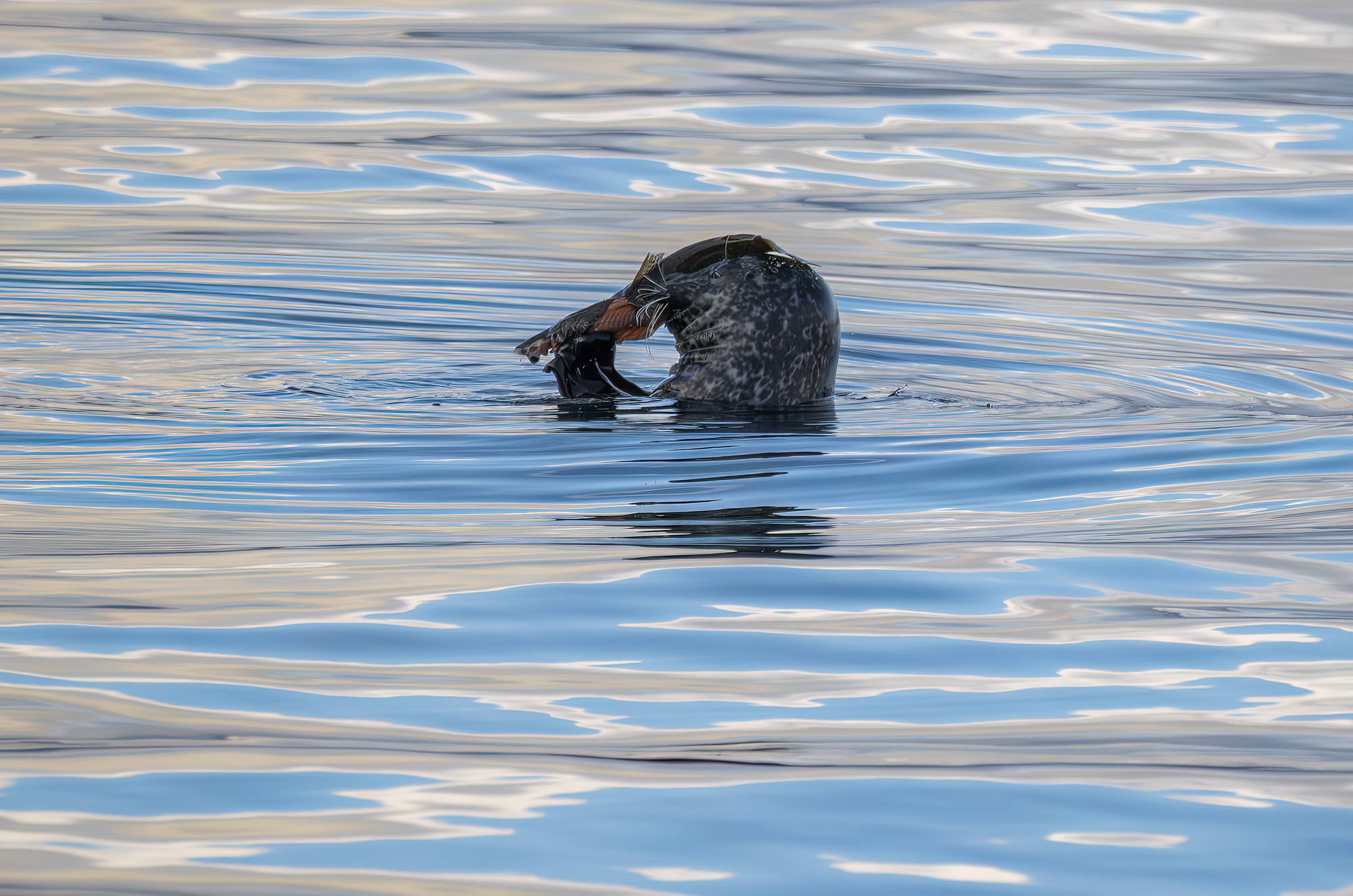
These statistics feel even more urgent when you encounter them. Near Port Glasgow, I recently watched a harbour seal catch and eat what looked like a brown trout. Witnessing that natural feeding behaviour first-hand highlighted their ecological importance and the need to protect the habitats that support them.
Photography protocols
Responsible photography is always central to how I approach seal encounters. Harbour seals haul out to rest, thermoregulate, and give birth – essential activities that we must never interrupt.
I always keep a respectful distance, using a telephoto lens to capture close-up portraits without disturbing the animal. It’s important to watch for signs of stress: raised heads, visible eye-whites, movement toward the water, or increased vocalisation. If you see any of these, it’s time to back off or leave quietly.
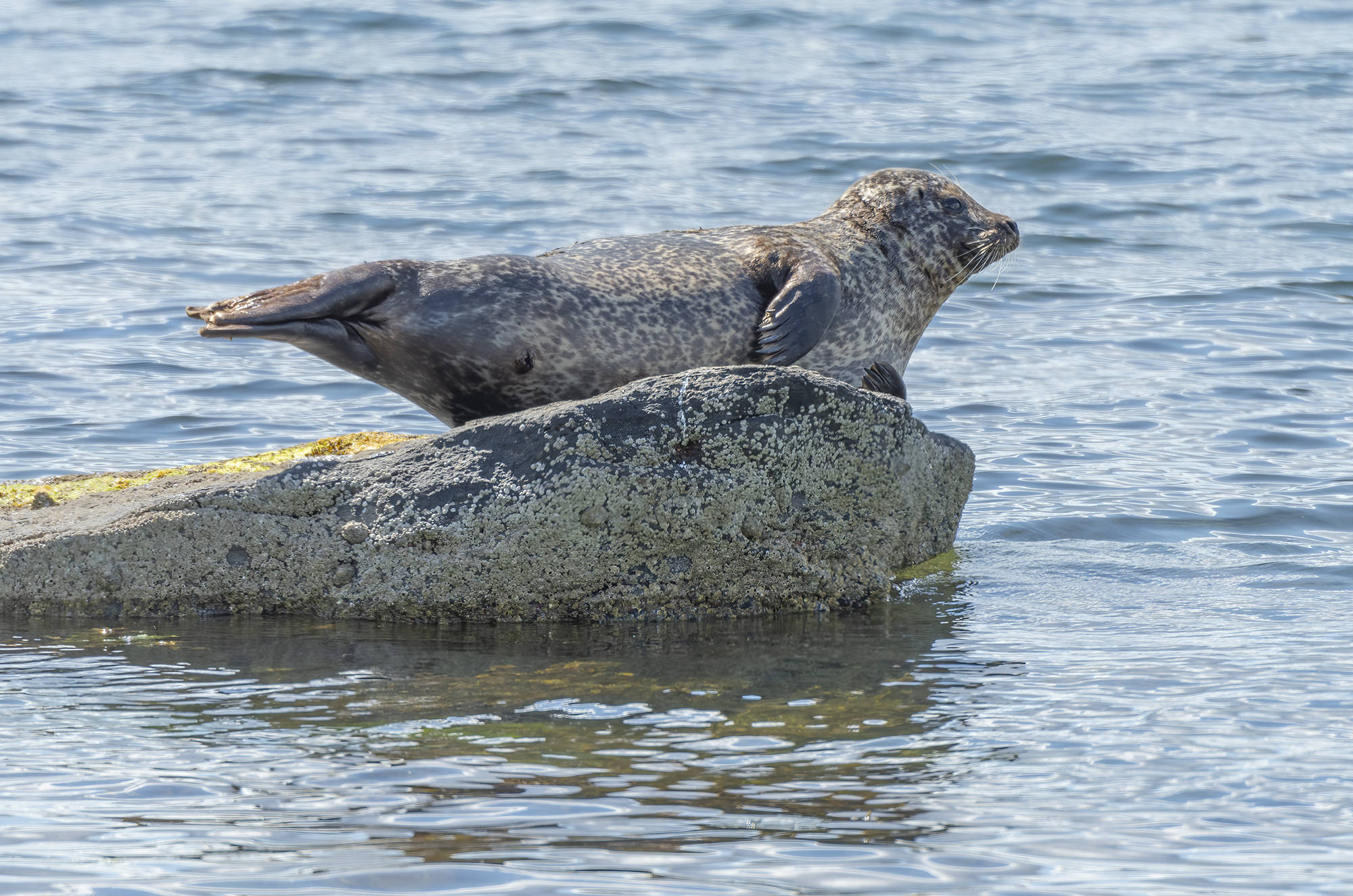
My experience at Lunderston Bay reinforced this. By sitting quietly on the rocks at a respectful distance, I was able to photograph a seal that remained completely relaxed – even dozing off at times. The seal barely reacted, apart from the occasional glance toward dog walkers on the path beyond the beach.
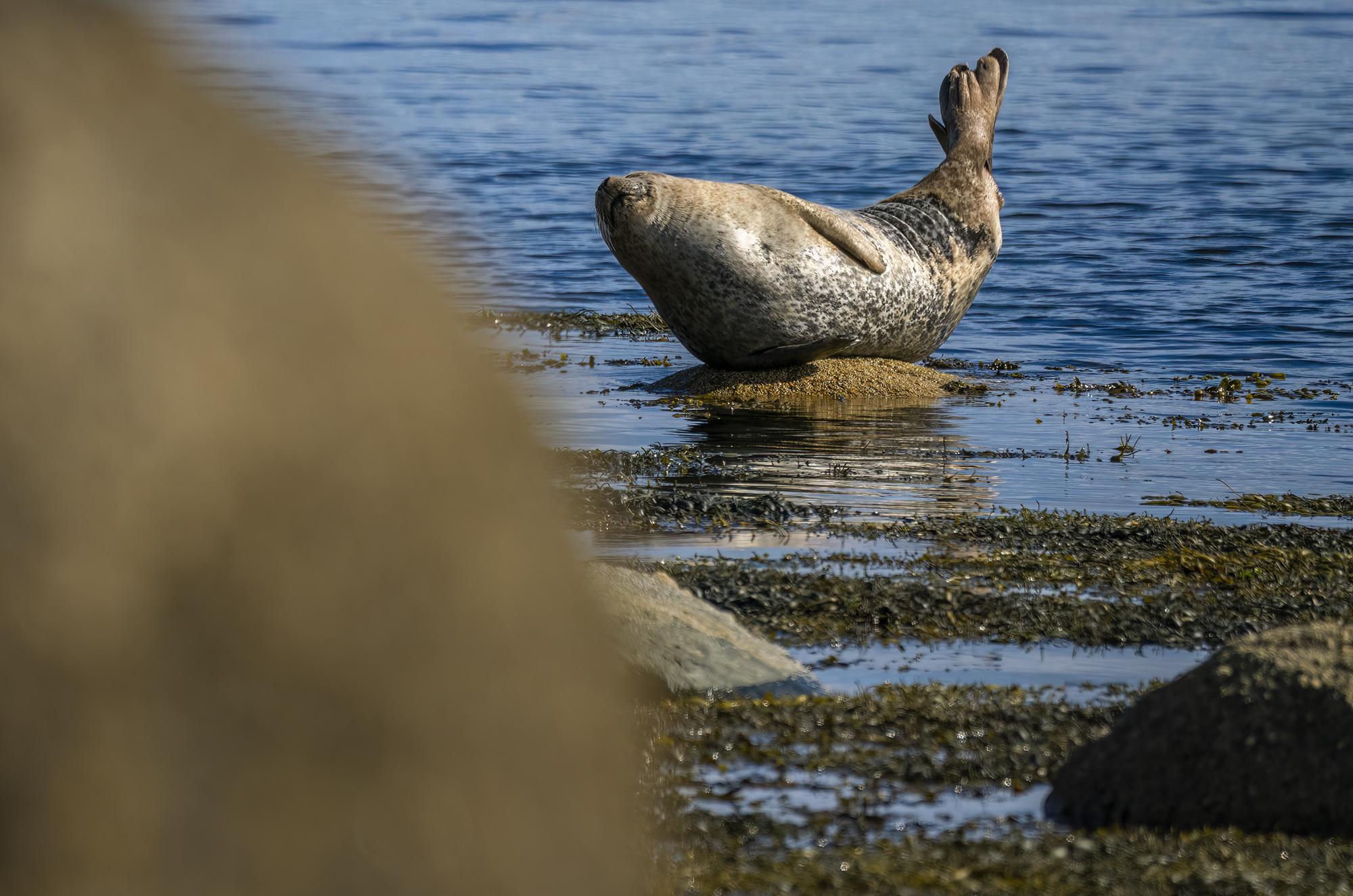
Arran offered another ideal encounter. Three seals, fully at ease, basked in the September sun – stretching, adjusting positions, and mostly keeping their eyes closed. They were far more disturbed by distant playground noise than by my quiet presence on the rocks.
I always remind myself of the cumulative impact. One quiet photographer might not bother a colony – but dozens of visitors throughout the day can cause chronic stress, disrupting feeding, resting, and breeding success. I try to visit lesser-known sites or go during off-peak times to minimise my footprint.
Conservation calling
The harbour seal’s decline makes conservation efforts more vital than ever. As photographers and nature lovers, we have the power – and responsibility – to become advocates for these incredible animals.
By learning more about their ecology and practicing respectful photography, we help ensure that future generations can share the same magical encounters we’ve been lucky to experience.
For me, the harbour seal’s story mirrors the broader challenges facing marine ecosystems across the globe. Through our images and stories, we can help bridge the gap between people and wildlife – and maybe even inspire action to protect what remains.