
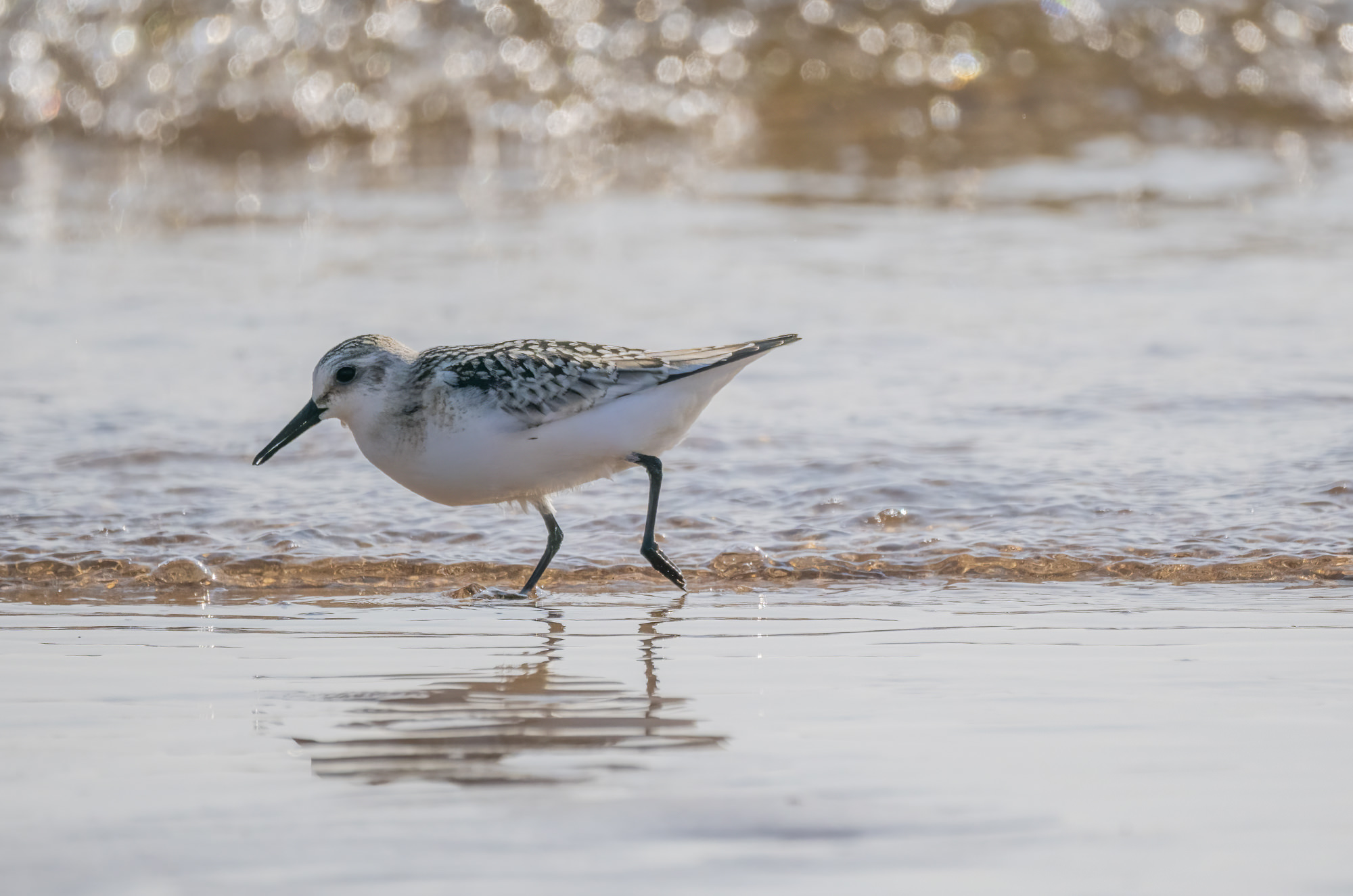
You rarely get to meet the real-life character of a Pixar film. And sanderlings certainly live up to the Disney billing. In 2016’s Piper, an adorable and hungry sanderling chick learns to overcome her fear of water. Director and writer Alan Barillaro was inspired to create the short film after running alongside the shore near the Pixar Studios in Emeryville, California. He noticed thousands of sanderlings feeding on bivalves exposed by the receding tide, and saw that the birds ran away each time the waves returned. And with that encounter, an Oscar winner was born, as Piper picked up the Best Animated Short Film award at the 89th Academy Awards.
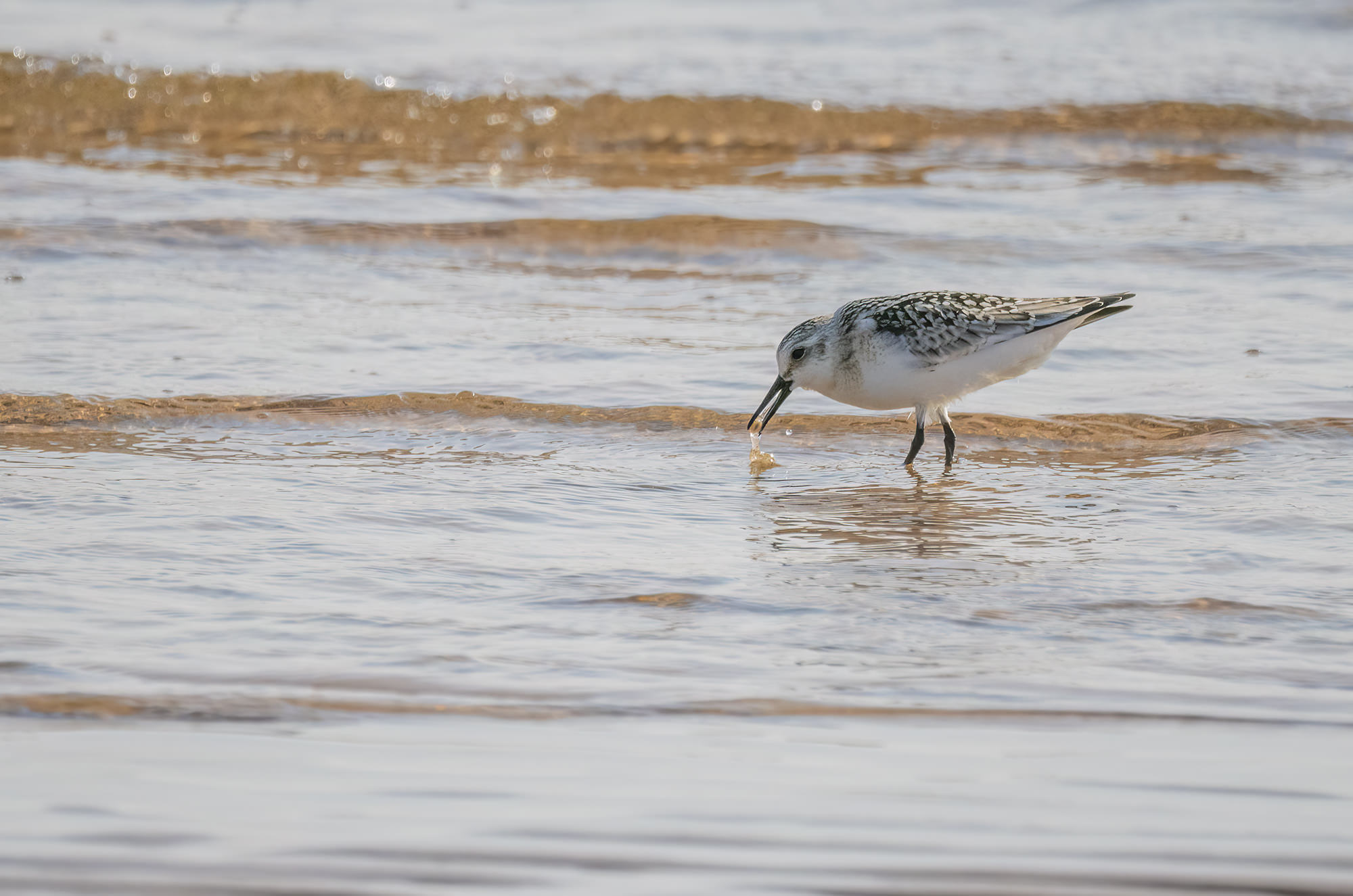
Although I’ve never seen a sanderling chick like Piper, I have had the privilege of watching and photographing the fully grown versions twice along the coastline of the Firth of Clyde.
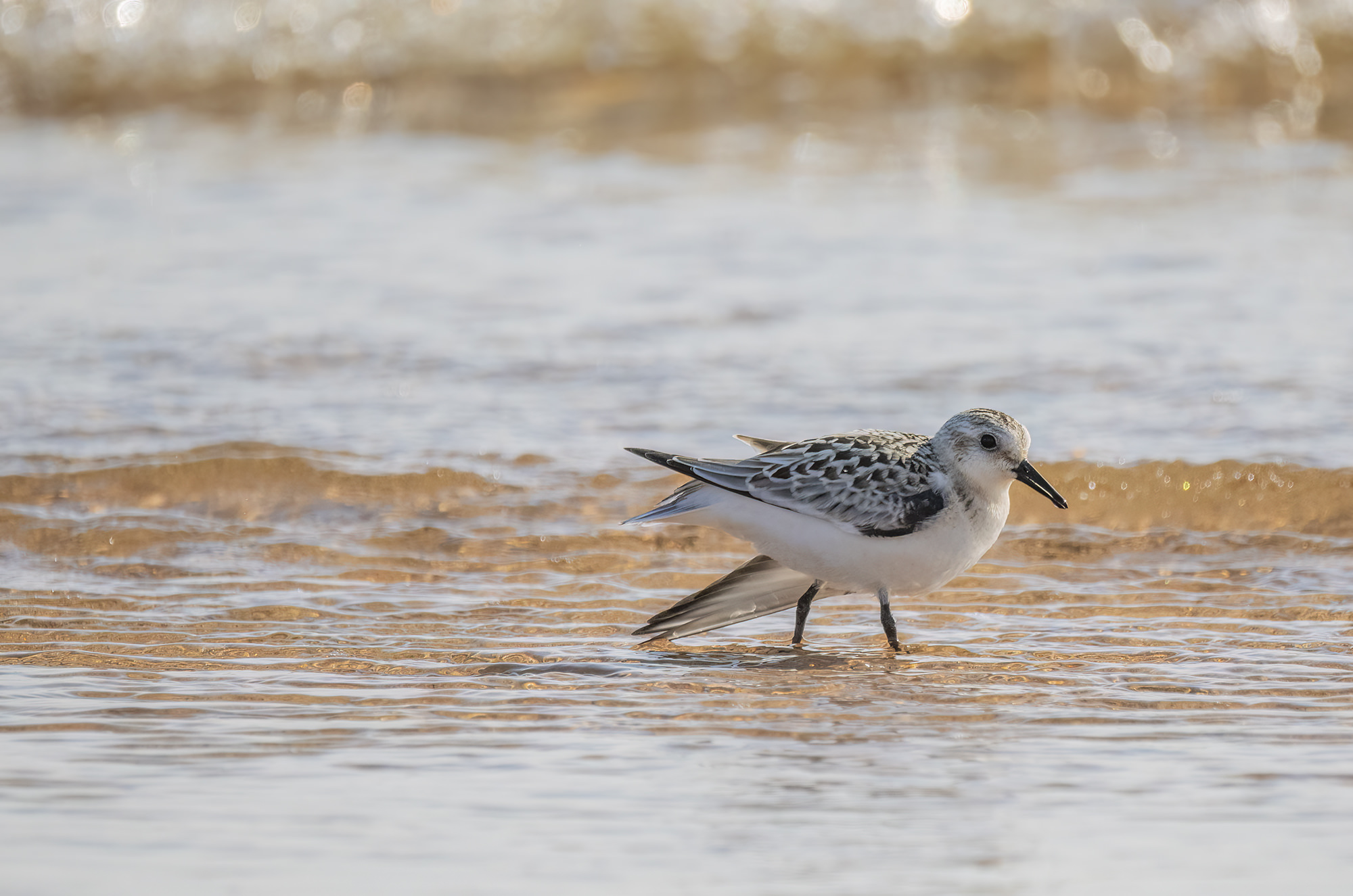
They are best distinguished from other waders by watching their behaviour – they run around on sandy beaches looking for food in the waves, rather than walking and probing for it in the mud.
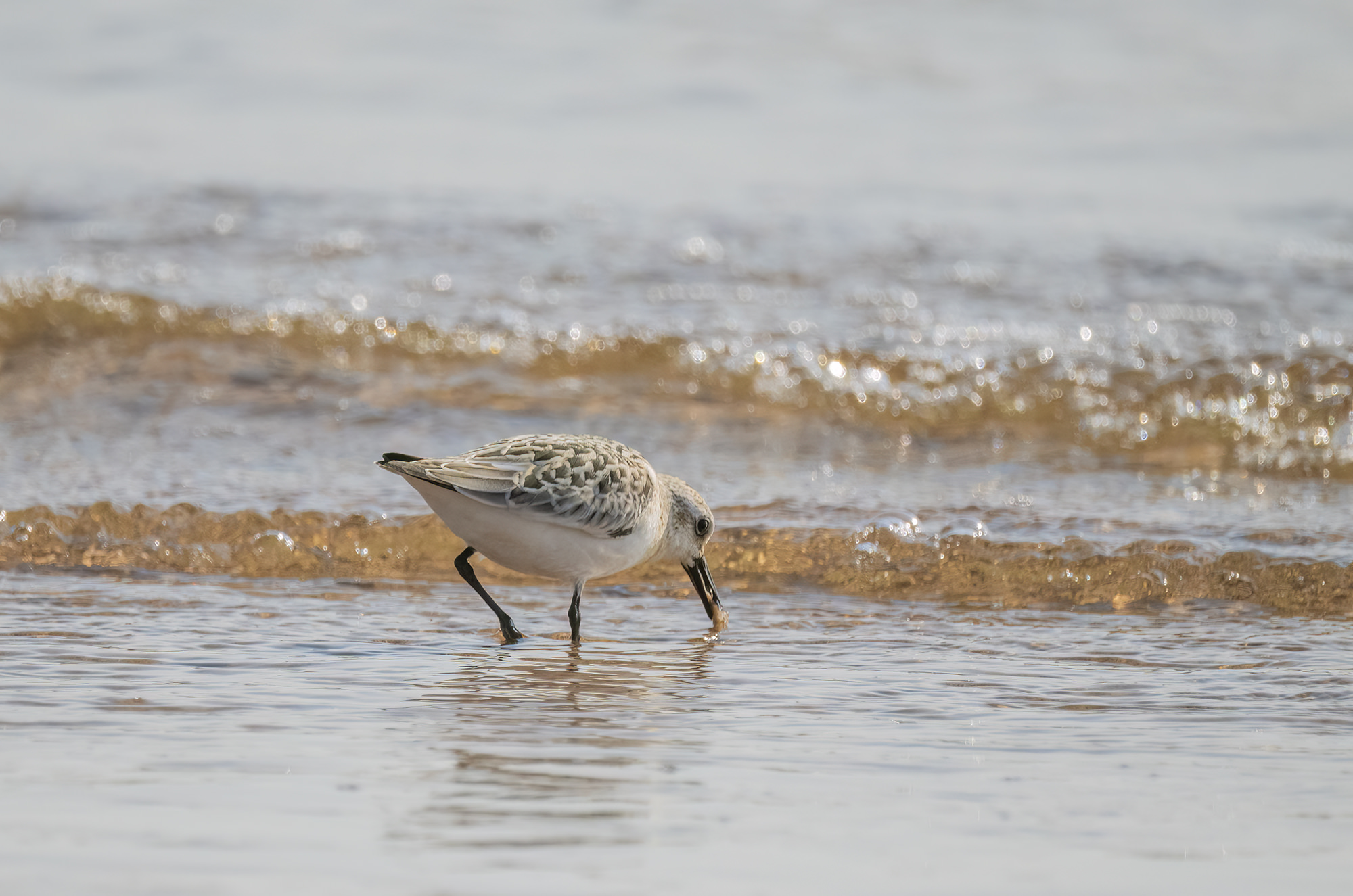
Their running action is due to having three toes with no hind toe, which is another way to identify them from other species. Sanderlings travel to the UK in winter from their Arctic breeding grounds, but you can also spot birds here during spring and autumn that are passing through on migration, and August seems to be a good time to spot them along my part of the west coast.
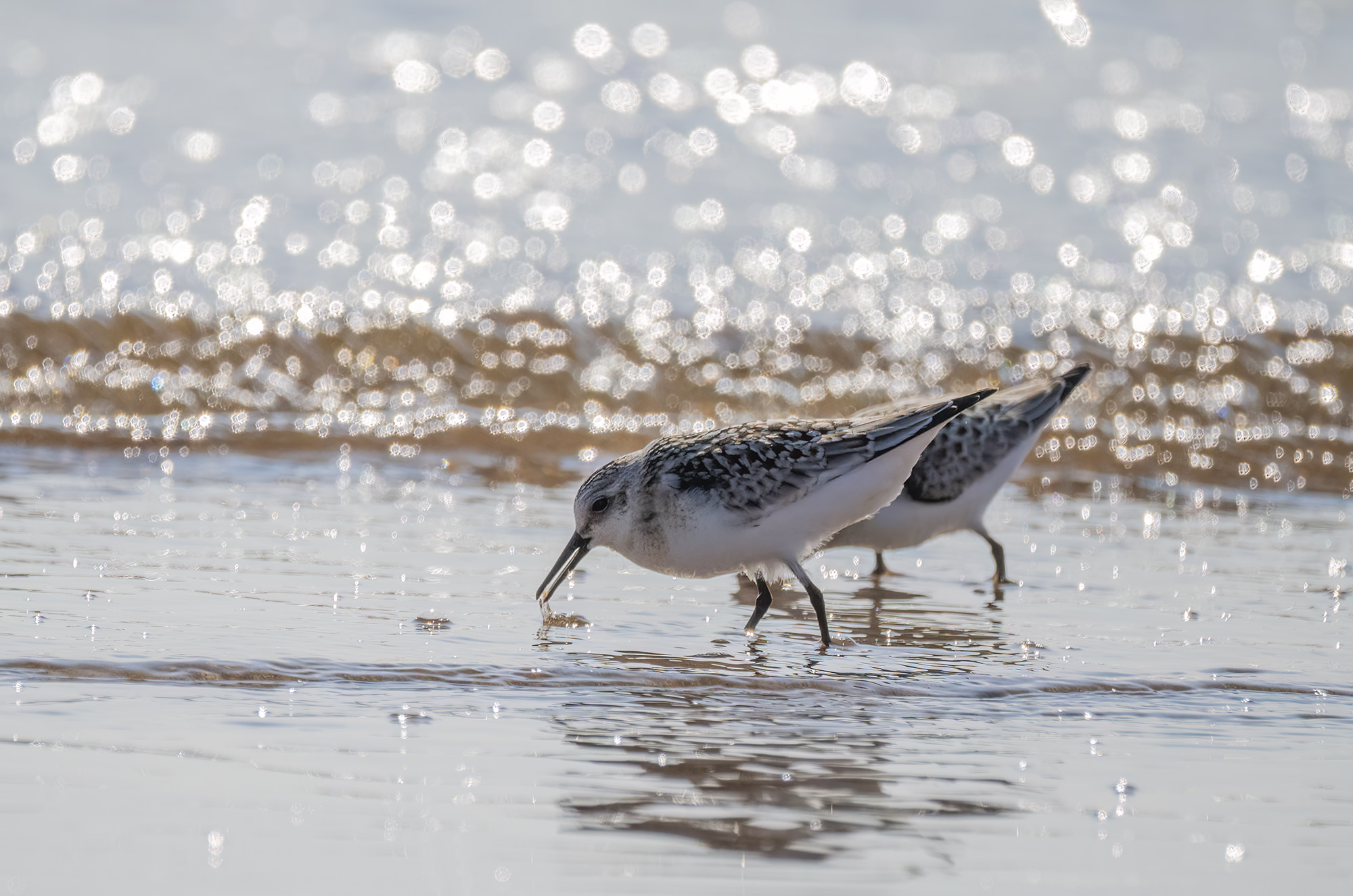
Back in August 2024, I caught my first glimpse of a small flock of young sanderlings while we strolled along Portencross Beach on what was, at the time, a rare sunny day in a month of not-very-summery weather.
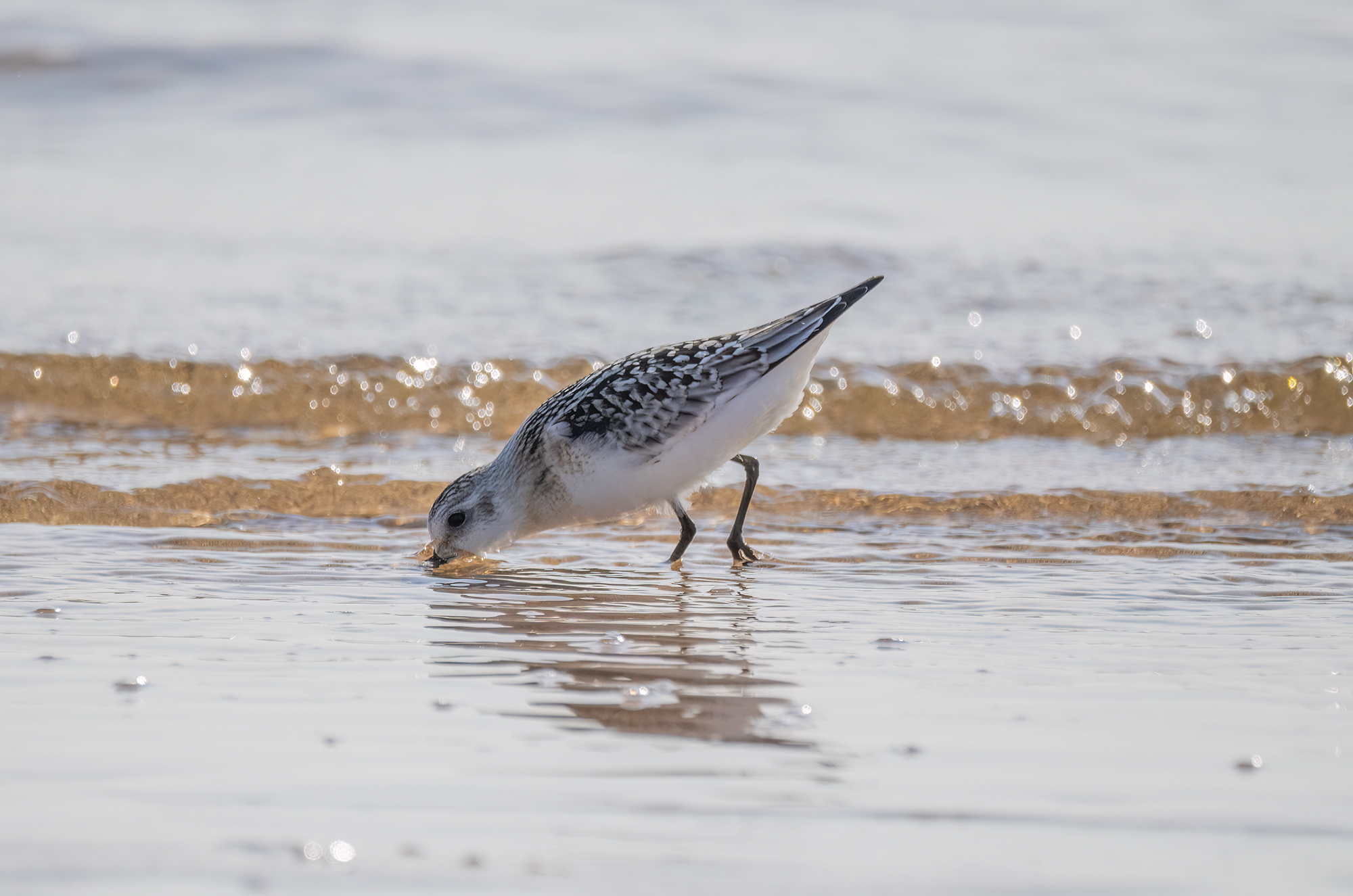
I was delighted when these birds allowed me to hang around close by as they ran along the water’s edge looking for food. I knelt on the wet sand and busied myself photographing them with the water sparkling in the sun for a background.
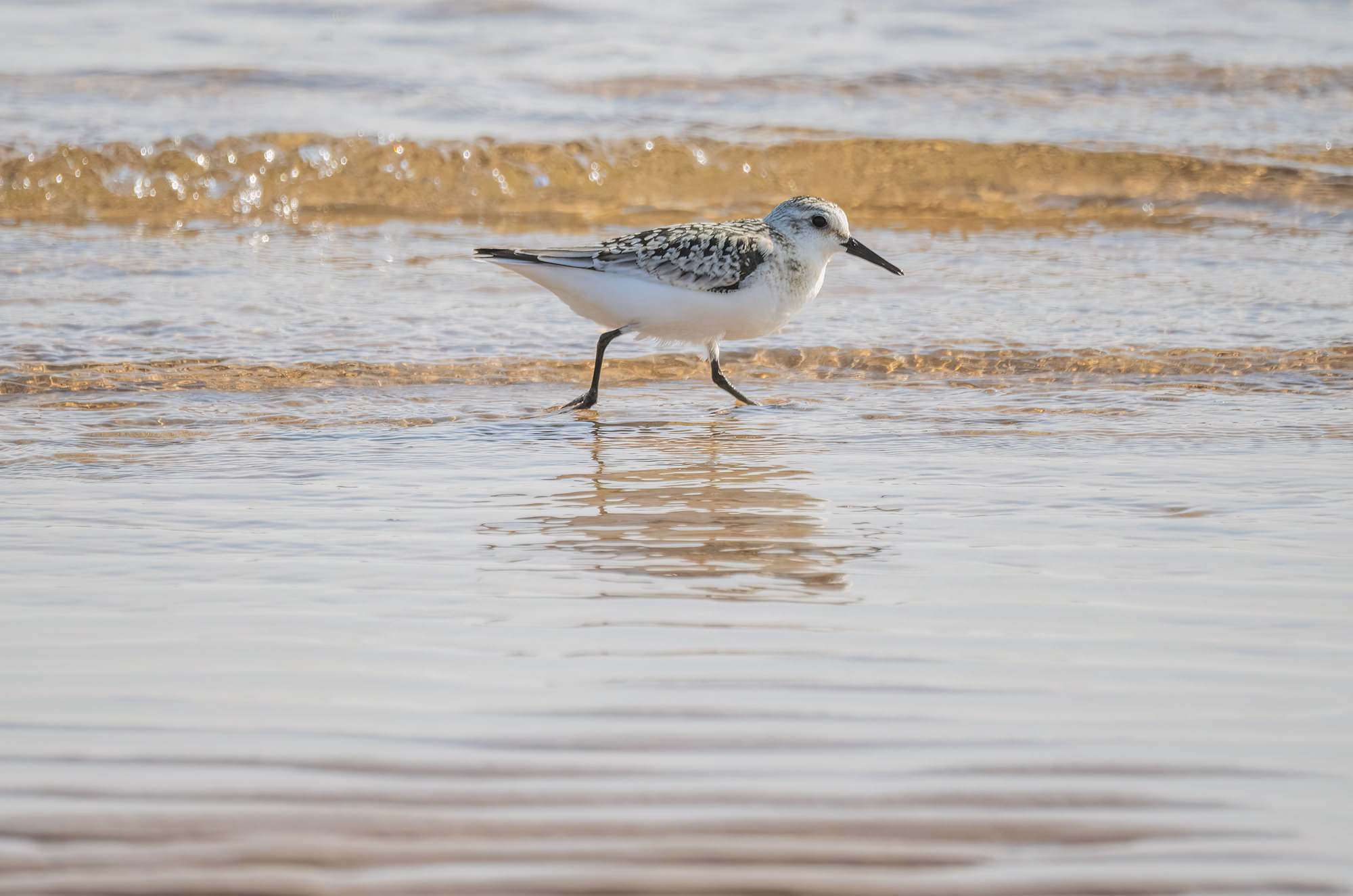
There is something joyful in their hyperactivity, like little clockwork toys. But they can also be a wind-up bird in other ways – for the wildlife photographers amongst us at least. My encounter with them at Prestwick beach this month was the perfect example of that. I had waded through a knee-deep channel of water that had cut me off from the tide line. I tried to keep my camera steady while bent over, trying to get photos of the flock that were merrily running along much quicker than I could hope to keep pace with.
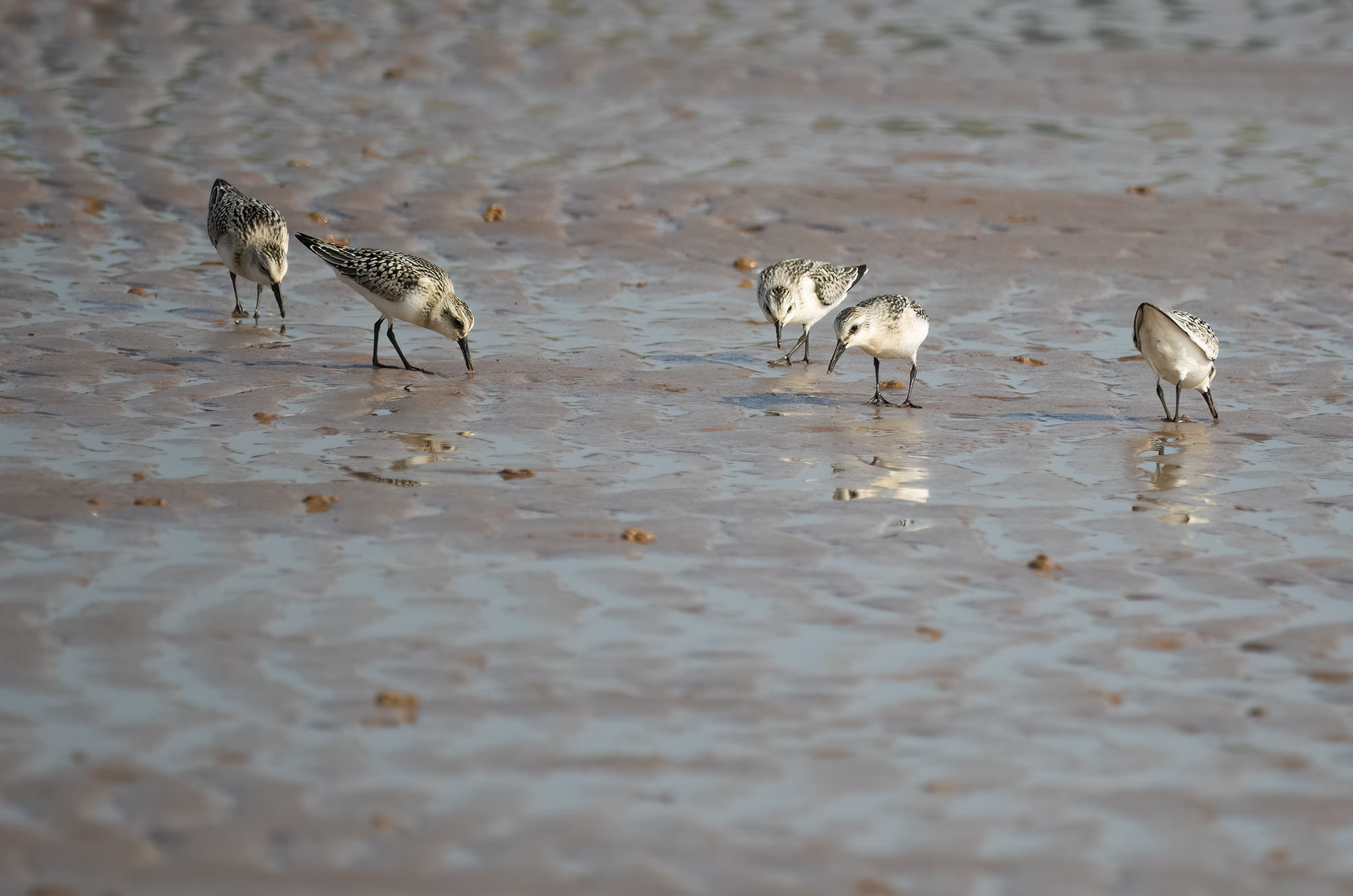
I abandoned that plan pretty quickly and opted to try and get further ahead of them so I could settle down and wait for them to come to me, as I’d managed to do at Portencross. This particular flock weren’t anywhere near as accommodating, and it took me at least four attempts – including me doing a half-walk-half-run sanderling strut – to get in the right position.
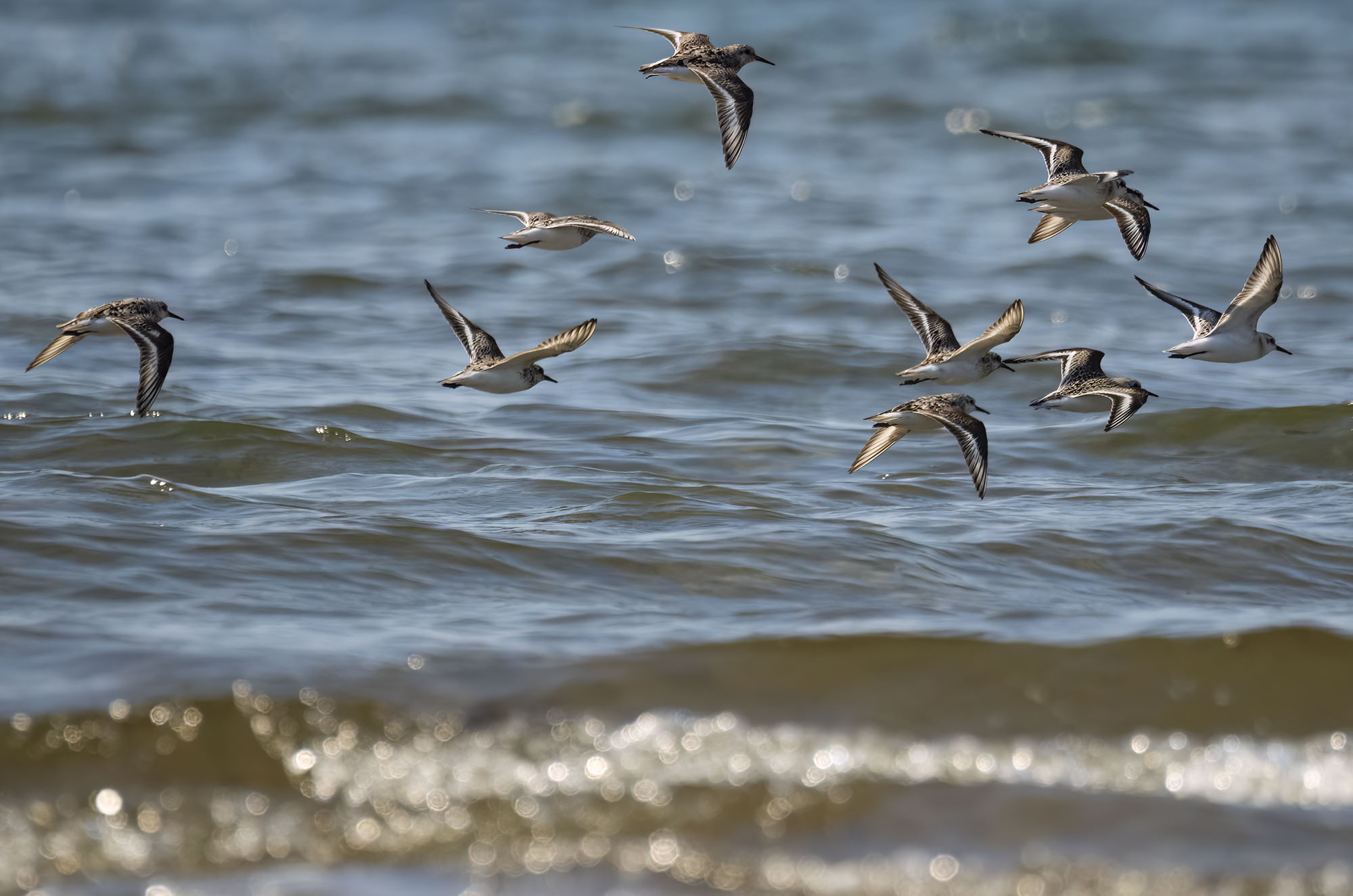
And when I did, it was essential to capture images quickly, as it wouldn’t be long before they scurried past me or a dog came running up the beach and flushed them. It was high pressure and exhausting, but eventually I captured a few shots and some footage I was happy with.
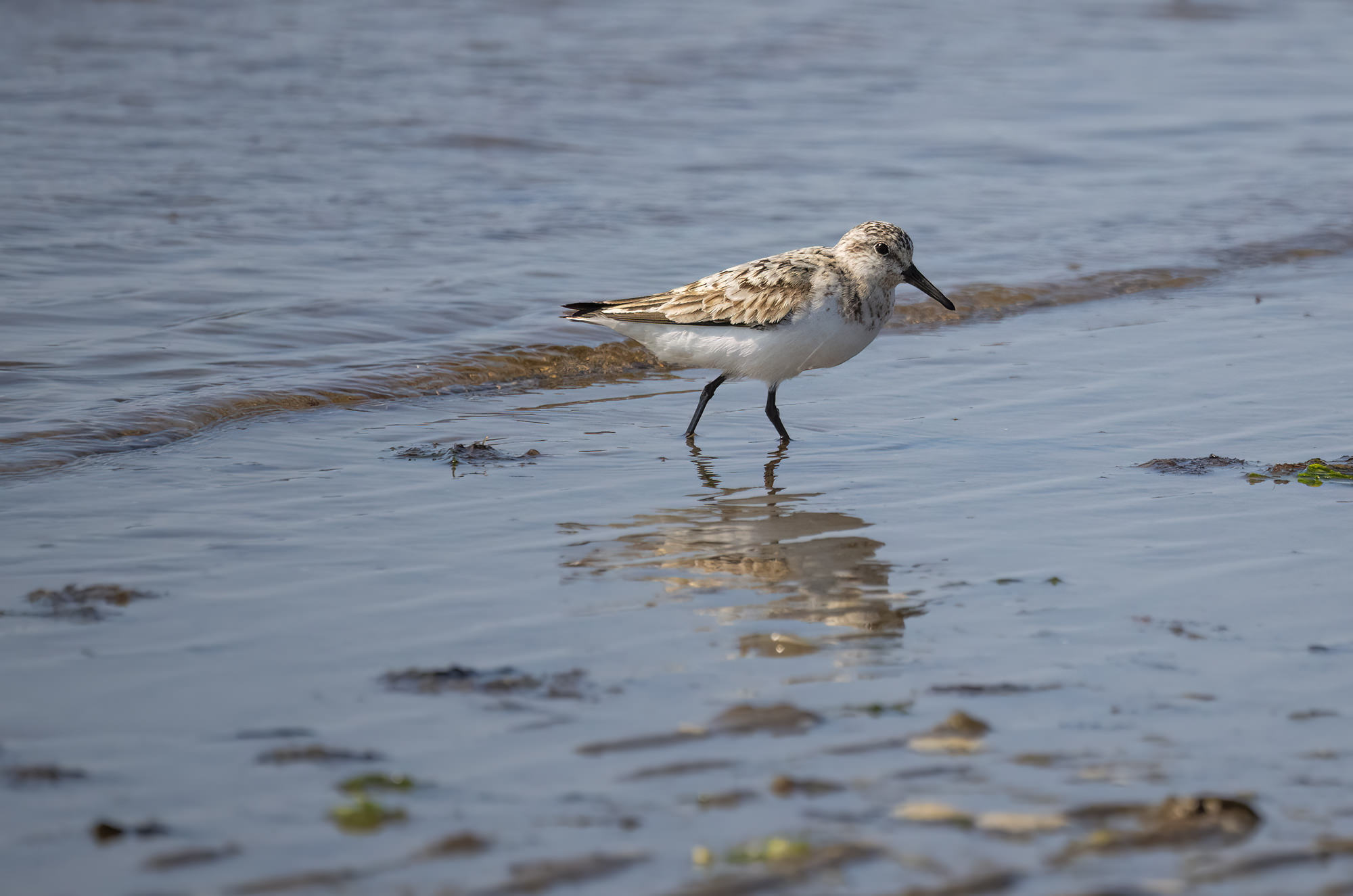
So, my advice to the wannabe sanderling photographer is to give yourself plenty of time and be ready to walk pretty quickly – these wind-up waders certainly know how to keep us on our toes.