I left my heart on the Isle of Arran last year. Well, the holiday-making part of my heart, anyway. I fell head over heels for the wildlife, the scenery and, most importantly, the atmosphere of the island known for being “Scotland in miniature”. As its nickname suggests, Arran has it all. The Isle of Bute, just north of Arran across the Firth of Clyde, felt a bit like a rebound destination – fine to visit for a quick fling but not a serious contender for ongoing bliss.
Little did I know that the smaller island had its own charms, including plenty of wildlife watching opportunities. And, while they weren’t as obvious and easy to find, it turned out that a bit of bay watching was all it took to discover the beauty of Bute.
A rocky start
One instant disadvantage that Bute had for winning me over, apart from a lack of places to eat (one sure-fire way to my heart), was the weather. Admittedly, the island had no control over that, but it did inevitably limit our opportunities to get out and see a lot – literally, when the curtains of rain meant we couldn’t see far past our noses. As with previous holidays I’ve written about, our trip to Bute was not a wildlife watching break. So, wildlife photography had to fit in with all the other activities we wanted to do and places we wanted to explore during our week on the island. Wildlife watching was also weather dependent – my partner and I are fairly hardy but persistent horizontal heavy rain doesn’t make for a relaxing stroll along the beach or through the countryside. We have our limits.
Waders and an apologetic encounter
So, our first proper exploratory trip out was on a grey day where there were at least a few decent breaks between downpours. We headed to Ettrick Bay on the north-west coast of the island where you can get good views of Dunoon and the Isle of Arran…when it’s not pouring with rain. Luckily, there is also a fantastic tea room, which could provide food and shelter during the worst of the weather.
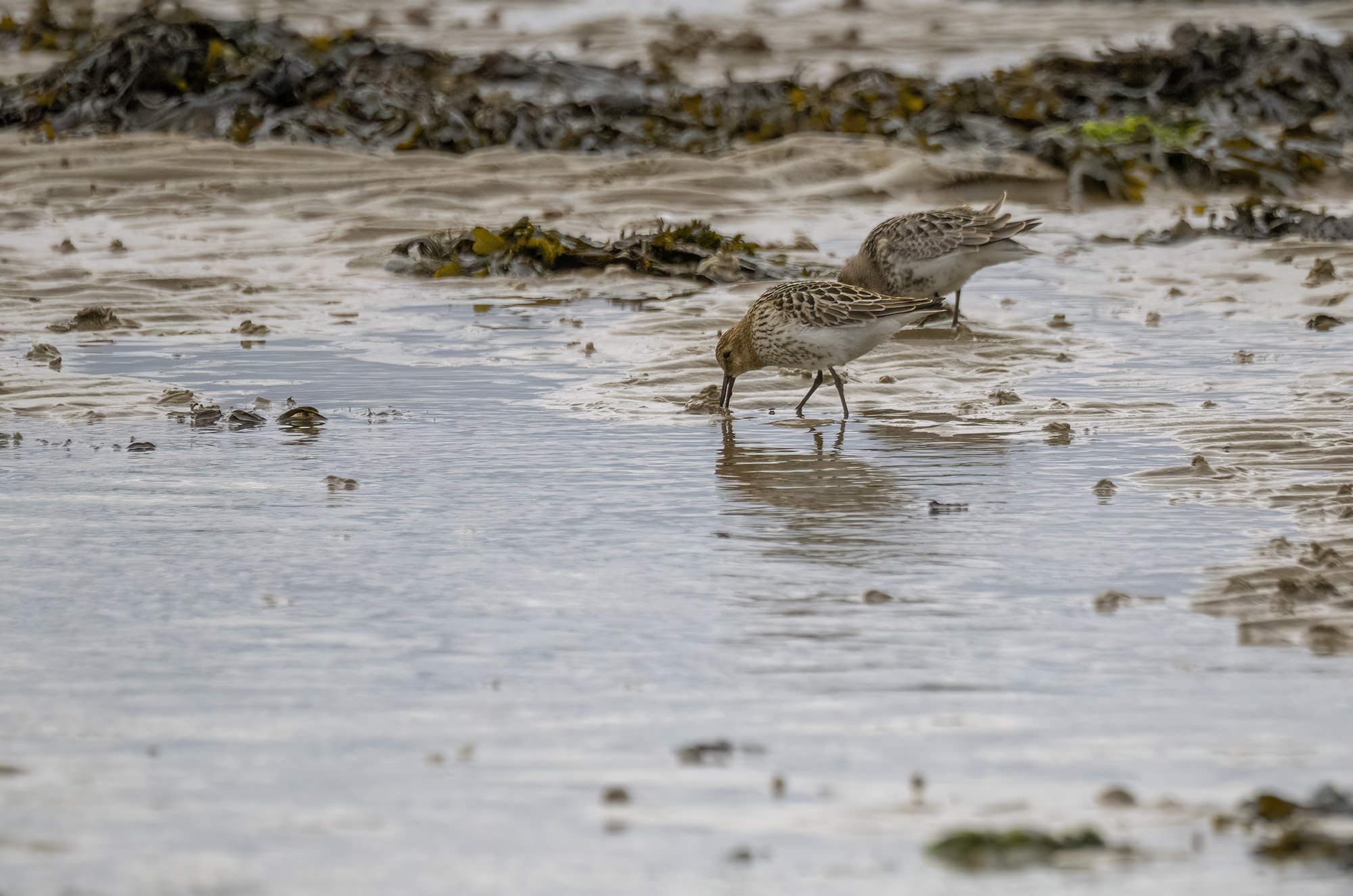
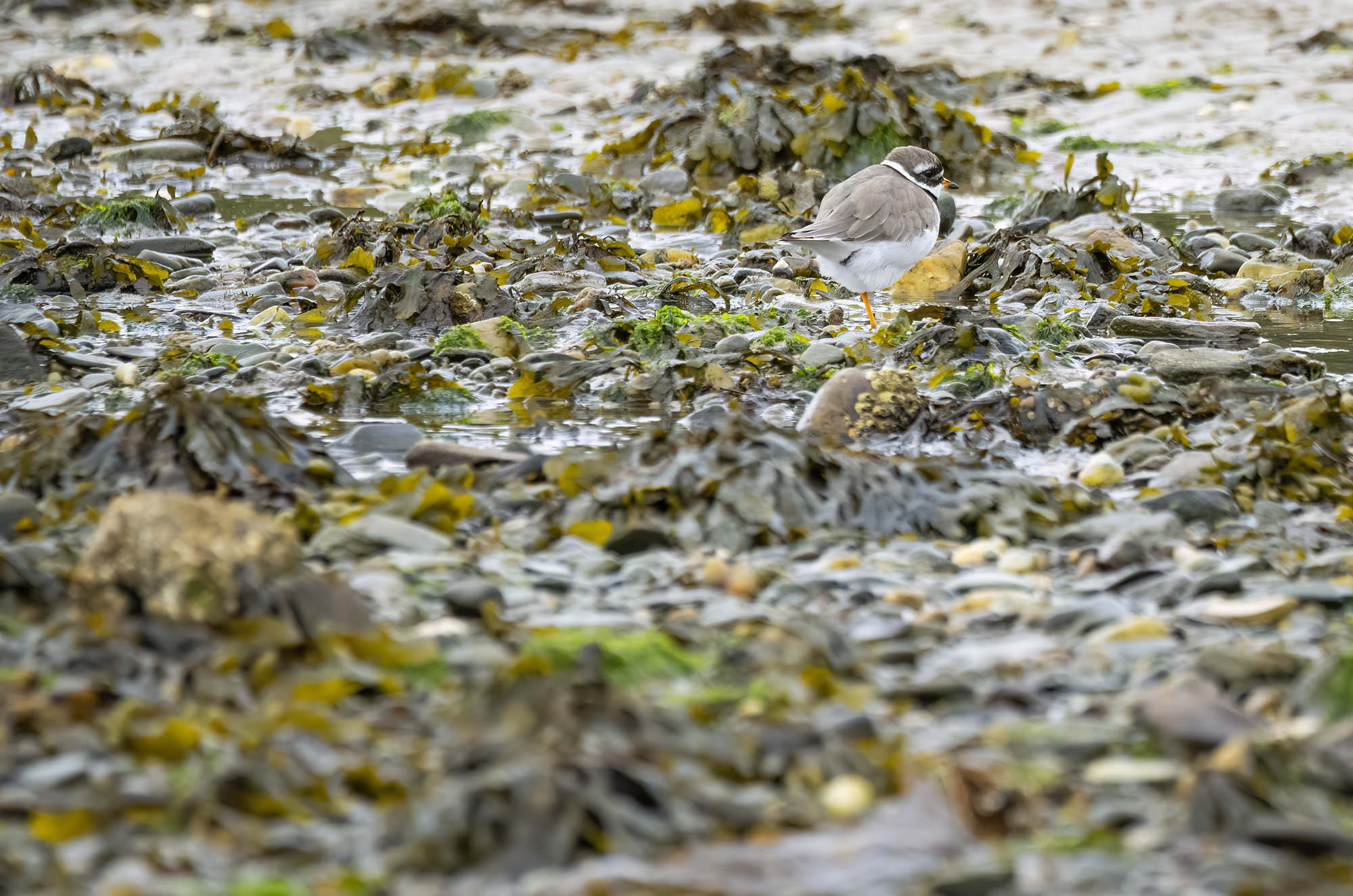
Even on a dull and damp day, Ettrick Bay is a stunning spot and we certainly weren’t alone in enjoying it. From the tide line to the seaweed-covered rocks and pebbles, the beach was teeming with waders. I spotted ringed plovers, turnstones, dunlins, sanderlings, oystercatchers, curlews and my first bar-tailed godwit. Most were so confiding and well camouflaged that we only spotted them when they lifted up, flocking together like a shifting cloud just above the ground before settling again just metres away from their previous feeding spot. The light was so poor that most of my images were only used as confirmation of my initial wader identification skills.
In the vain hope of it brightening up, we headed further around the bay towards the Kyles of Bute Viewpoint. Only a pair of ravens in a bare tree made the briefest appearance. As soon as I lifted my camera, they were gone, their cronks carried on the gusts of wind as they disappeared into the iron grey horizon.
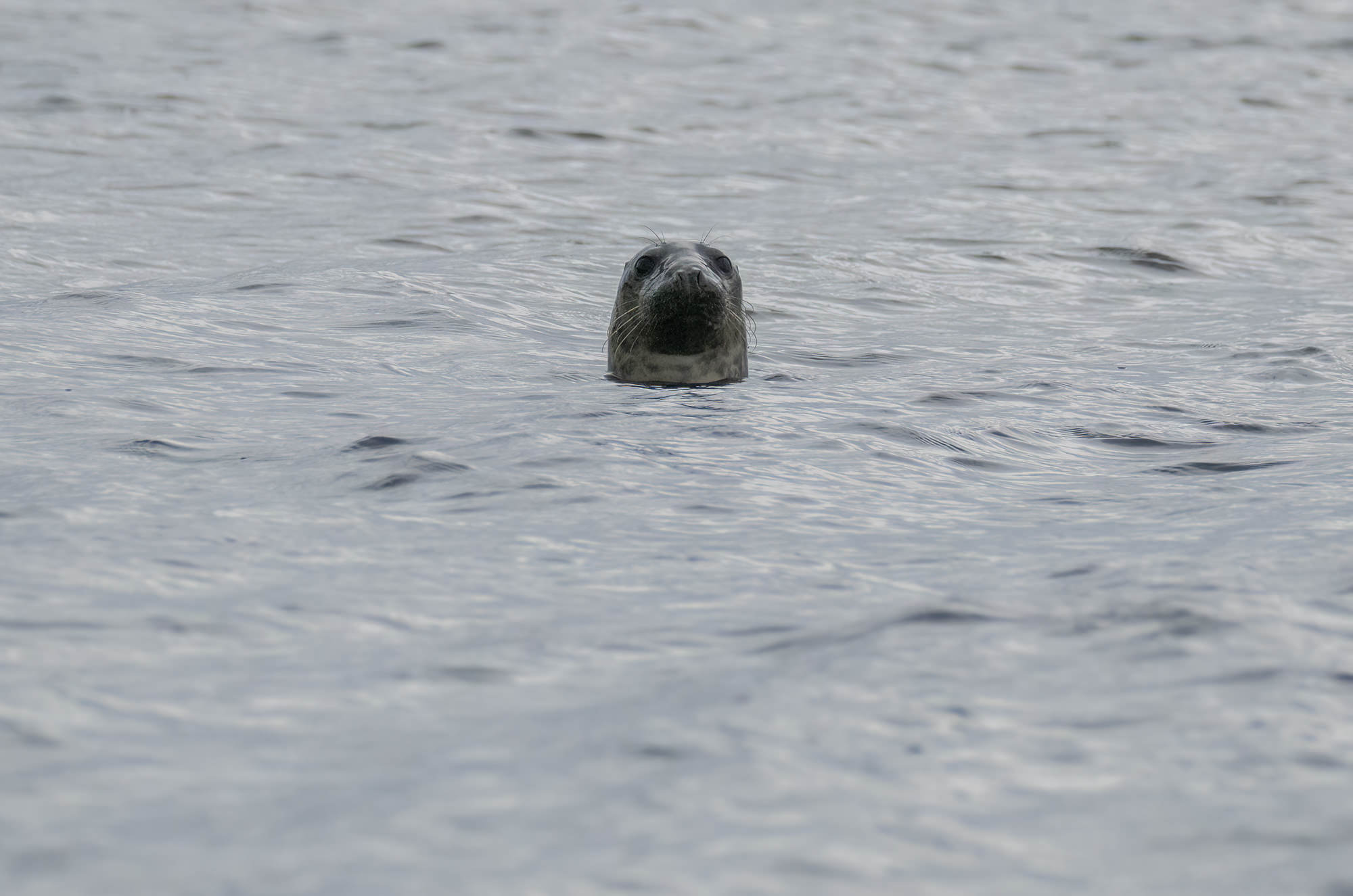
We walked from the road that hugs the bay down onto the shore. After a few minutes of carefully treading over the shifting pebbles on the empty and silent beach while the rain began to fall, my partner found a couple of flat ones to skim. As his first stone bounced its way across the still surface of the water, a head popped up in front of me. Before I’d had time to warn him, my partner sent another stone jumping into the distance. The grey seal, who had obviously been sleeping under the water away from sight, gave me a huffy look before diving back below the surface. We apologetically settled down on a nearby rock to see if we’d scared the seal away but it wasn’t long before it reappeared. As we sat quietly, the seal snoozed at the surface in the familiar ‘bottling’ position – floating vertically with only its head and snout exposed above the water. We watched it for a bit before creeping away, taking our blushes with us.
Stonechats and sunny bunnies
I couldn’t help noticing that parts of Ettrick Bay looked like the perfect spots to try to see otters, so we returned a few days later on a much brighter evening.
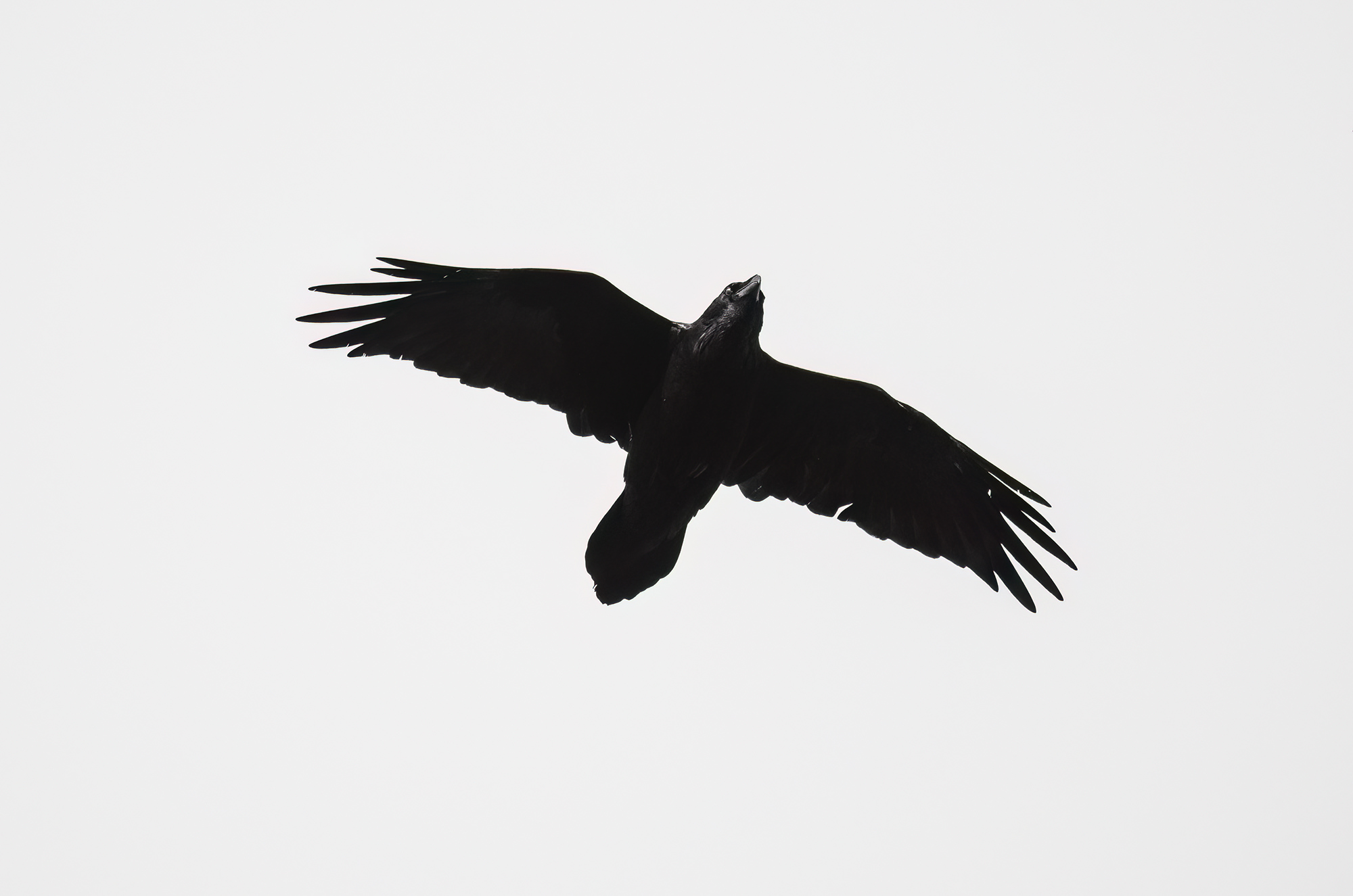
While the otters obviously hadn’t read the memo, it was still a lovely walk full of wildlife and few people. A lone raven returned to fly directly overhead, making up for the disappointment of missing the moment with them on our previous visit.
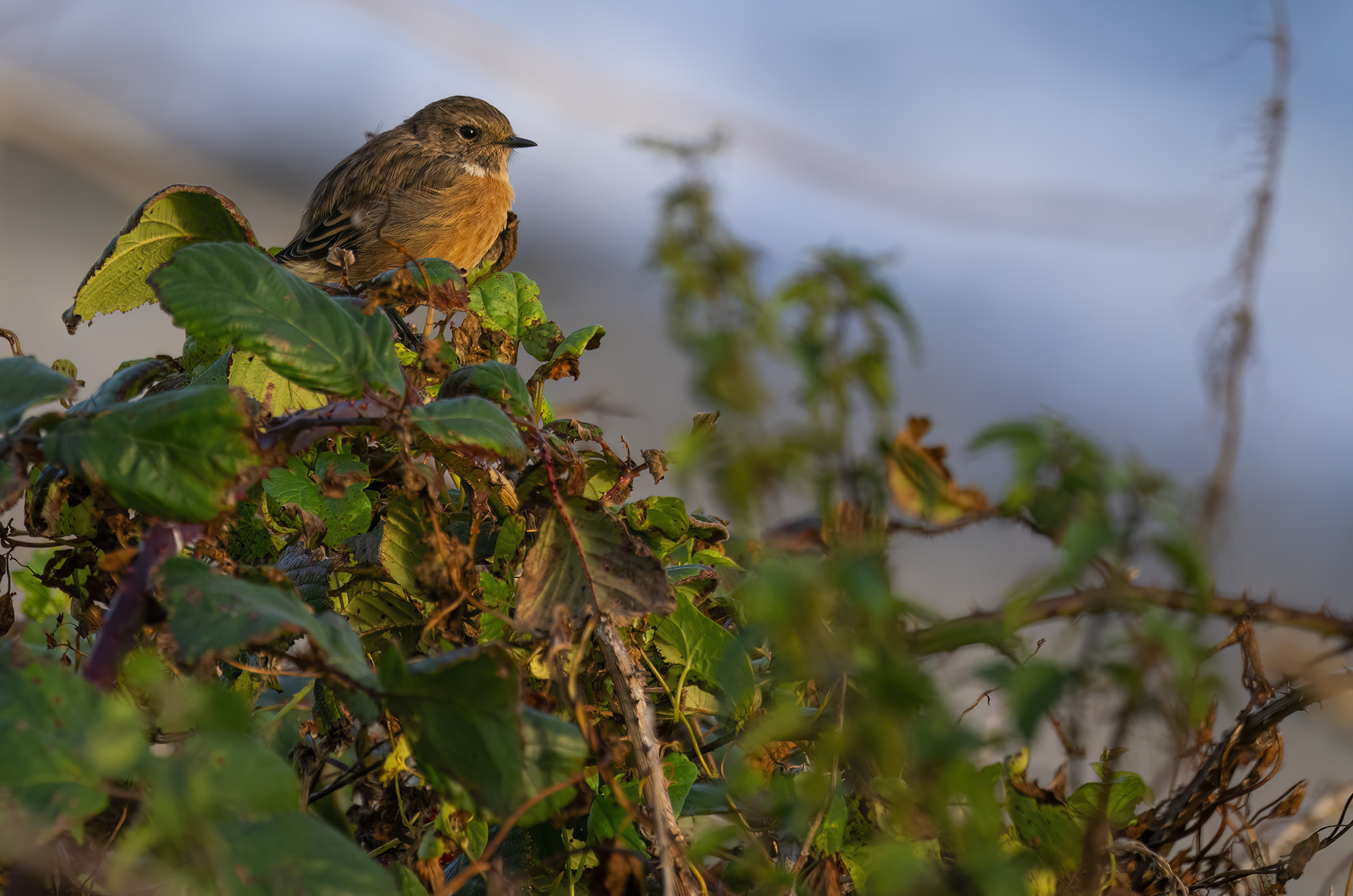
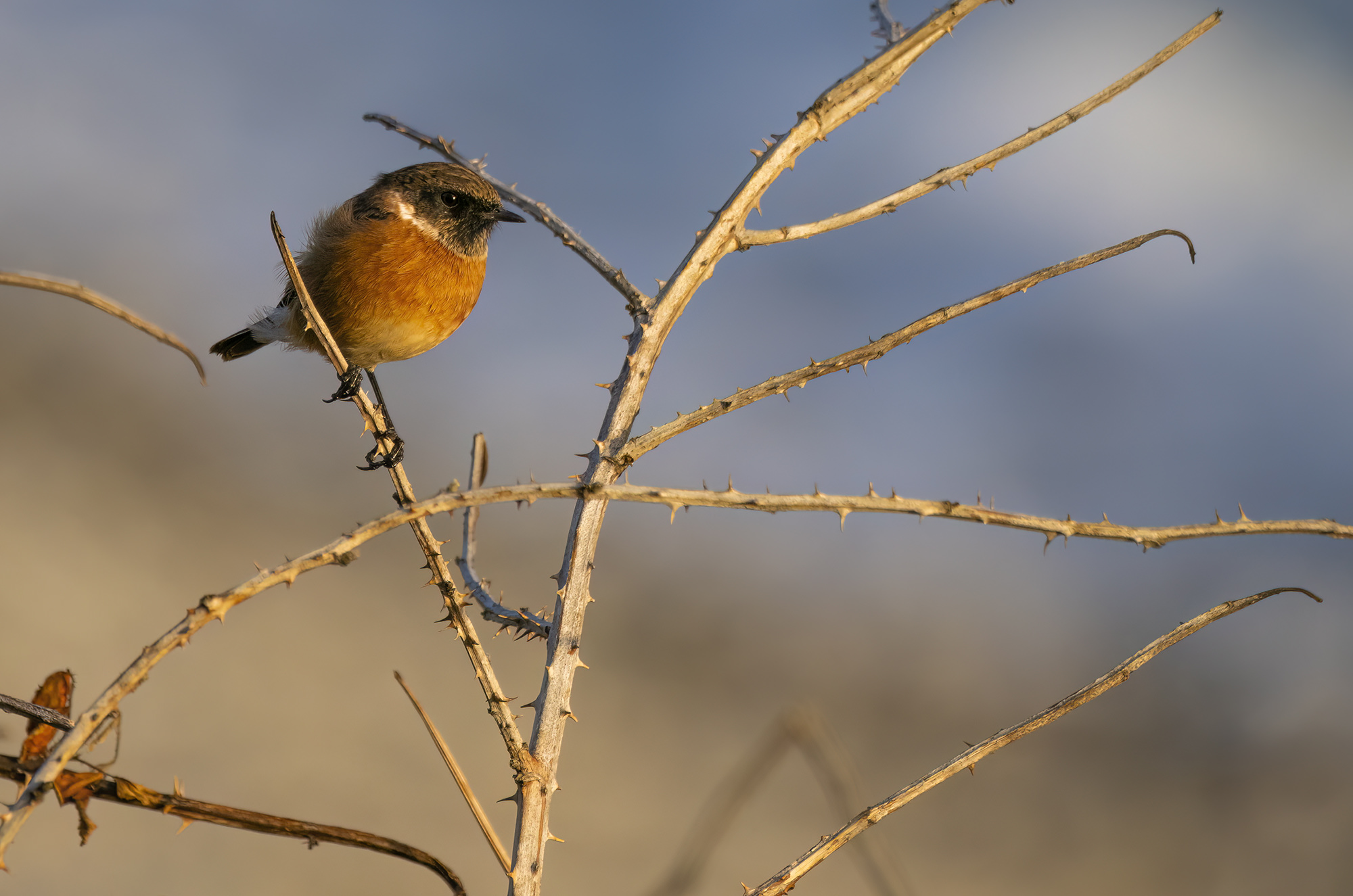
We were also treated to pairs of stonechats flitting from bush to bush in the setting sun, their calls sounding just like two small stones being knocked together – hence their name. These energetic little birds had claimed prominent perches along the coast, and they weren’t shy about shouting territorially at anyone who passed. It’s worth keeping your eyes peeled for stonechats in coastal areas as we move into the colder months, as it tends to be a bit milder by the water with more small insects for them to eat.
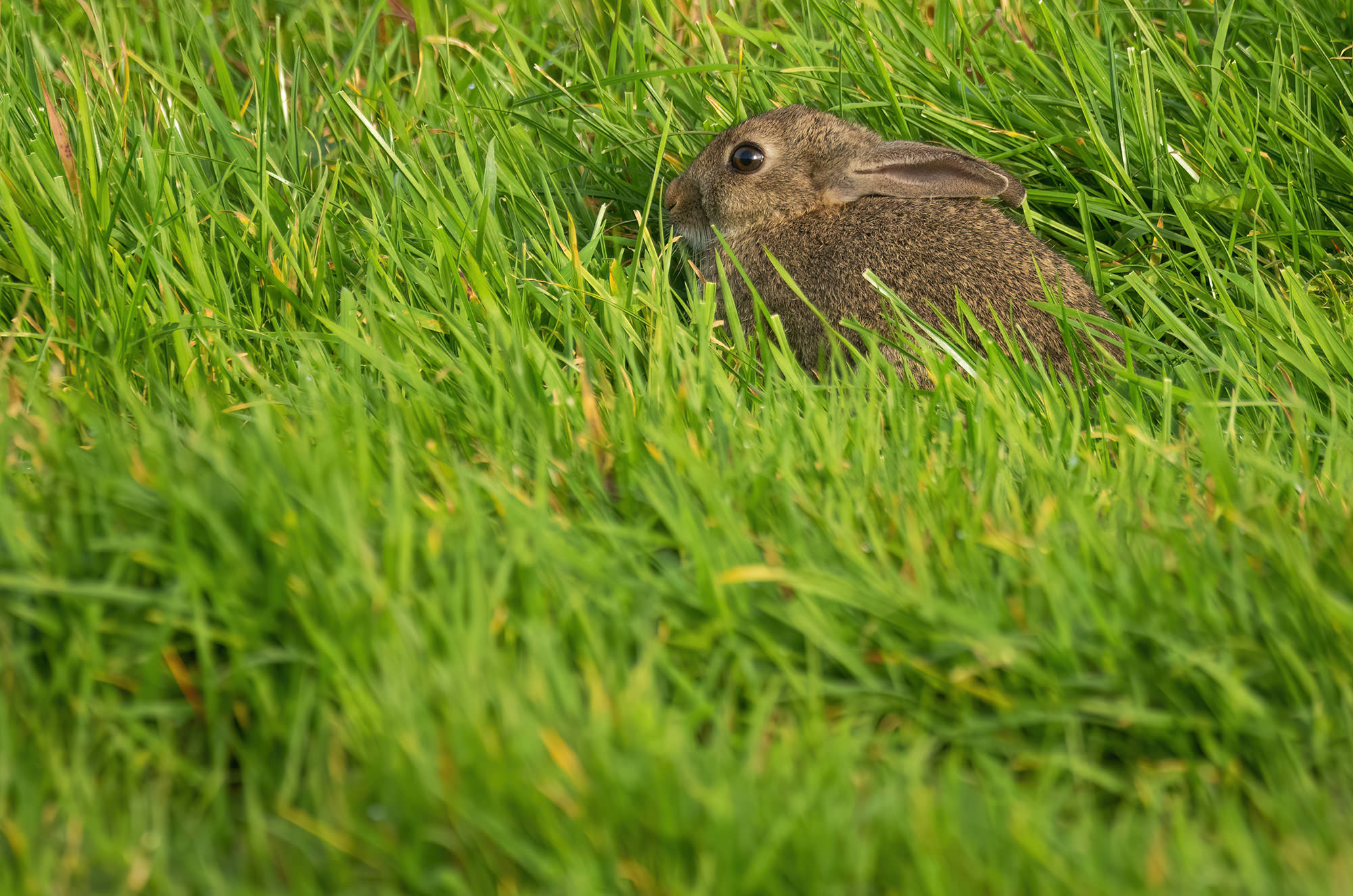
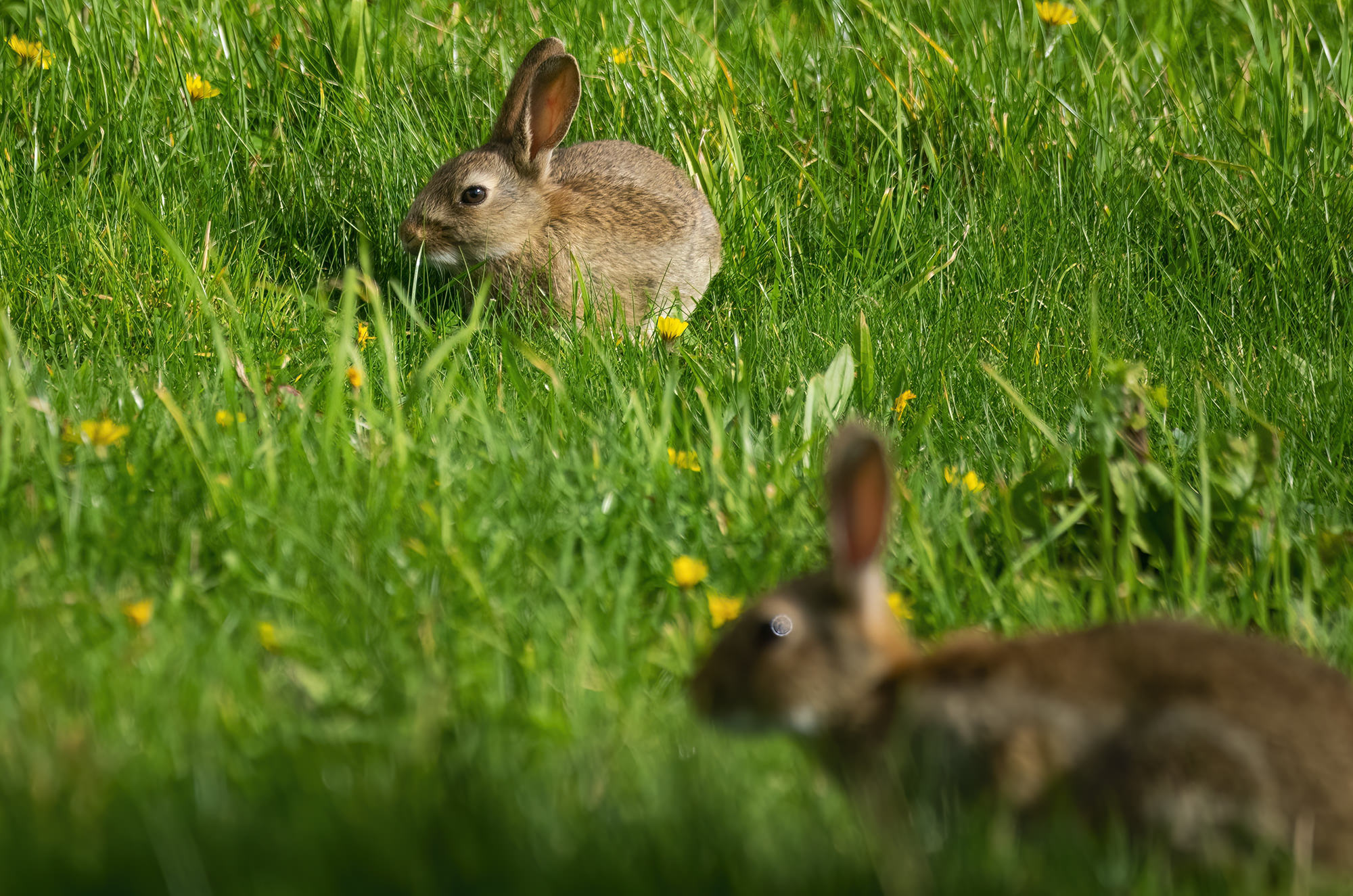
Rabbits basked in the lush green grass as we strolled along in the fading light. By moving slowly and quietly, I was able to capture one of the sunny bunnies without it dashing into the nearby undergrowth.
The barrier I had unknowingly erected in my head to Bute’s charms was failing. But it was our trip to the secluded and tranquil Scalpsie Bay that fully convinced me.
Seal the deal
A short walk from the viewing platform above the bay, with views to Kintyre and Arran, is the path down to the seal viewpoint. In my eagerness to get down to the shore while the sun was shining, I ignored the warnings about the steepness of the dirt track down the hill. It was a bit of a struggle on dodgy knees but the reward when we reached the beach was worth the few minutes of pain.
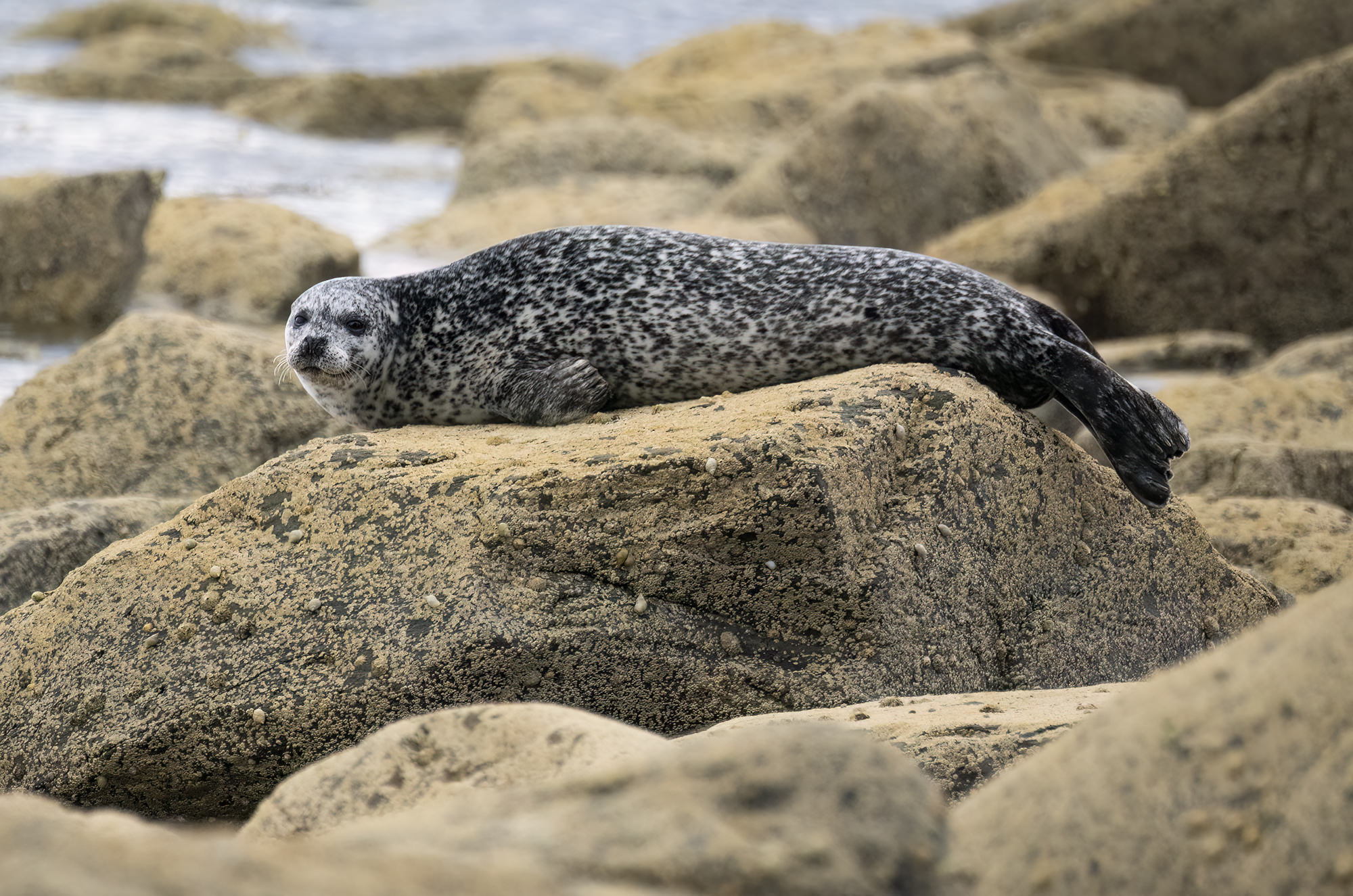
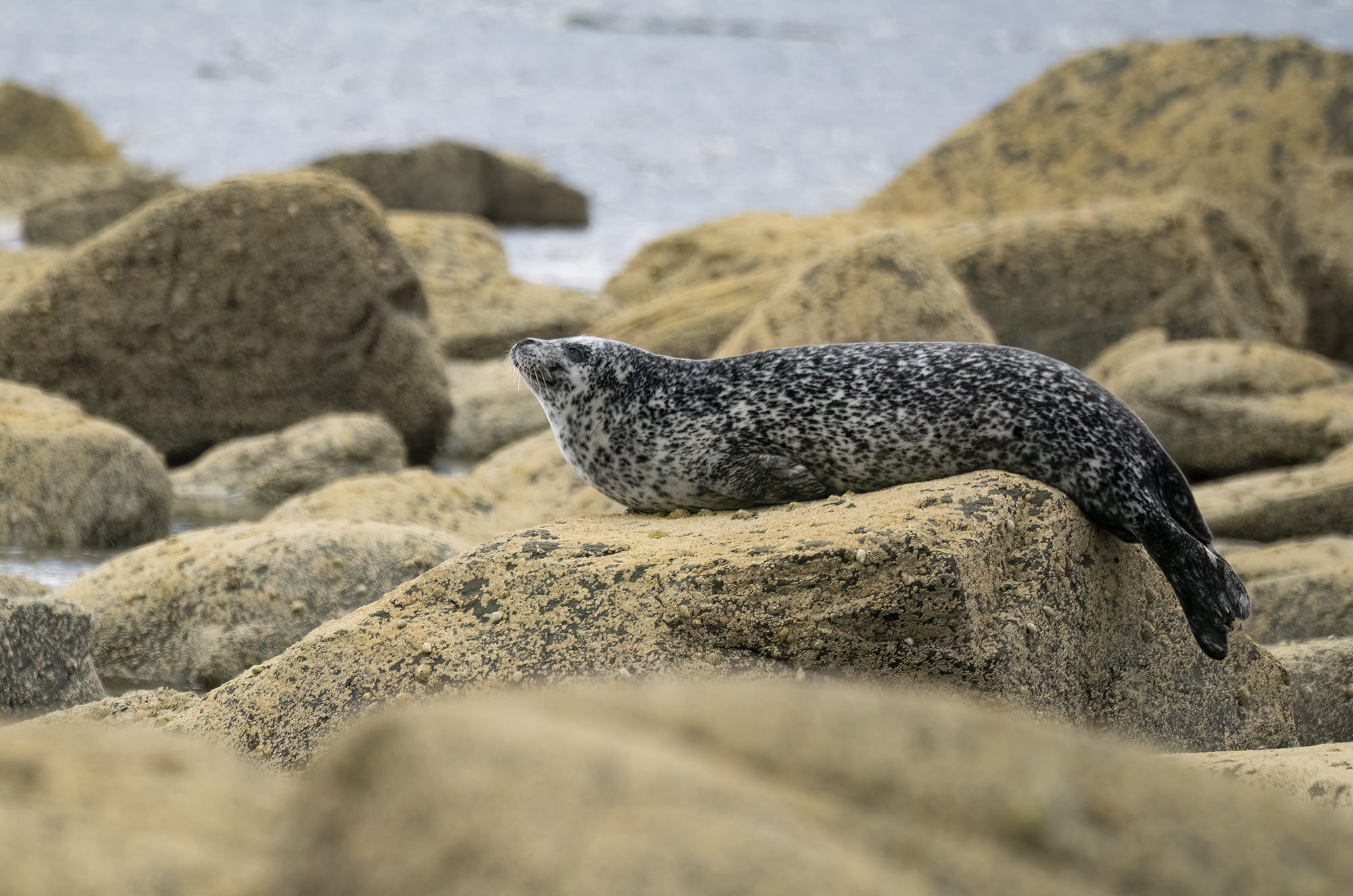
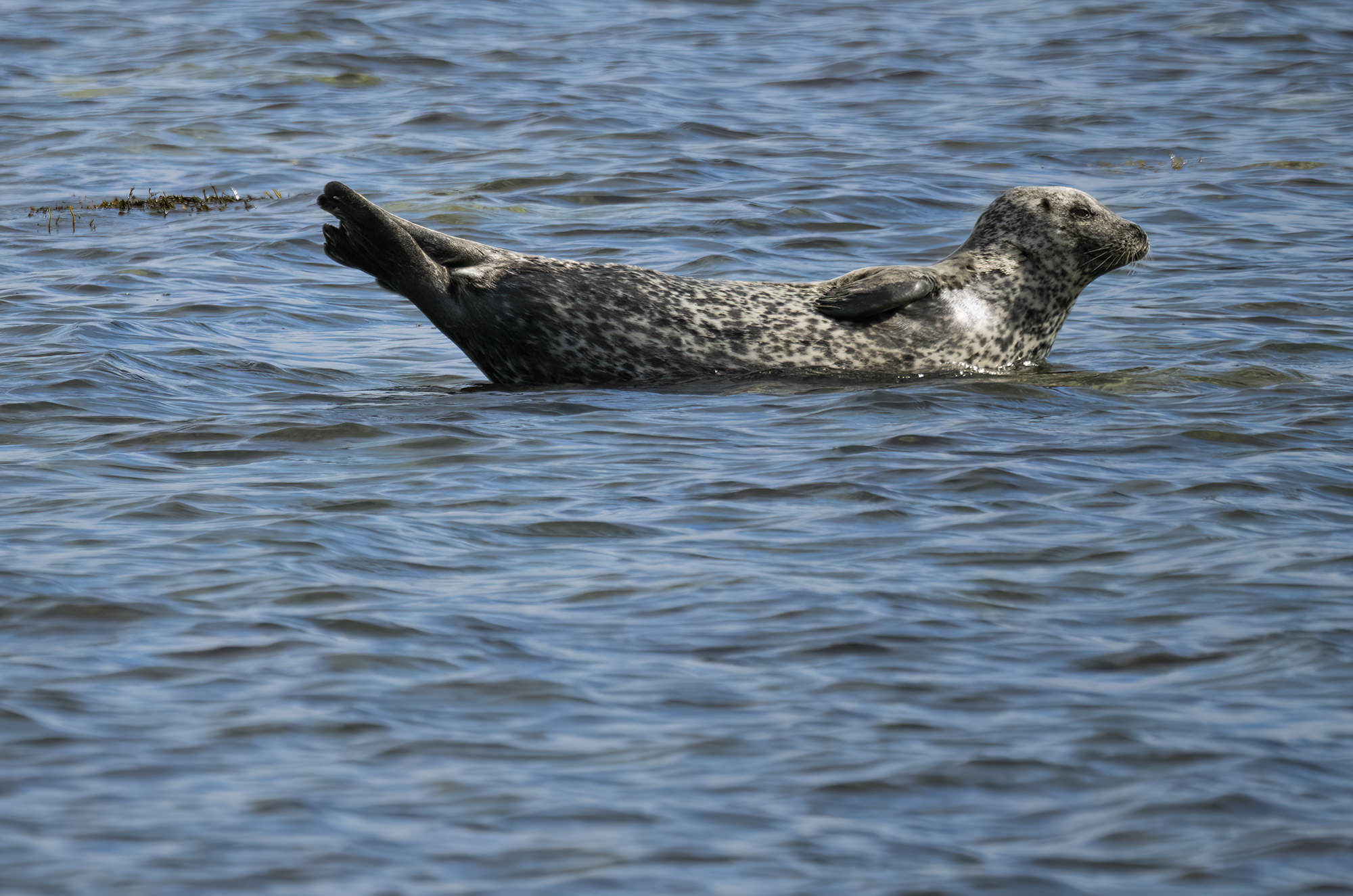
As I’d discovered on our trip to Arran, harbour seals, unlike their grey seal cousins, show a strong preference for familiar haul-out spots. I knew the seals of Scalpsie Bay were often seen basking on the rocks along this stretch of shore during low tide, so we kept our distance and moved slowly and quietly along the nearby path, just in case.
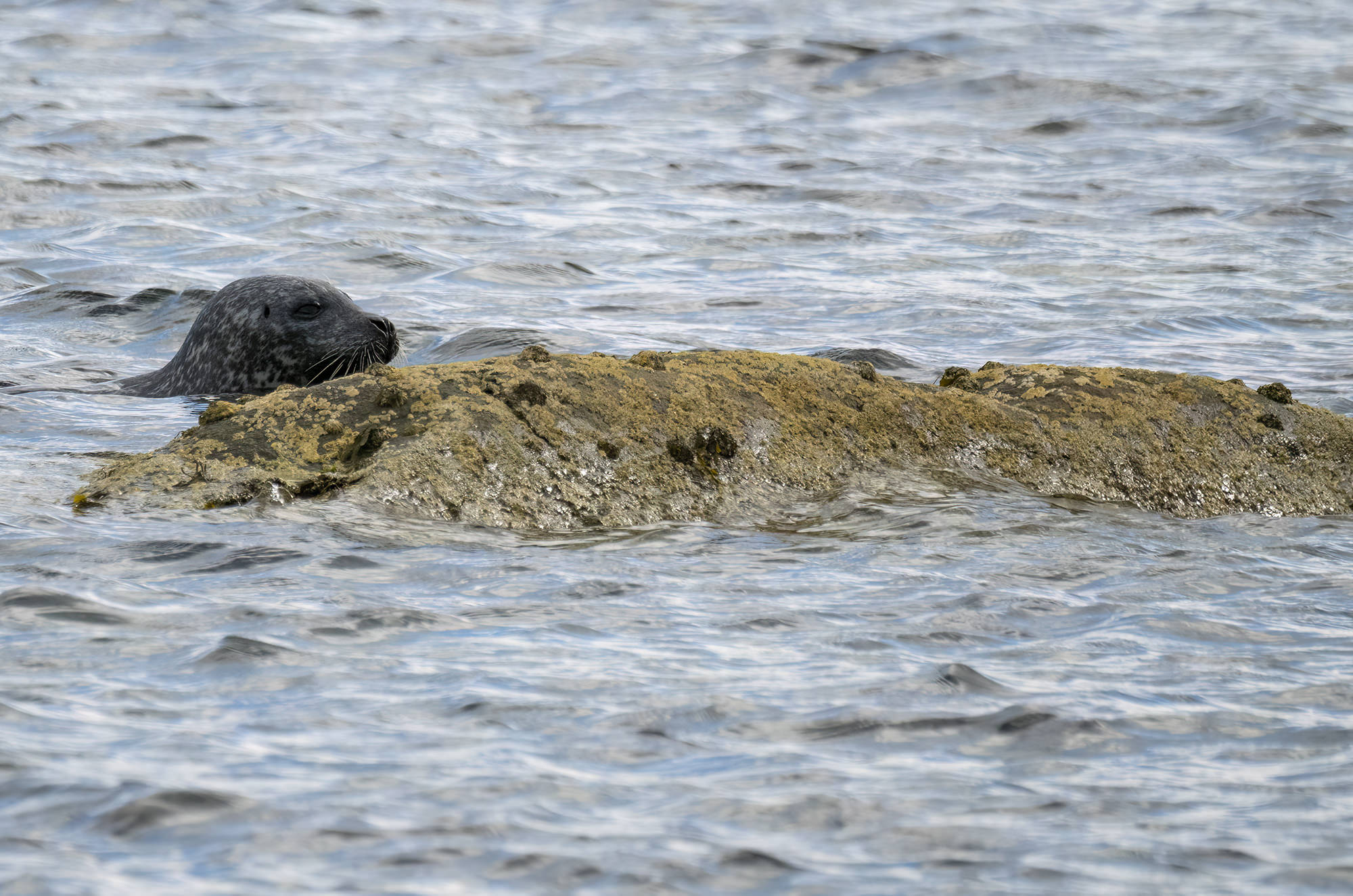
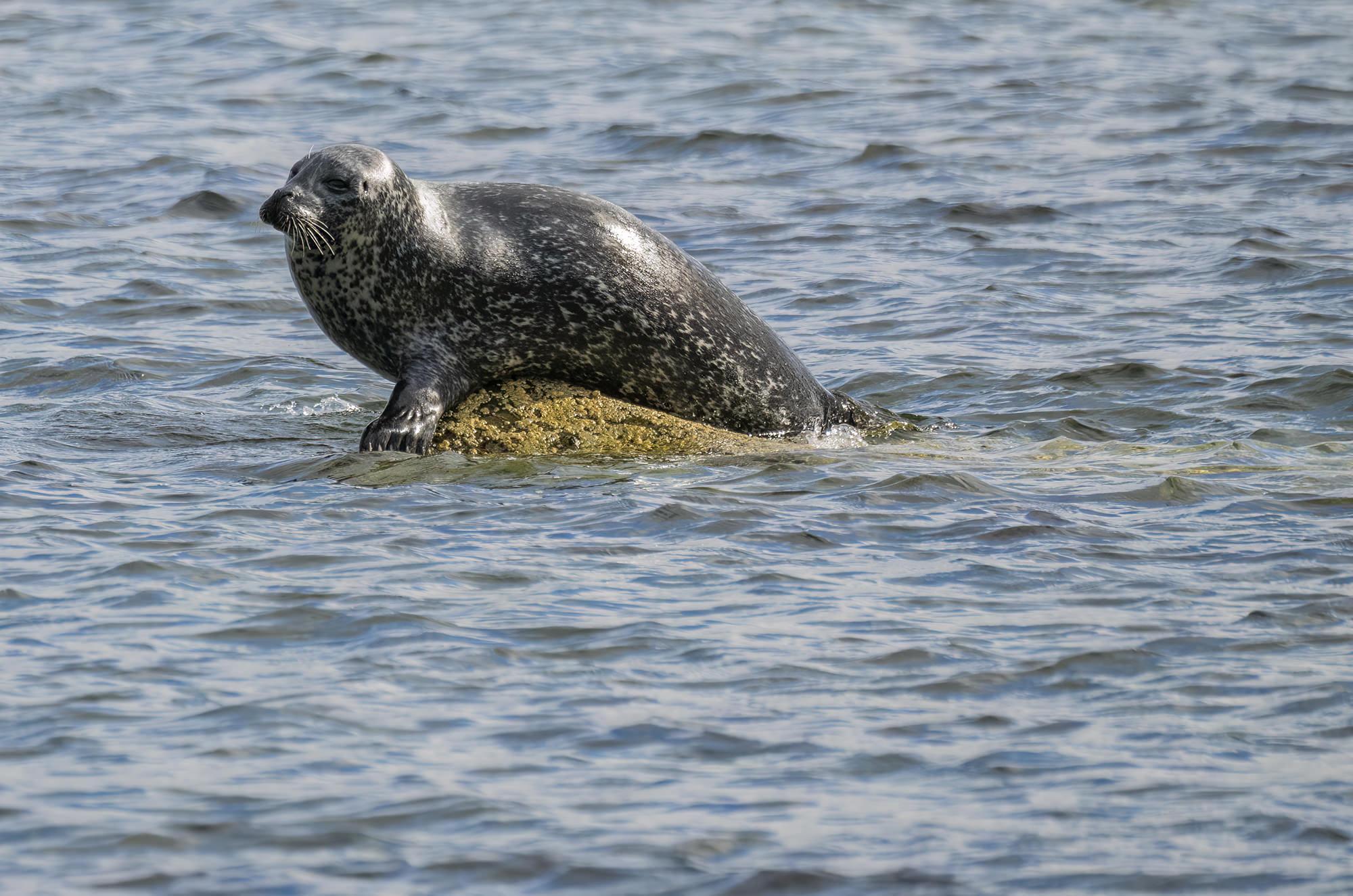
We were in luck – as we moved from the path to the shore we could clearly see a number of harbour seals sunning themselves on the rocks. By giving the seals plenty of space and sitting quietly to monitor their reactions to us, they remained relaxed. As the light shifted from harsh and bright to dull and overcast, I was able to capture photos of the seals as they basked, swam about and failed miserably to remain resting on rocks that were being reclaimed by the incoming tide. It was a delightful couple of hours with these magnificent marine mammals.
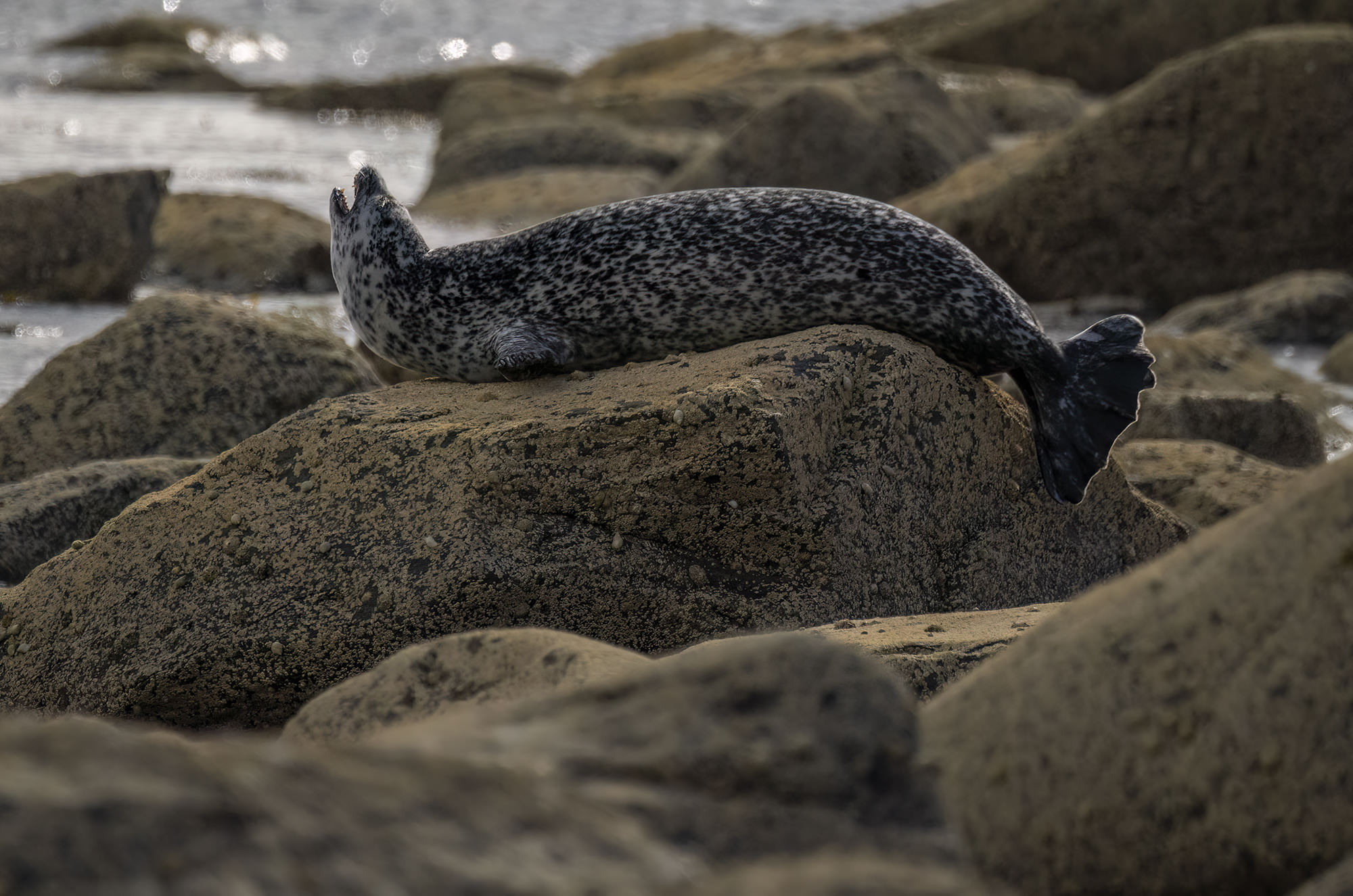
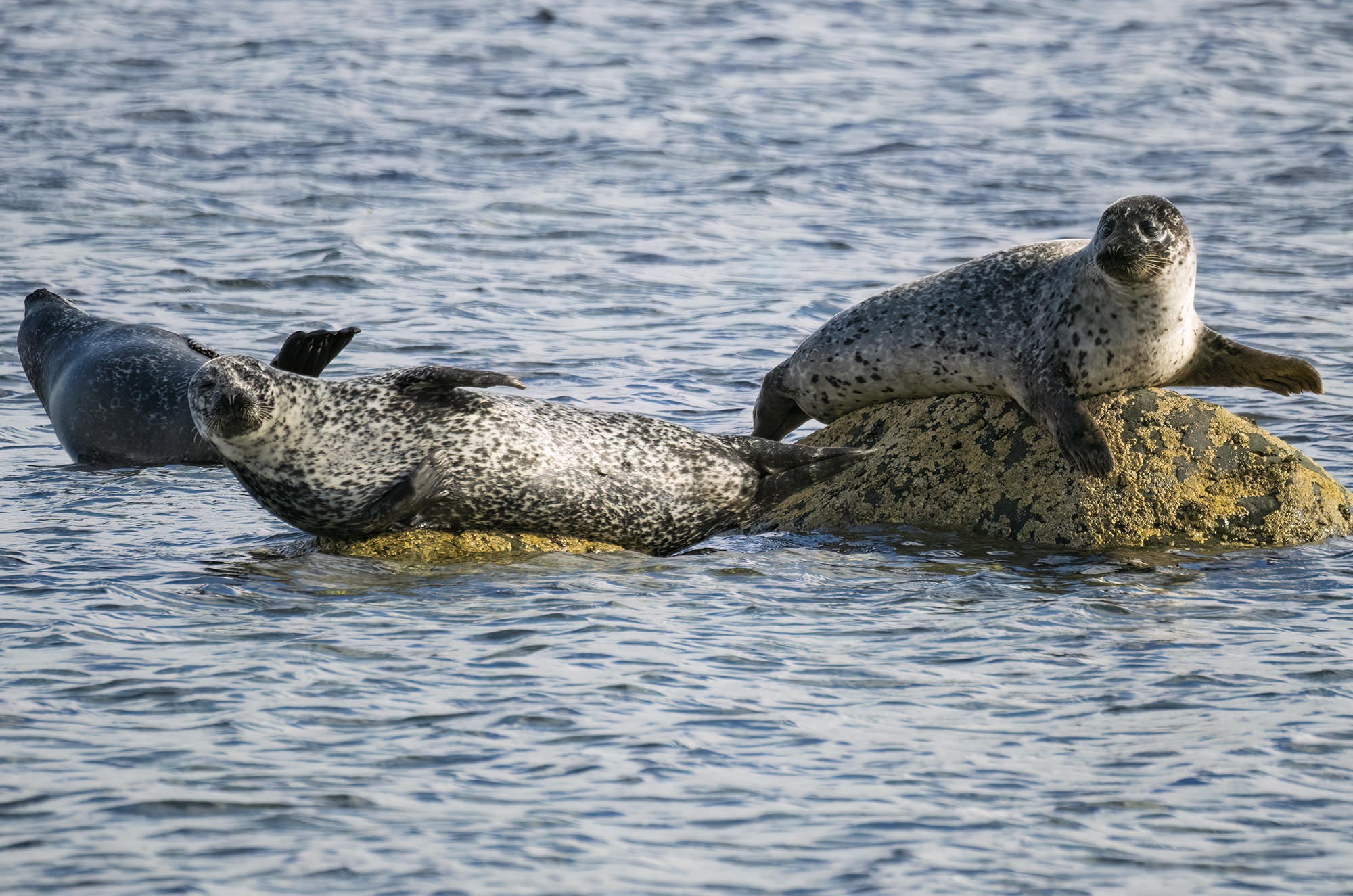
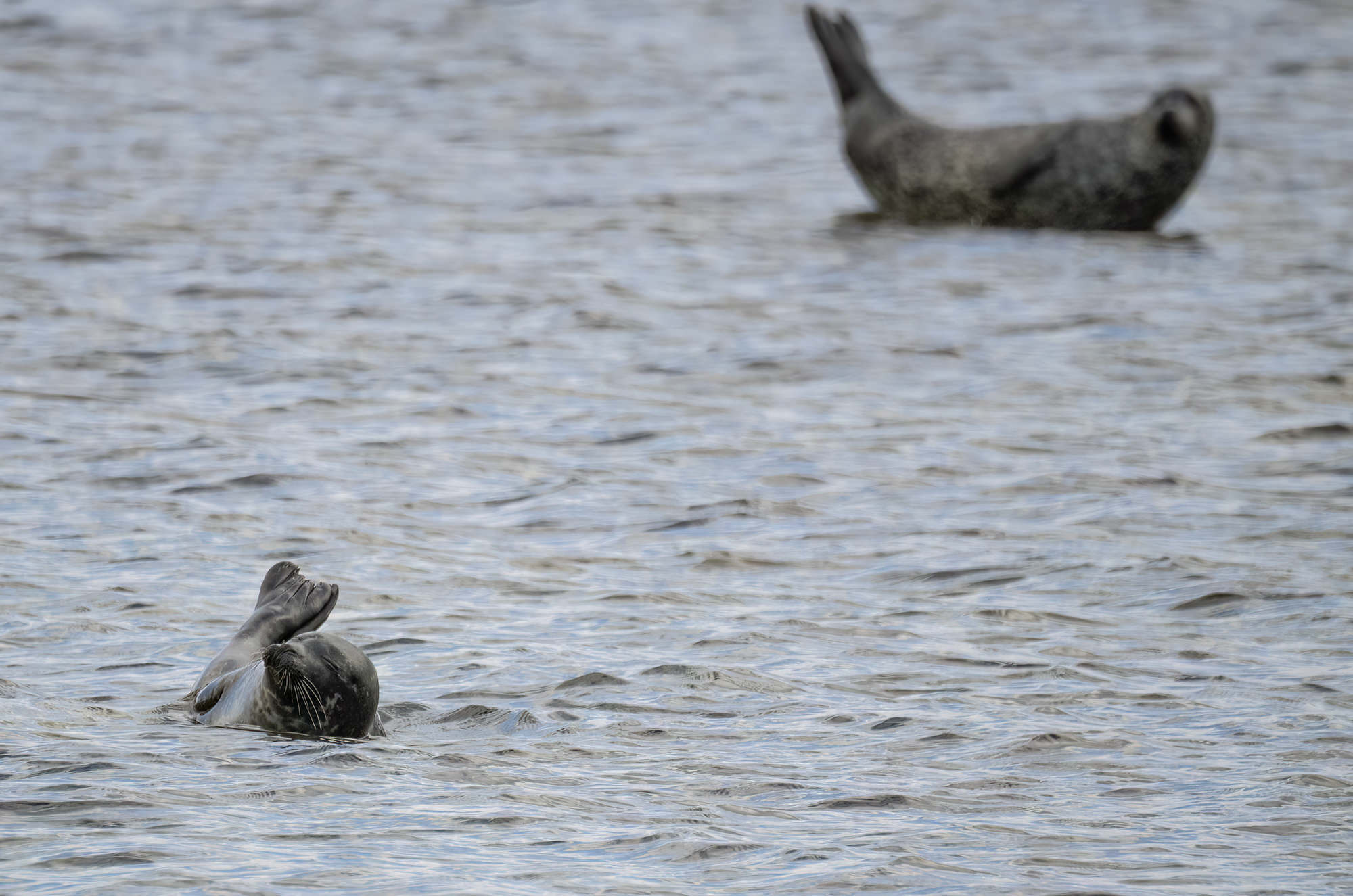
We left as quietly as we’d arrived and opted for a stroll along the sand, accompanied by oystercatchers and gulls, before making our way across the field and onto the road to get back to the viewpoint. Not only did this give me the opportunity to photograph more rabbits bounding about in the fields, it also protected my slightly sore joints.
A grey but gorgeous goodbye
By the time the cloud had settled back into its familiar blanket over the sky on our last day on Bute, I was hooked on the place.
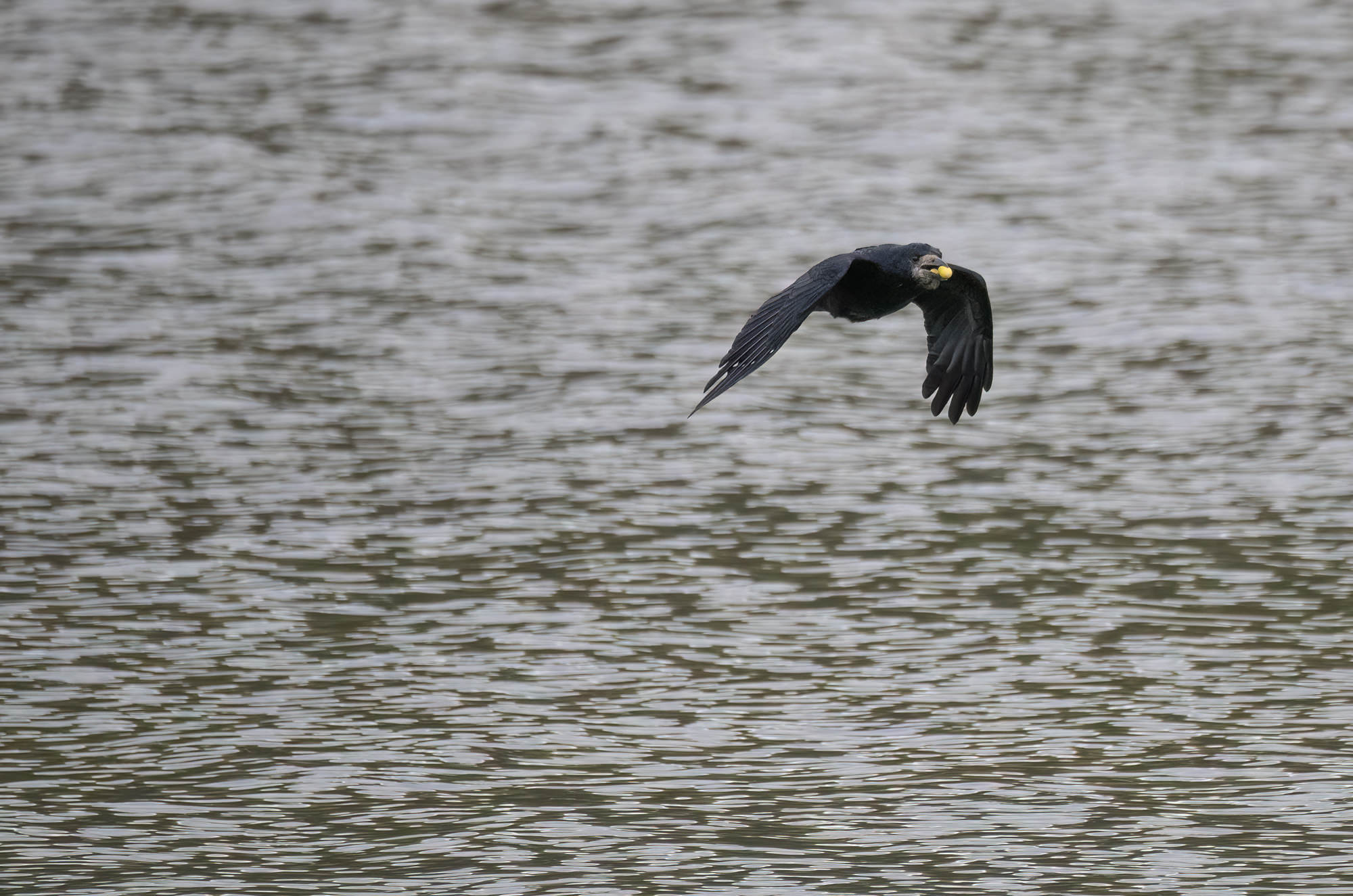
Sitting next to the ferry slipway at Rhubodach, which was more peaceful than it sounds, we watched large numbers of rooks flying back and forth to Colintraive on the mainland. There was constant corvid traffic and the reason for this soon became clear when I checked the images on screen.
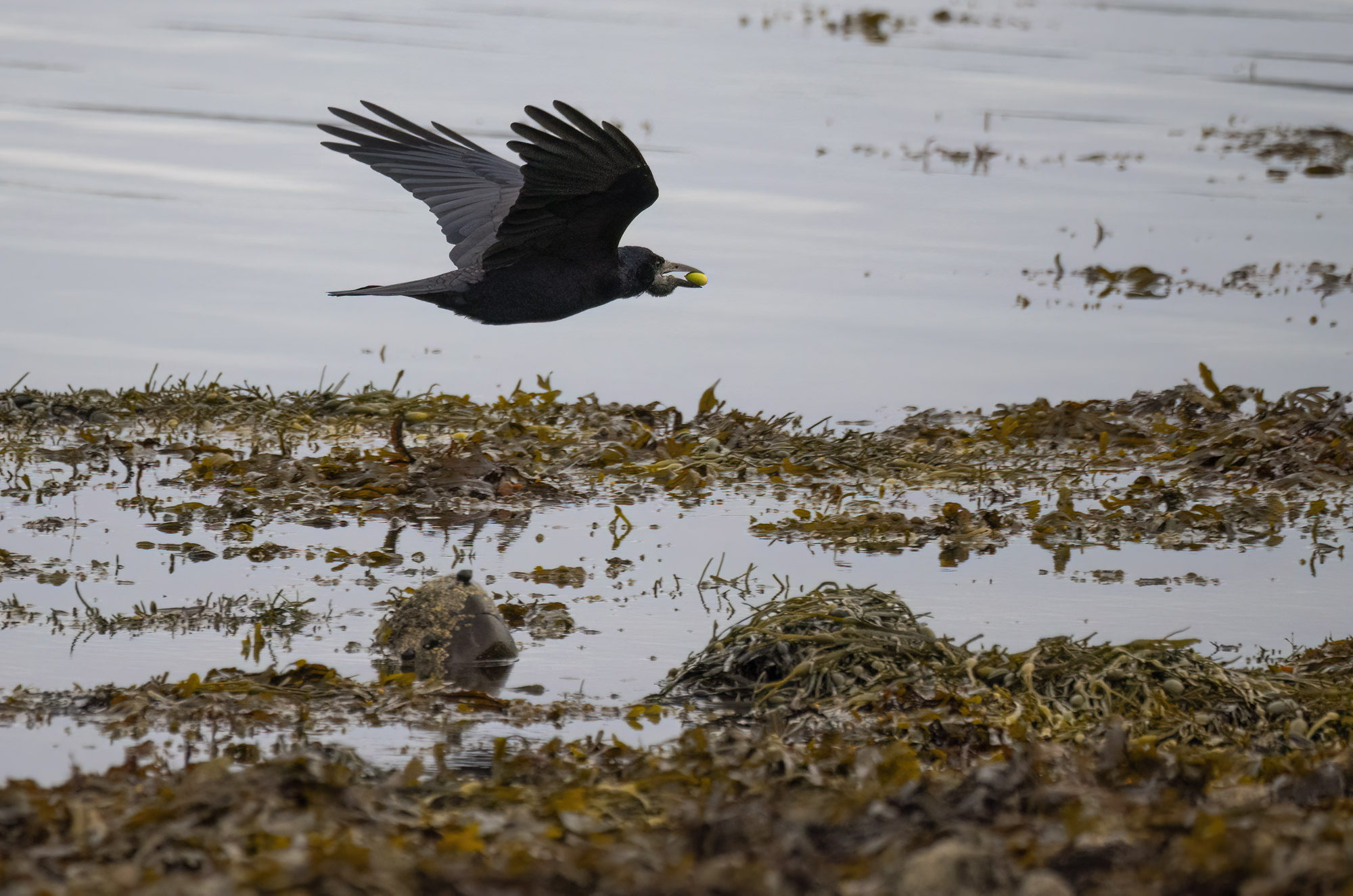
The rooks were carrying acorns in their beaks. It is a mast year, with a bumper crop of acorns available, and the birds were busy taking advantage, making trip after trip over the water and back. Although jays are known for caching acorns, rooks also hoard these energy-packed nuts. We watched them work as the drizzle fell in a mist across the bay until the light began to fade completely.
It was a grey but gorgeous end to our time on Bute – the island close to Arran but certainly not in its shadow.