
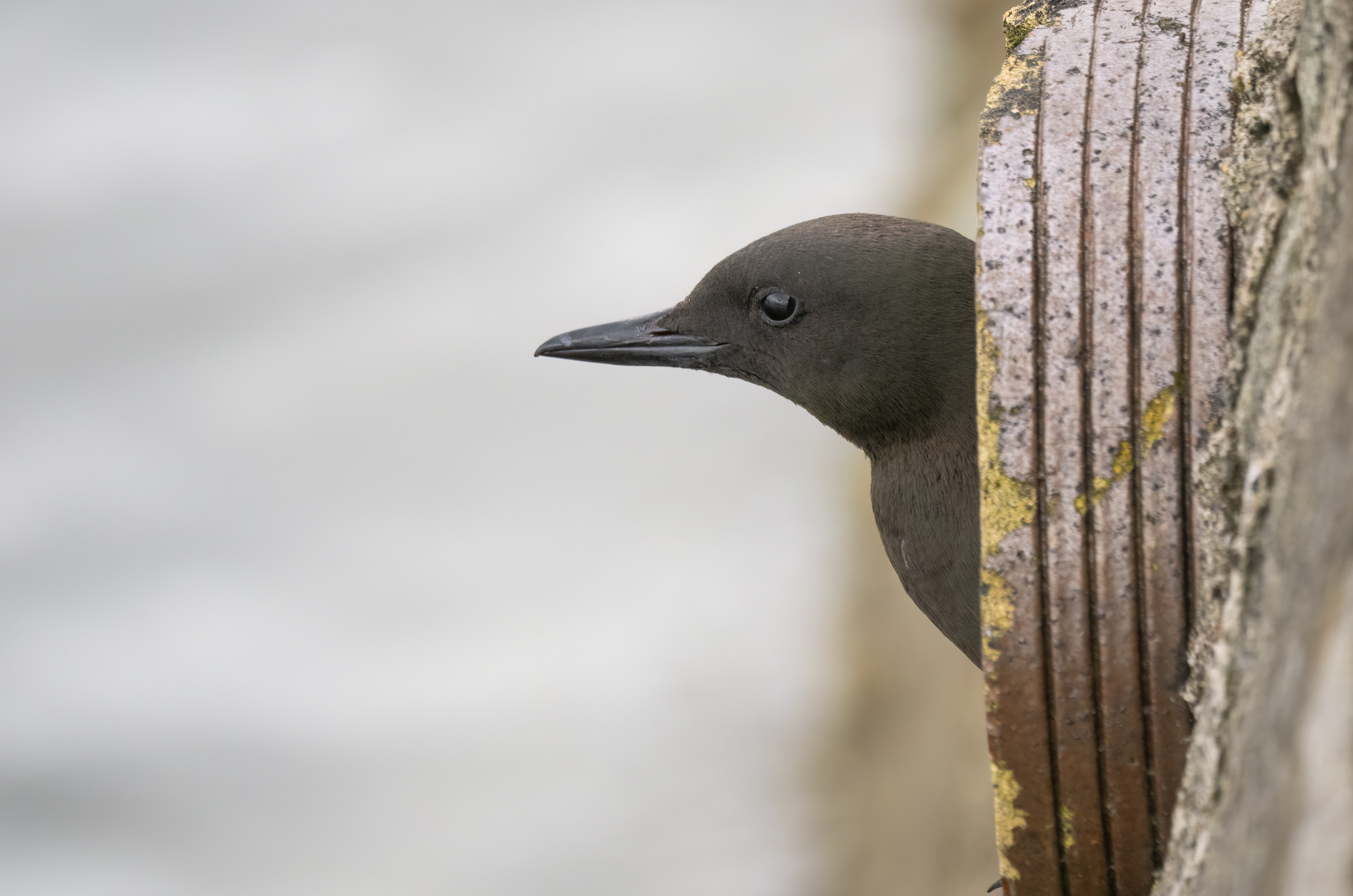
Over the past ten years, I’ve spent a lot of time wandering along the edges of the Firth of Clyde with my camera, pointing my lens at whatever wildlife I could find. In recent years, however, one bird became the subject I always searched for – the black guillemot (or tystie, as they are known in the Scottish Isles). They’re striking, full of character and somehow always manage to surprise me. Before I knew it, they had become a constant in my photography: a familiar shape on cold harbour water, a flash of red feet or that distinctive piping call drifting across the Clyde.
This blog marks the start of a short series about my time with them. It’s a look back at how this interest began, why these birds have held my attention and some of the things I’ve learned about photographing them along the way. These are encounters that have involved hours of research, a lot of luck and a couple of sore knees.
Meeting the Clyde’s black guillemots
How it started
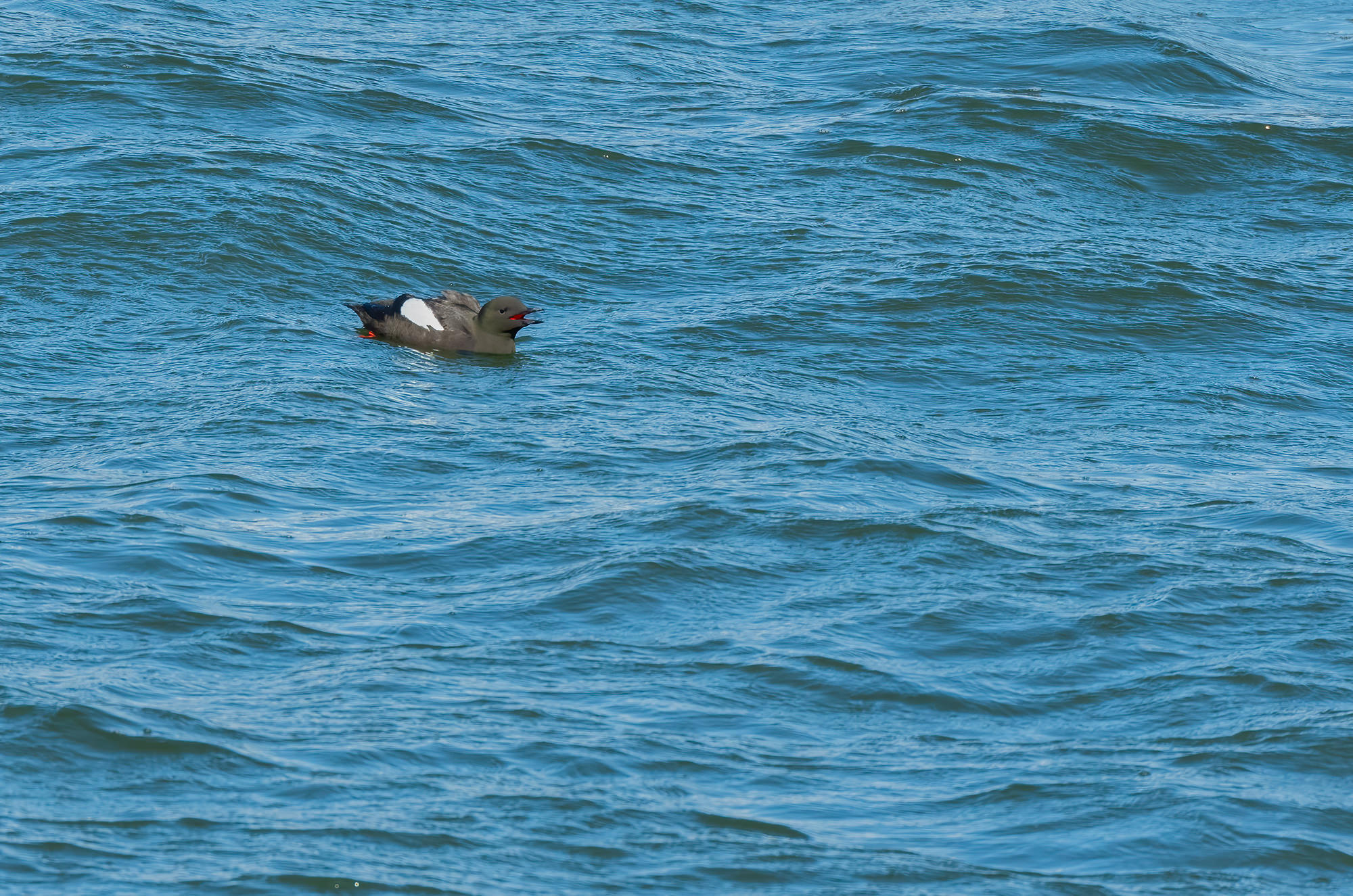
My first proper encounter with a black guillemot was, as is so often the case with seabirds, a distant sighting. On a bright, sunny day in April 2022, I was strolling along the Clyde walkway at Port Glasgow with my partner when I noticed a black bird bobbing around on the water before diving below the surface. It was far from the shore, but through my lens I recognised it as a black guillemot. I captured a few images, including one with its beak open, revealing its bright red gape. For me, this was a rare sighting – one I was delighted with – but beyond processing the images afterwards, I didn’t think much more about it.
The next time I spotted black guillemots, the encounter was completely different. It was the same location, but this time the rain was falling and my camera was in my bag – always a big mistake and one I’ve learnt the hard way. Instead of a single bird, there were two, and they were sitting on the edge of the path, under the railings. They were right there in front of me, just metres away. I was stunned to see them so close to where people regularly walked. At that point I knew very little about black guillemots and had no idea they were often seen in places like this – essentially perched on a harbour wall.
Before I could get my camera out, a family with a dog appeared on the path. The guillemots allowed them to get surprisingly close before deciding it was time to fly down to the water, leaving me standing in the rain with my mouth agape and my camera still in the bag.
Moments like that have a habit of sticking. After that close encounter, I found myself returning to look for black guillemots along the Clyde, checking different piers and harbour walls and slowly learning their habits: where they tended to feed, where they liked to perch and how to recognise their high, whistling calls.
How it’s going
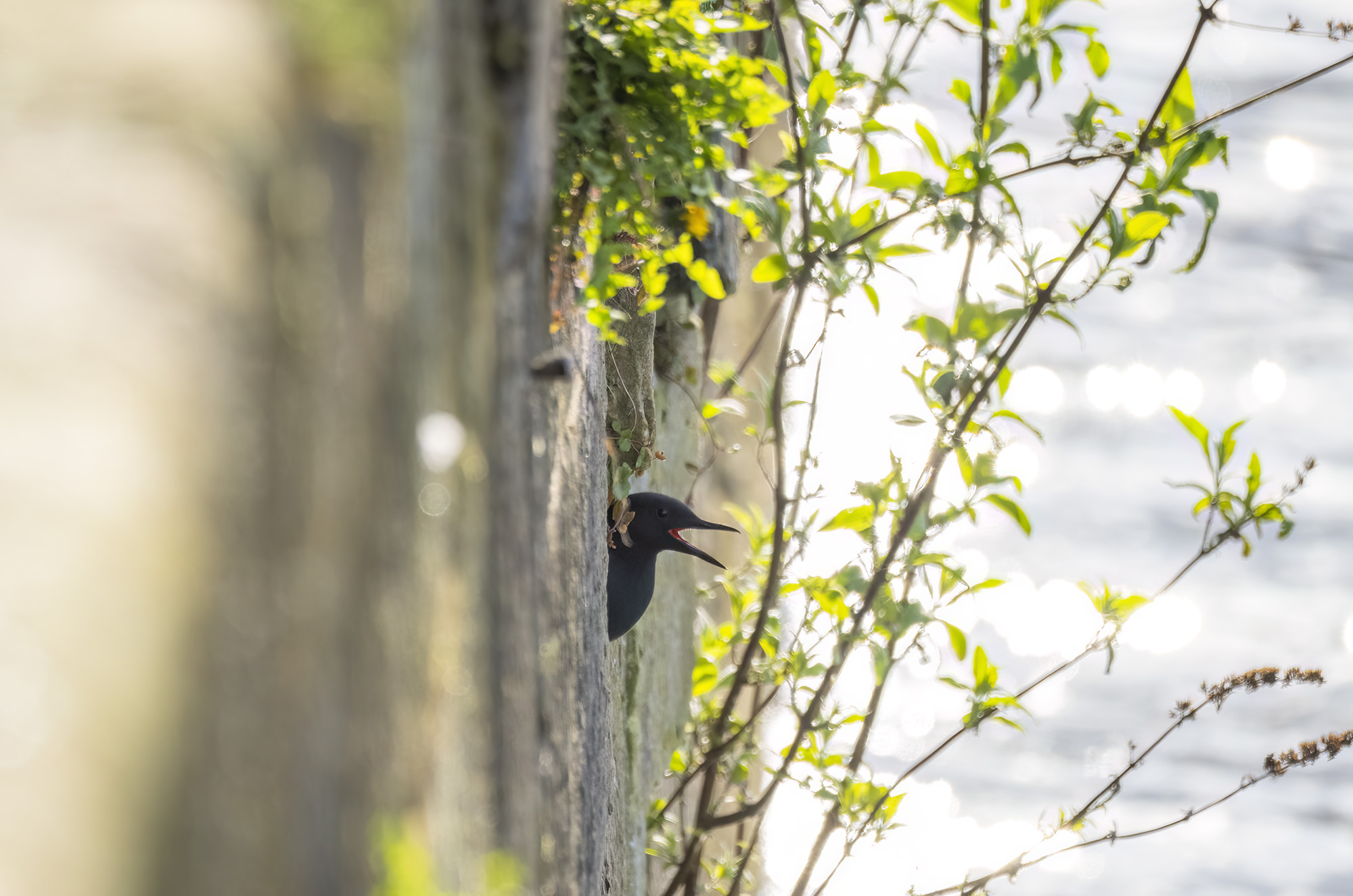
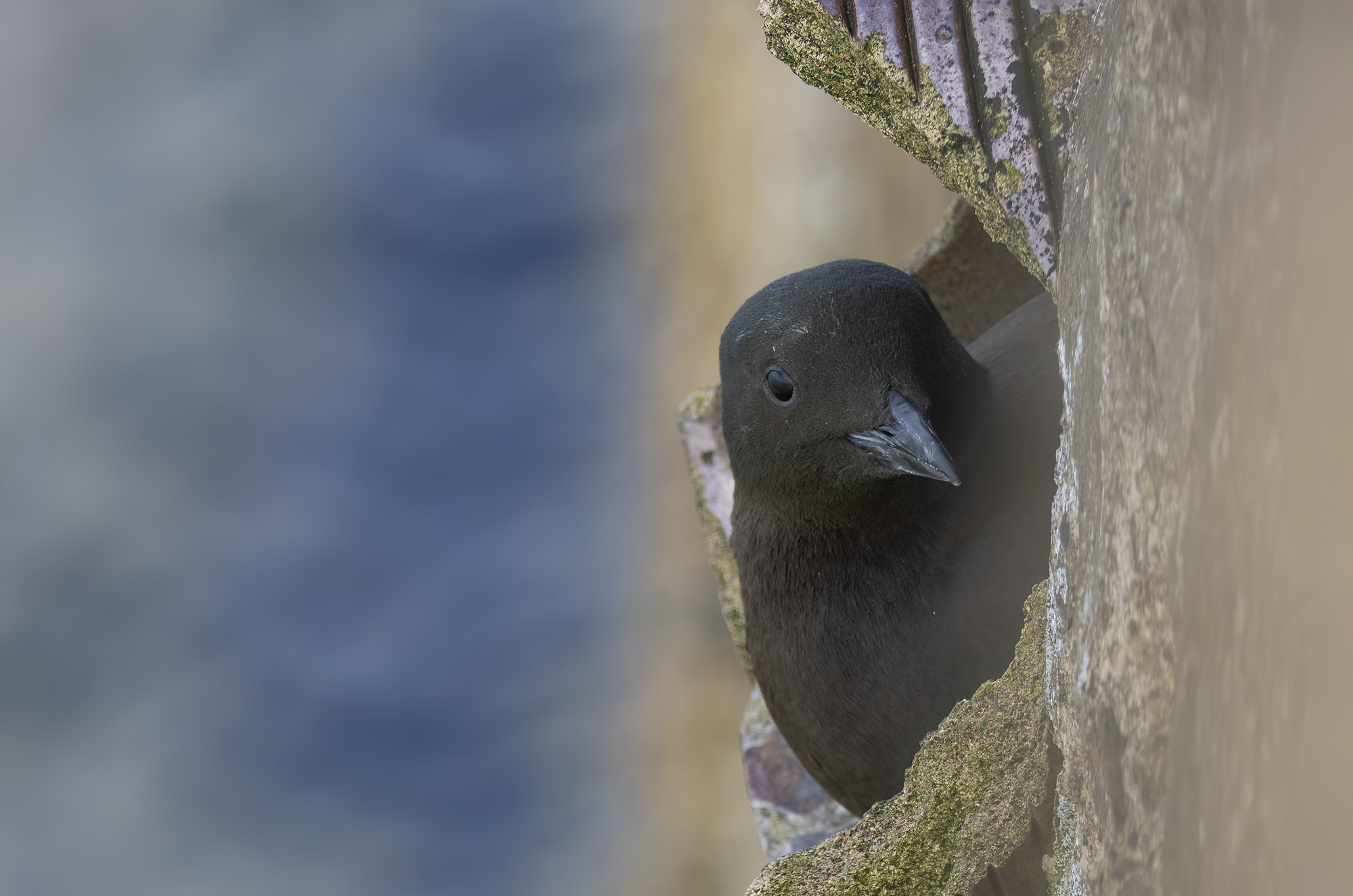
After becoming increasingly obsessed with photographing black guillemots, I was delighted to spot the opportunity to capture them popping their heads out of the sea wall at Greenock Esplanade in March 2024. I noticed birds flying to and from a drainpipe in the wall and hoped they might try to breed there. You may have heard similar stories from Oban, where black guillemots have famously nested in the Corran Esplanade sea wall, much to the surprise of visiting tourists.
My first attempt at photographing them was fine, but the subject was a little distant and backlit. It was OK, but not quite what I was hoping for.
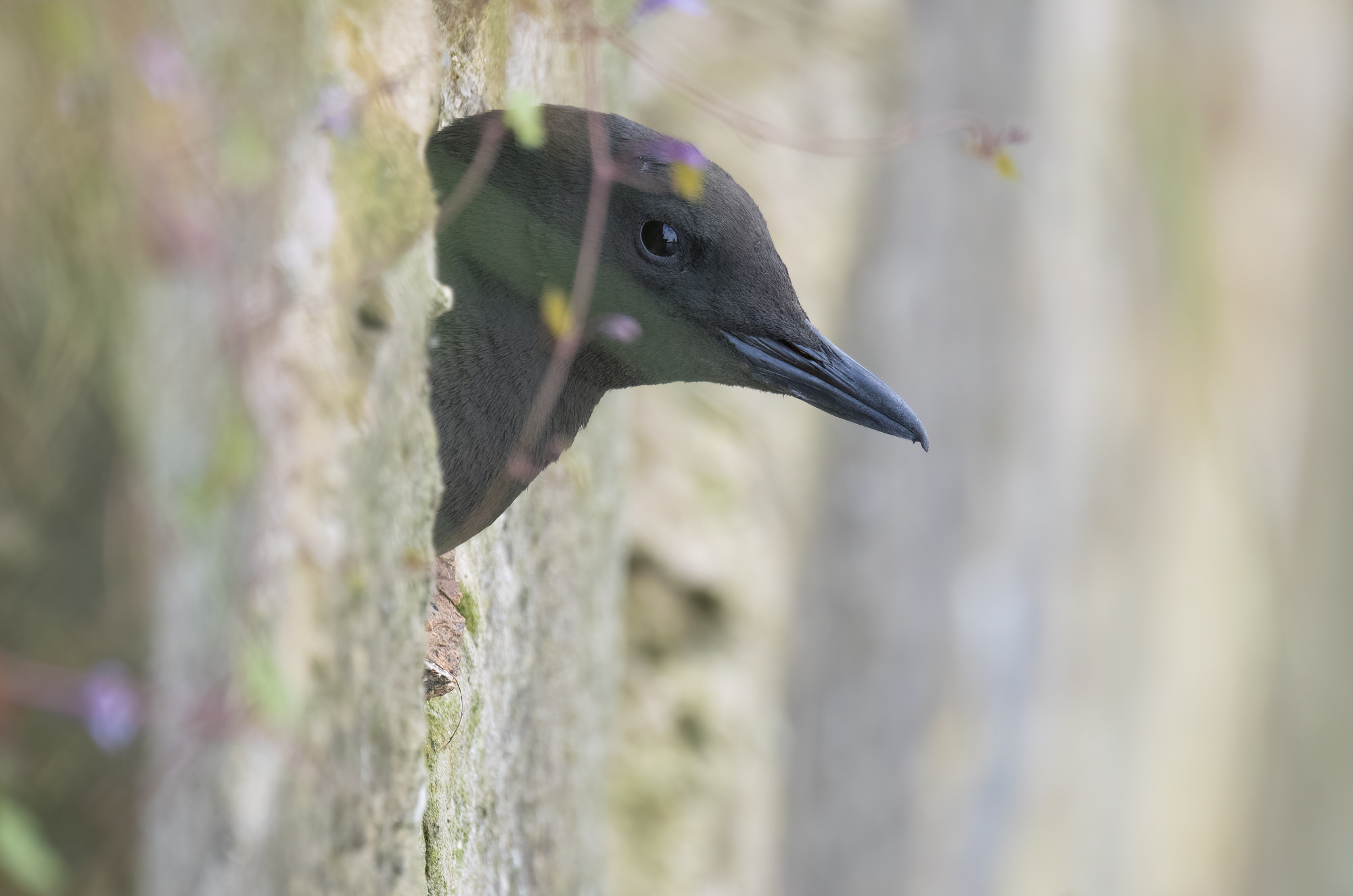
In June this year, I tried again, and experience paid off. I set myself up on the ground behind a barrier and waited. When one finally popped its head out, I was in the perfect position to photograph it at closer quarters without disturbing it. This was the image I had originally hoped for, and I was delighted to get it. It even reached the second round of judging in the 2025 British Wildlife Photography Awards, although it didn’t make the final selection for the book.
Why the Clyde is perfect for black guillemots – and photographers
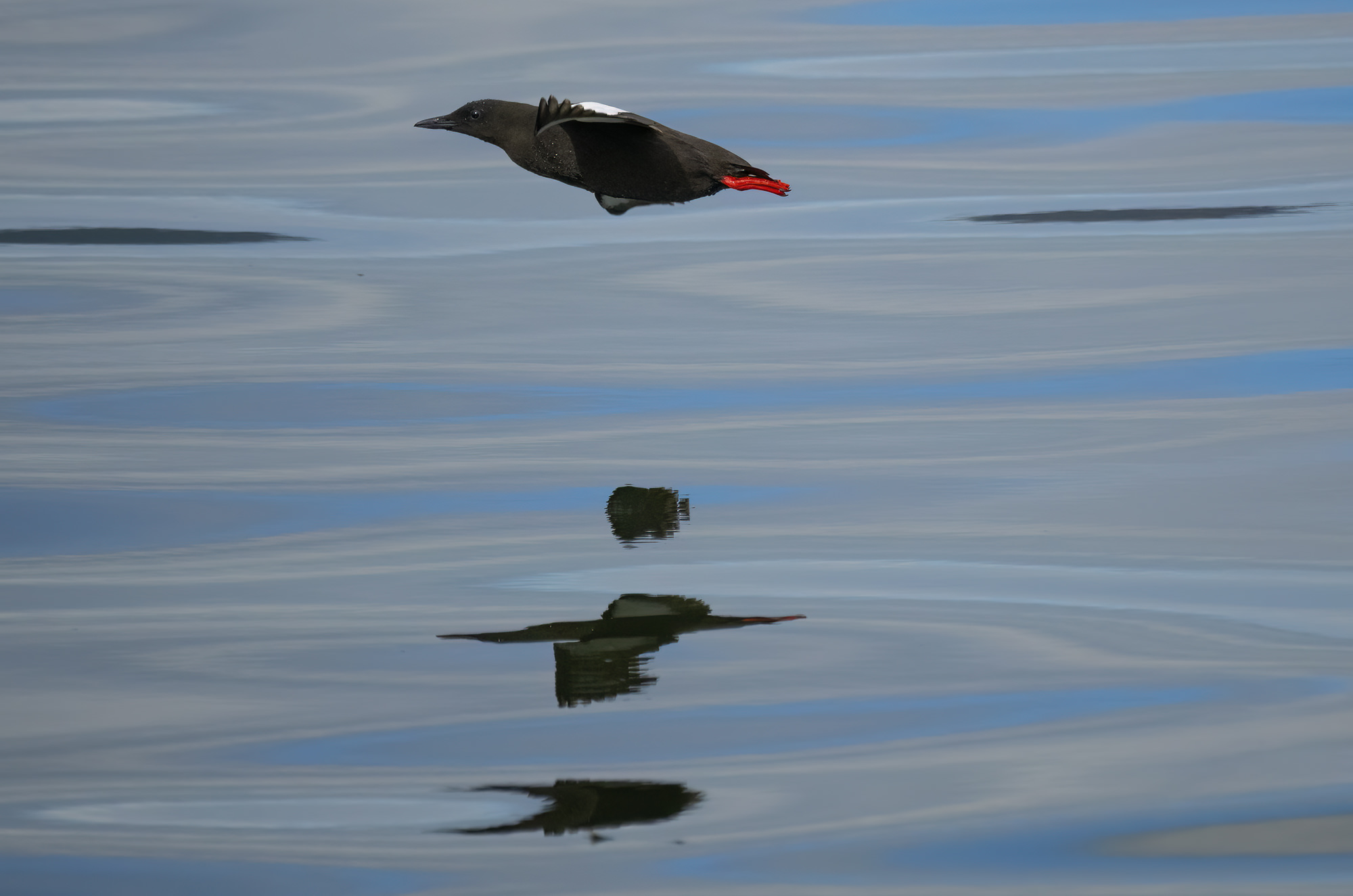
One of the things I’ve come to appreciate is just how accessible black guillemots are along the Clyde. While many seabirds stay tucked away on cliffs, these birds seem perfectly at home among piers, harbour walls and the various bits of coastal structure we’ve built over the years. From a photographer’s point of view, that creates opportunities you simply don’t get with many other seabird species. For me, photographing black guillemots combines two loves: urban wildlife photography and seabird photography.
A few things that make the Clyde particularly special:
- Sheltered water – often giving reflections and calmer surfaces to work with
- A mix of natural and industrial backgrounds – surprisingly photogenic when the light hits right
- Regular sightings – black guillemots are creatures of habit, and the more you watch them, the easier they are to predict
- Year-round presence – they don’t all disappear when winter rolls in
My black guillemot teachers – early lessons in fieldcraft
Although black guillemots are often quite tolerant of people, photographing them still requires patience and care. It took time to understand how best to work around them.
- Learning their comfort zones
In the beginning, I sometimes stepped too close or moved too soon. They rarely panicked, but they drifted just far enough away to make a clean image difficult – a polite reminder that I wasn’t quite getting it right. With time, I learned to watch for subtle signs: relaxed preening, gentle vocalisations or simply a bird going about its business without giving me a second glance. - Making use of the surroundings
Harbour walls, steps, railings and mooring posts all became useful. They gave me something to lean against, hid my movement and helped me get the low angles I love. Shooting at eye level – or as close as possible – makes such a difference to the feel of an image. - Light, as always, makes all the difference
On brighter days, their glossy black feathers shine, but it’s easy to blow the highlights on the white patches. On overcast days, the colours soften and the contrast becomes kinder, though their gorgeous plumage can look more muted. Every kind of light teaches you something.
Developing a project without planning one
What began as a few chance encounters slowly grew into something more. I started to notice patterns: birds appearing at the same spots, repeated behaviours and how different weather or tides influenced their movements. I also learned which places were worth visiting at different times.
At some point, I realised I wasn’t just taking photos for the sake of it – I was unintentionally building a long-term project. The more familiar the birds became, the more rewarding each outing felt, and the more I fell for their charms.
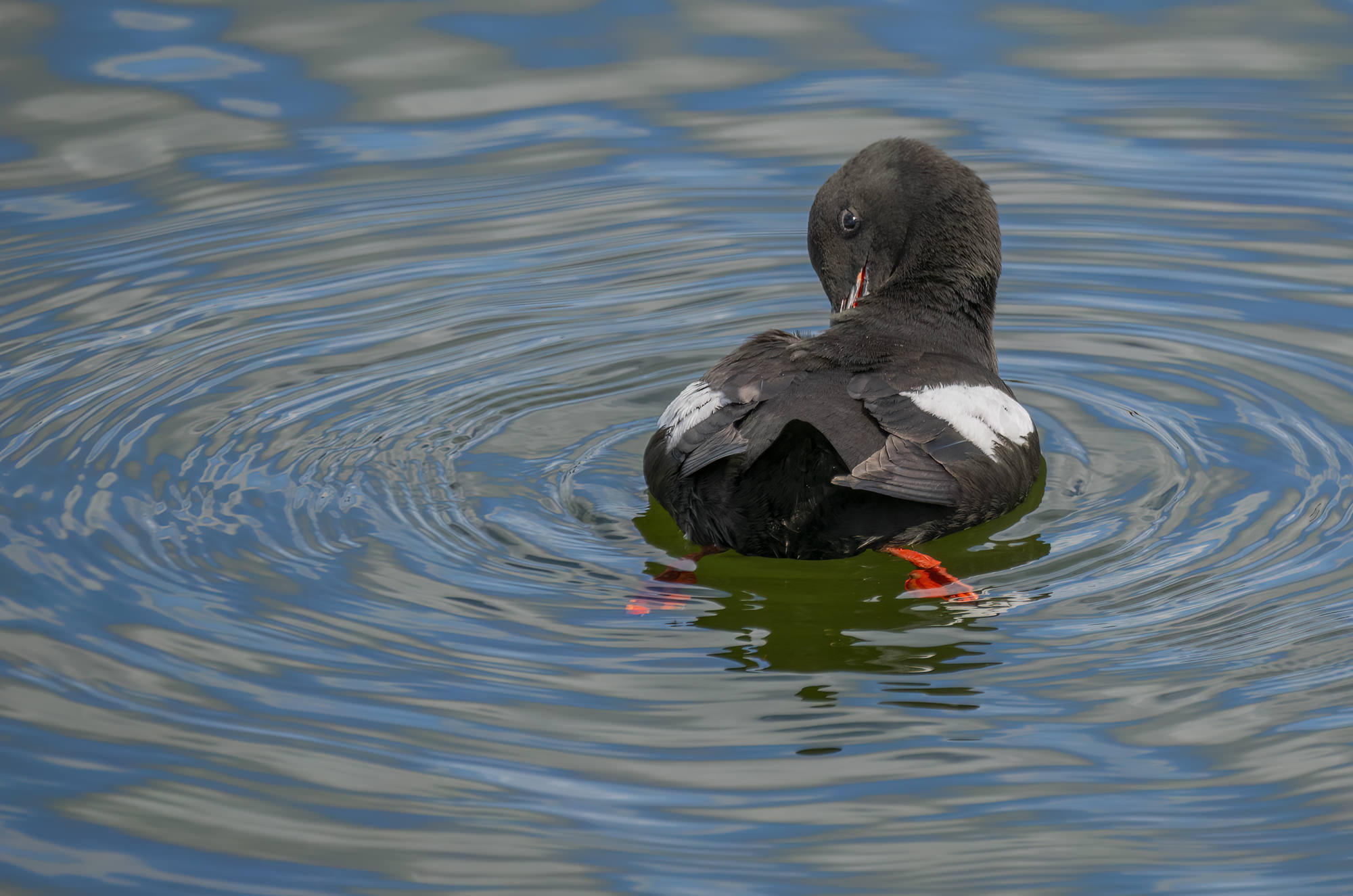
Spending time with black guillemots along the Clyde has reminded me to slow down and pay attention to the small details. They’ve turned ordinary strolls by the water into something a little more special and reminded me that some of the best photographic opportunities come from simply falling in love with a species and returning to a place again and again.
In the next blog, I’ll look more closely at their behaviour throughout the year and share what I’ve learned about photographing them in a way that captures both their personality and the spirit of the Clyde. Welcome to my ongoing obsession.