
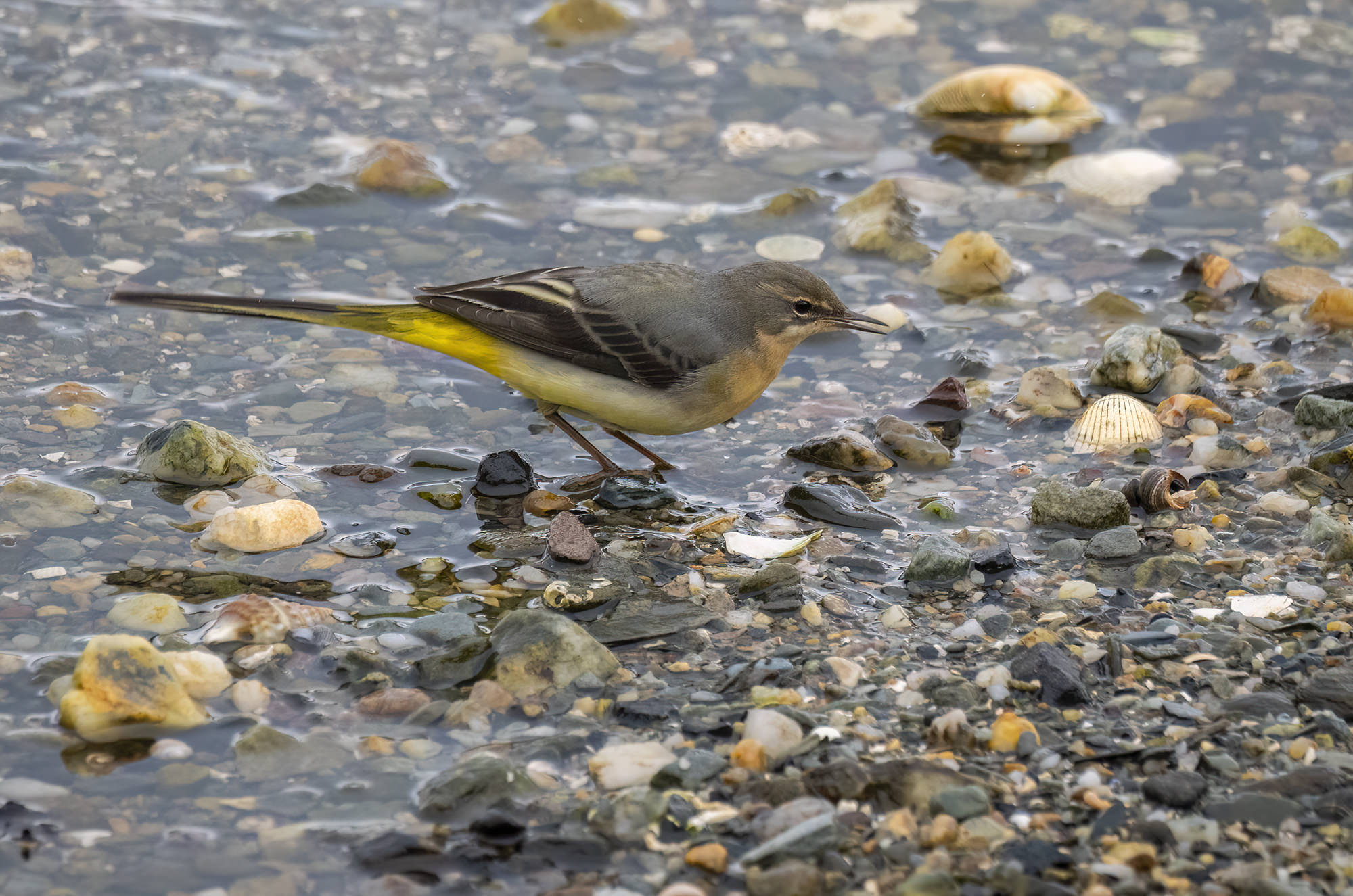
These are the months when colour can be hard to find. In late autumn, as it slips into winter, we often endure monochrome days of flat light, cloud cover and rain. The leaves that once dazzled in yellow, gold, rust and red now lie sodden on the ground – turned dark and brown in churned mud. Blue skies and sparkling frosts are often fleeting.
So it’s a small relief when nature surprises us. A quick flick of bright colour, a lively movement – exactly what you least expect – can lift a dull winter walk. I count myself lucky that, at this time of year, even the dullest day on my local patch is often brightened with the fizz of lemon-drop yellow and the sparkling, high-pitched call of the grey wagtail.
And yes, the name is a little confusing. Because while this species does have soft grey upperparts, the vibrant yellow underparts are pretty hard to miss. However, a cursory glance at a yellow wagtail’s all-over golden glow clearly shows why the grey wagtail had to settle for the grey moniker.
From highs to lows
The grey wagtail was once a bird most often associated with upland, fast-flowing rivers, but increasingly it has become a familiar sight in lowland areas – even in urban fringes. Improved water quality has played a key role in this shift, with even our towns and cities now providing cleaner rivers and streams where insect life thrives.
This means the grey wagtail has become far more accessible. No longer just a river-gorge specialist – now more and more likely to brighten your local patch, even close to home.
Yet, while their shift from the uplands to the lowlands has meant that, for many of us in the UK, grey wagtails are easier to spot, they are currently classified as Amber on the UK Red List for birds – a reminder of a long-term, moderate decline in the breeding population. Its status was once Red; the improvement suggests some resilience but still underscores the fragility of many of our common birds.
Winter wagtails
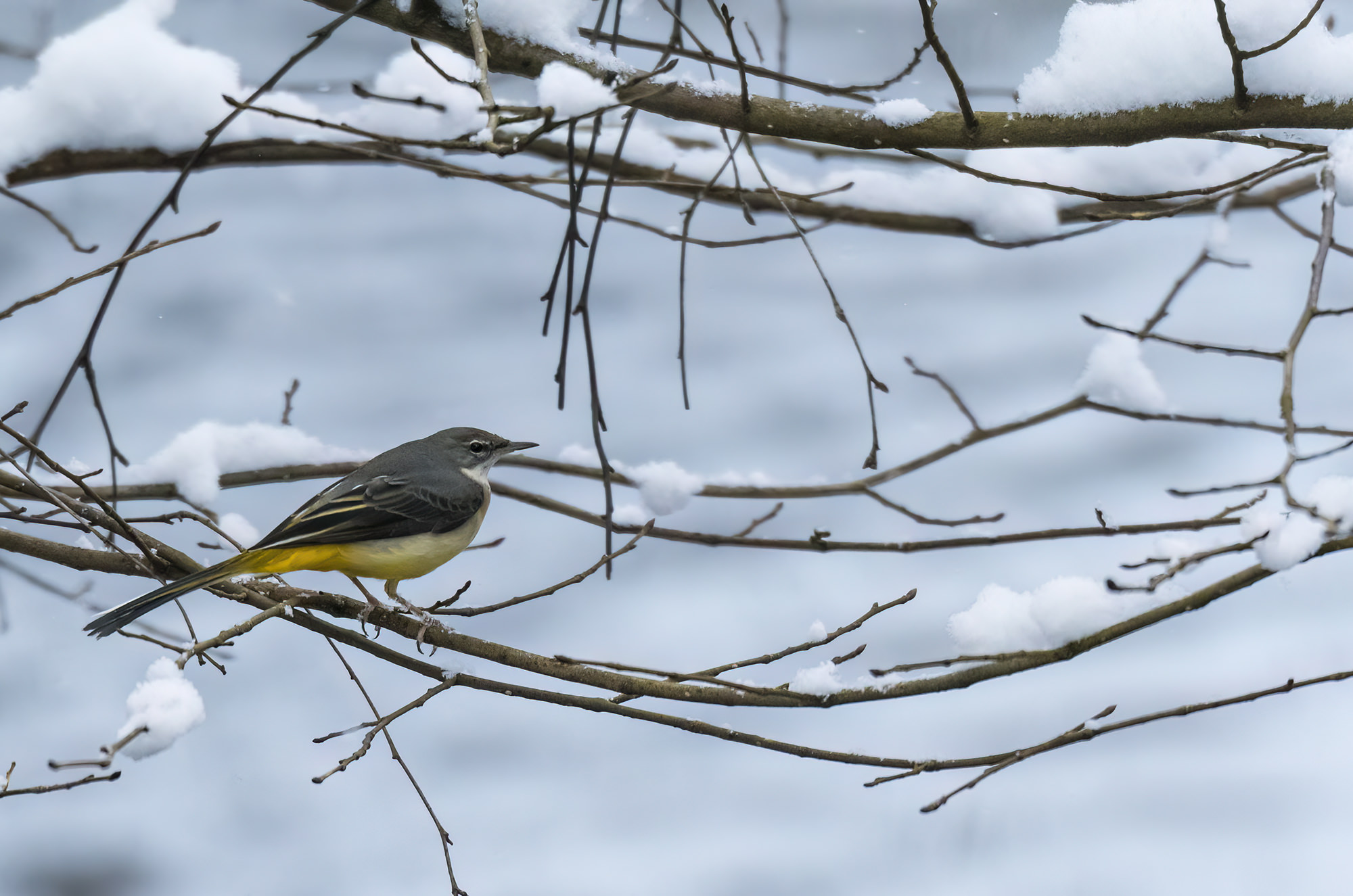
Looking out for grey wagtails on winter walks along local rivers has led to some lovely encounters. On a snowy day, I paused on a bridge in the park when a pair came bouncing through the branches of a nearby tree, sending little showers of icy white crystals fluttering onto the mallards below. They didn’t hang around for long, and I think I only managed to photograph the female, which lacks the male’s black bib.
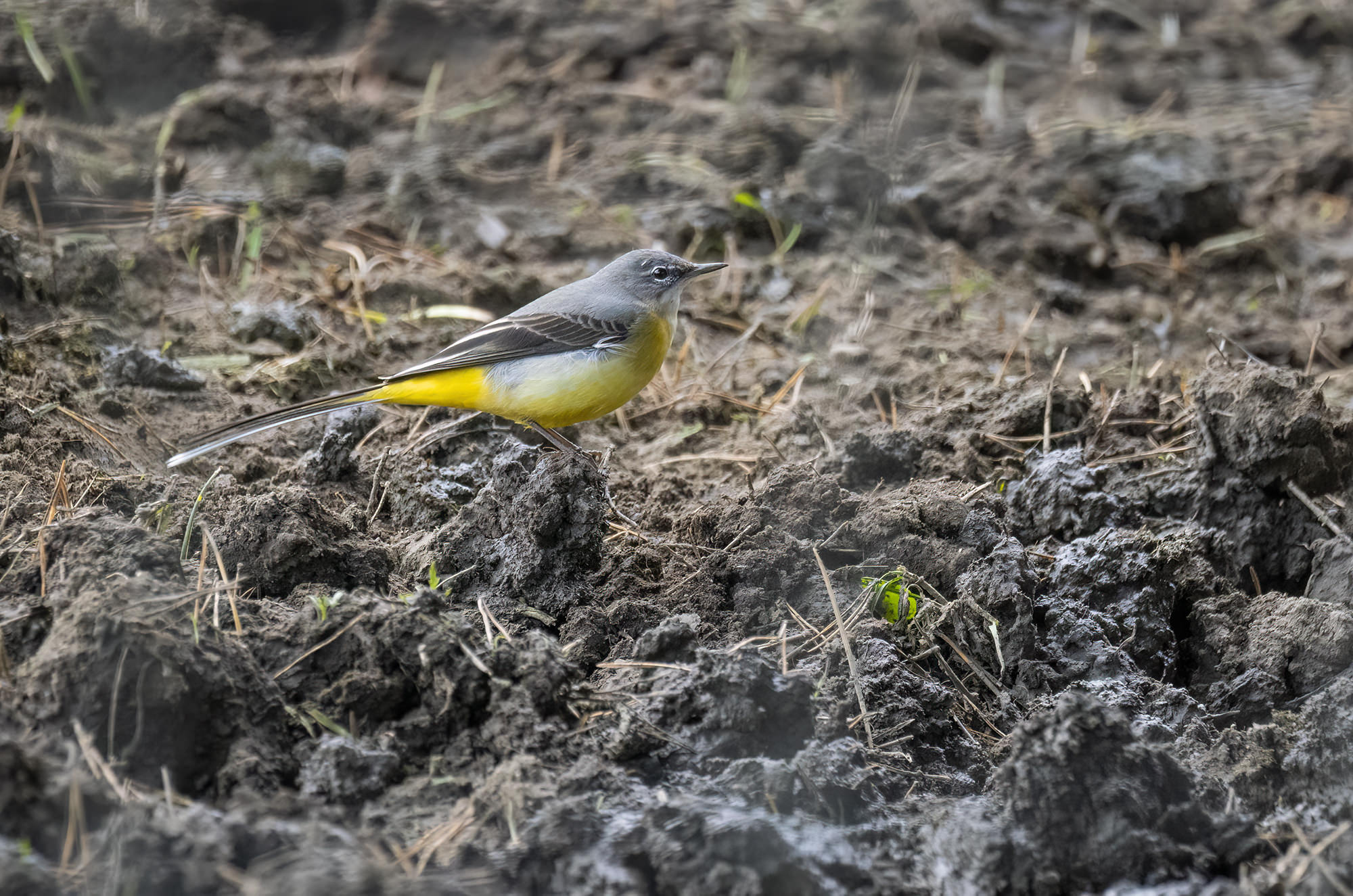
Grey wagtails may not be winter migrants, but I’ve noticed they appear at this time of year in the field containing the highland cattle I walk past almost every day. On most visits they’re busy plucking insects from the churned-up mud around the cattle trough. If I hear their calls, I’ll approach slowly and quietly, as they are easily flushed. However, with the path being popular with dog walkers and joggers, my ability to get close enough for decent images often depends on the level of disturbance.
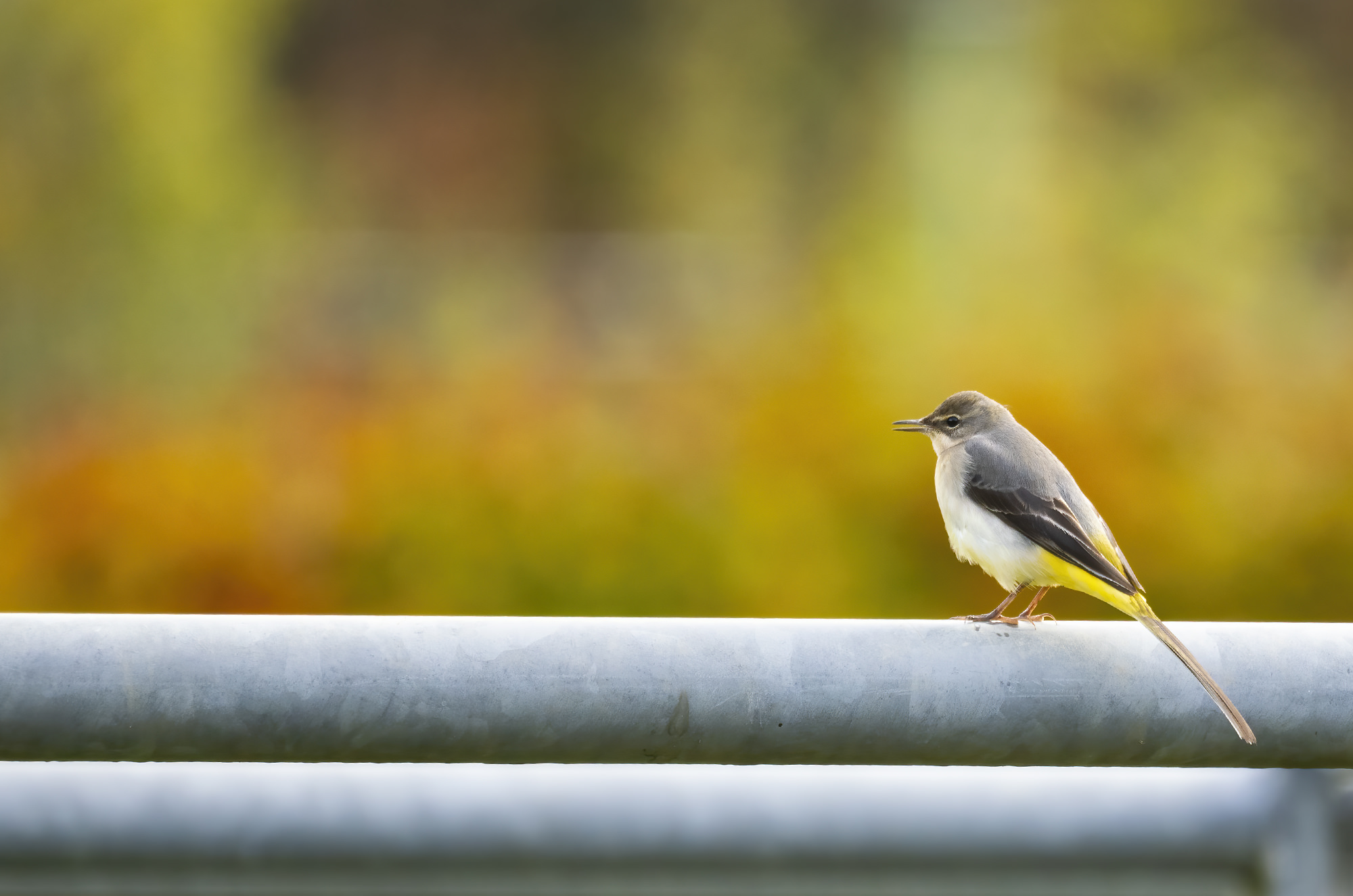
If disturbed, they tend to fly away over the nearby houses and down into the fields beyond. But if I’m lucky, a bird will sometimes perch on the field gate, offering a chance to photograph it against the soft, out-of-focus autumn leaves.
As well as being a river-loving bird, grey wagtails can also be found in farmyards, at ponds, on wet pastures and even around puddles – essentially anywhere with a small source of water where they can forage for ants, midges and small molluscs.
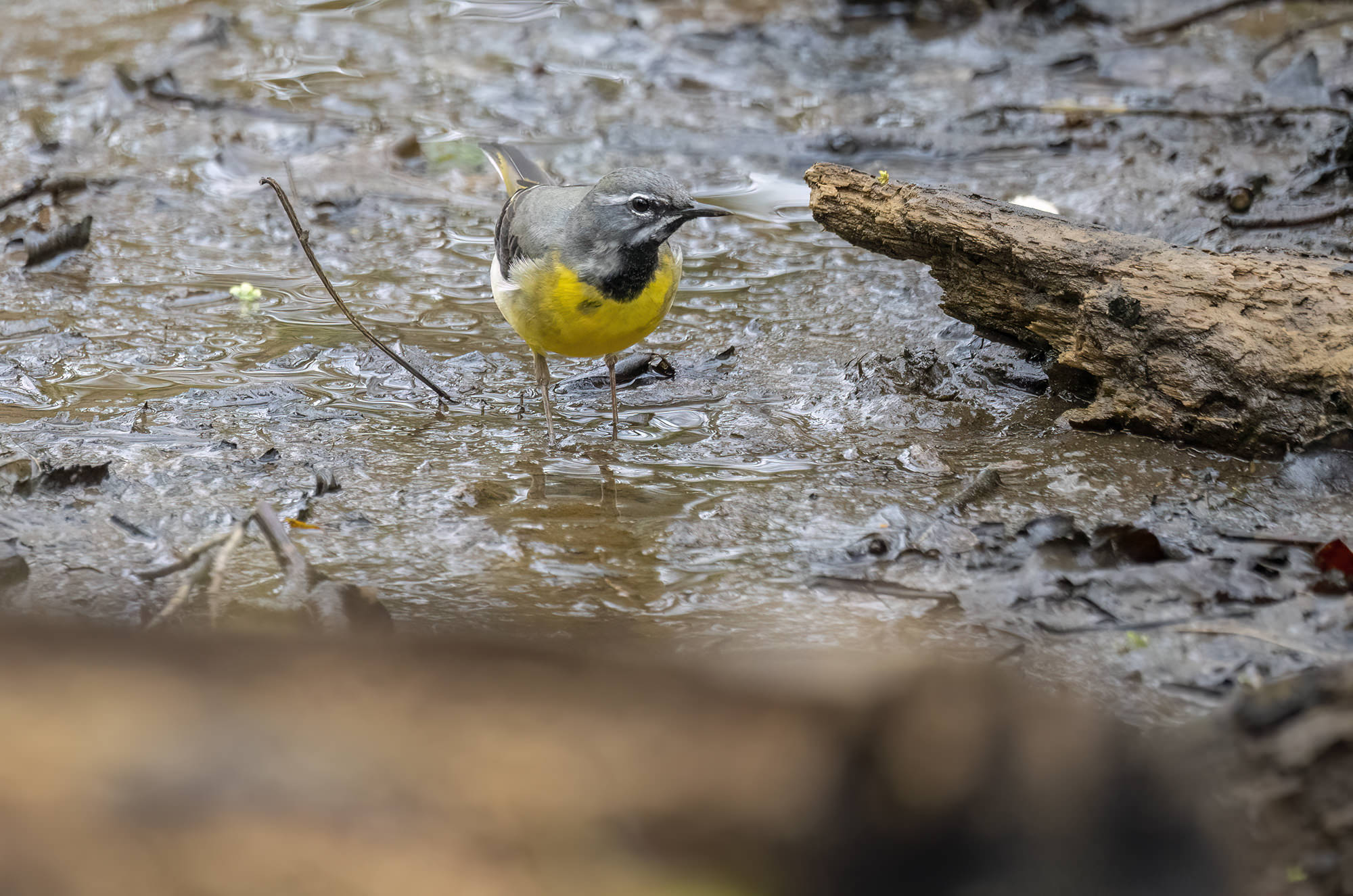
These moments – the lemon-yellow breast glowing against muted winter browns – are exactly what I love about wildlife photography: a fleeting spark of colour and life, just when the world seems settled to grey.
Why “wag”?
The grey wagtail’s characteristic tail-flicking and pumping – the “wag” – is more than an amusing habit. Several theories have been suggested to explain the behaviour: perhaps it’s a signal of alertness or a way to flush prey. Some studies even suggest wagtails wag more when predators are near. The short, rapid tail-pumps may be a small but vital survival tool – and also a wonderful photographic opportunity, especially in the crisp stillness of winter.
Having the right shutter speed is crucial for photographing a bird that bounces as much as the grey wagtail. A fast shutter speed is essential, unless you’re intentionally aiming to capture a hint of motion blur in their distinctive dance.
The grey wagtail certainly isn’t a mellow bird. Constantly moving, it isn’t always easy to capture. But each one you see – each flash of yellow on a dull day, particularly in urban environments – is a reminder of the difference that clean watercourses and nature-friendly farming can make to our environment, for wildlife and for us.