
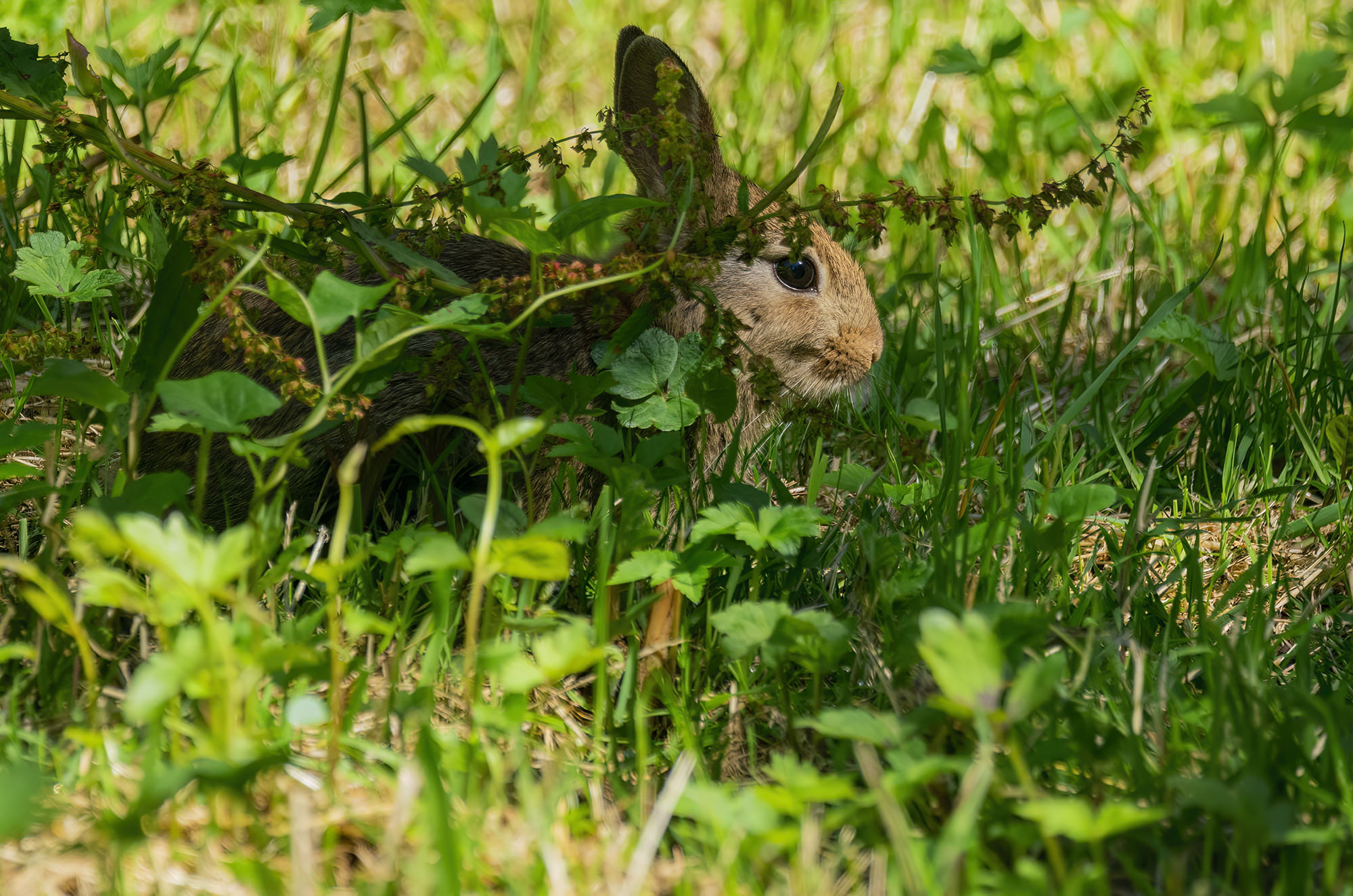
On one of the hottest days of the year, as we ambled along the path cutting through Cardross Golf Course, a group of brown rabbits suddenly bounced out in front of me from the dense tangle of bramble bushes. While most wildlife photographers might have walked on by, I couldn’t resist pausing mid-walk. Here was my chance to photograph one of Britain’s most underappreciated subjects.
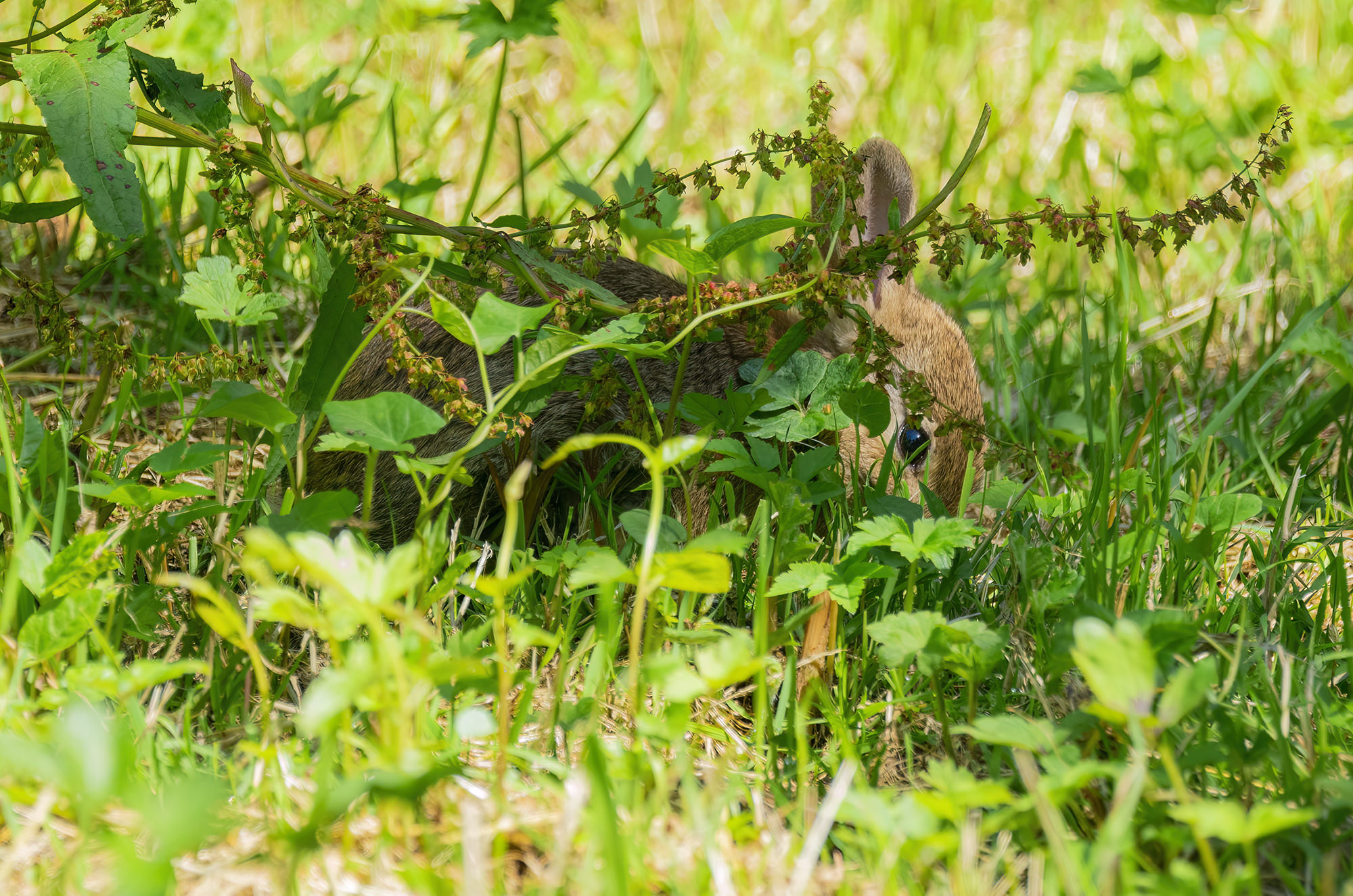
If many UK wildlife photographers’ Instagram profiles are anything to go by, brown rabbits are thoroughly overshadowed by their long-legged hare cousins in the popularity stakes. Apart from Karen Miller’s recent images from Orkney, it’s rare to see much love for wild bunnies. I suppose if you live near a large rabbit population, their presence becomes easy to take for granted.
Rabbits aren’t technically native to the UK – though they arrived so long ago they feel like they are. Historical records suggest that humans brought them over as early as the 1st century, though how and when the wild population became fully established remains unclear.
I can certainly see the appeal of hares, with their explosive speed and dramatic boxing bouts. But for me, the humble, hopping rabbit is an equally exciting subject, full of character and charm waiting to be captured. By moving as quietly as possible, I managed to photograph them as they fed. The harsh sunlight and deep shadows falling across the path may have worked in my favour – possibly making it harder for the rabbits to detect us approaching. My excitement was matched only by my later frustration when a couple walked straight past the spot I had quietly settled into, sending the rabbits fleeing back to cover.
My rabbit teachers
I should explain my particular enthusiasm for rabbit photography. I’ve previously written about a place I affectionately nicknamed “Bunny Park“, where I was almost guaranteed to spot at least one rabbit on every visit. These rabbits became my teachers, showing me the value of patience and fieldcraft – how to stay still, observe quietly, and earn the trust of nervous wildlife. These are lessons I’ve applied again and again with other wary animals like roe deer.
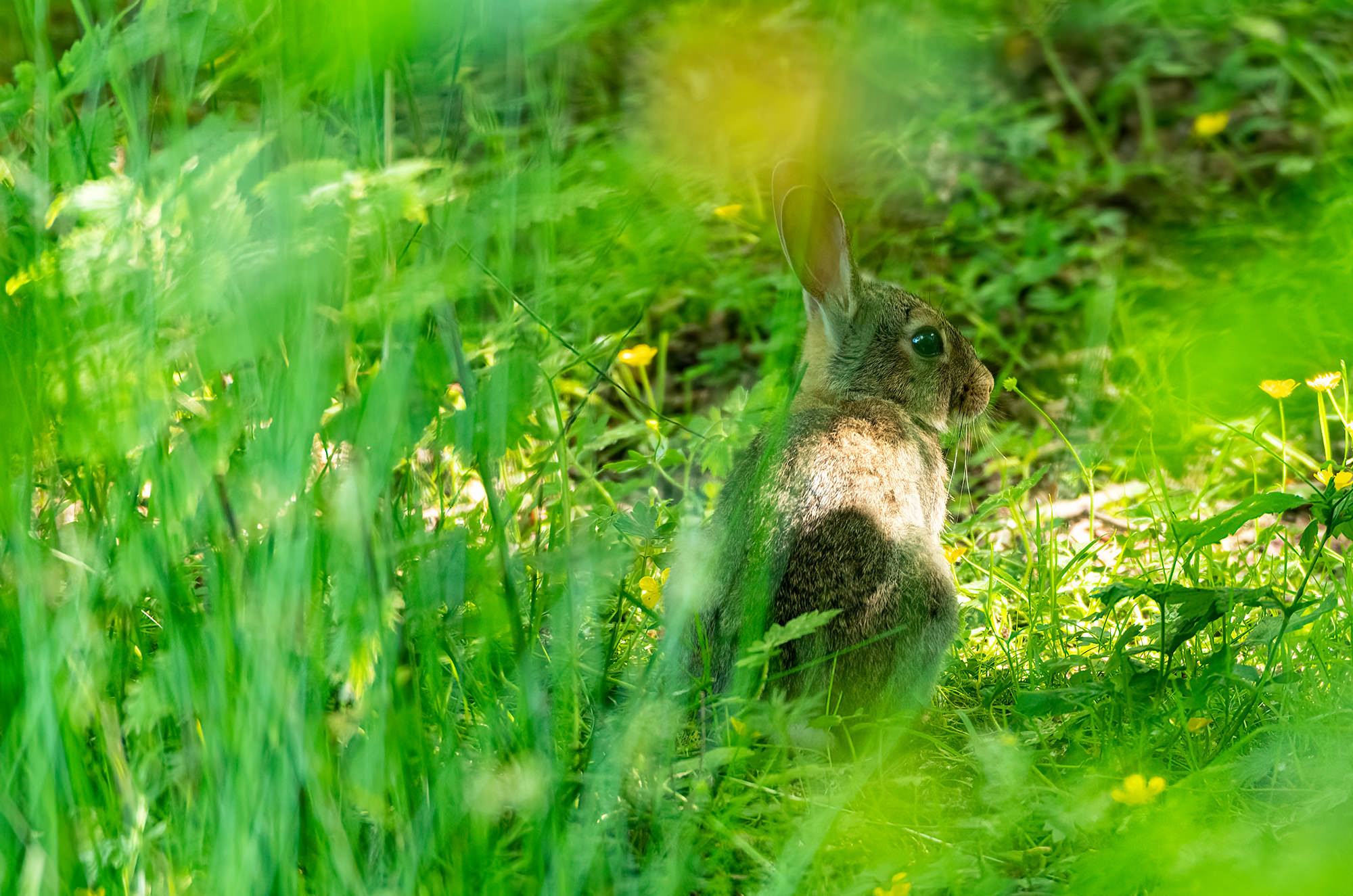
Sadly, we haven’t seen any rabbits on our last few walks there. The long, unnibbled grass – taller than I’ve ever seen it – tells its own story of a sharply declining population.
Disease and decline
This change coincided with damage caused by storm Éowyn, which temporarily closed the park. Many trees were brought down, and I suspect the warren – located in the same area – may have been destroyed or severely damaged. It’s likely that some of the rabbits didn’t survive.
But the absence of my “Bunny Park” rabbits reflects a much wider and more troubling trend. Wild rabbit numbers across the UK have plummeted in recent years, largely due to Rabbit Viral Haemorrhagic Disease (RHDV), a highly contagious and deadly illness affecting both wild and domestic rabbits.
This comes on top of myxomatosis, another nearly always fatal disease that spreads between rabbits and via mosquitoes and fleas. While myxomatosis causes obvious symptoms, RHDV often strikes without warning. If you keep rabbits as pets, this is a critical reminder of the importance of vaccinations.
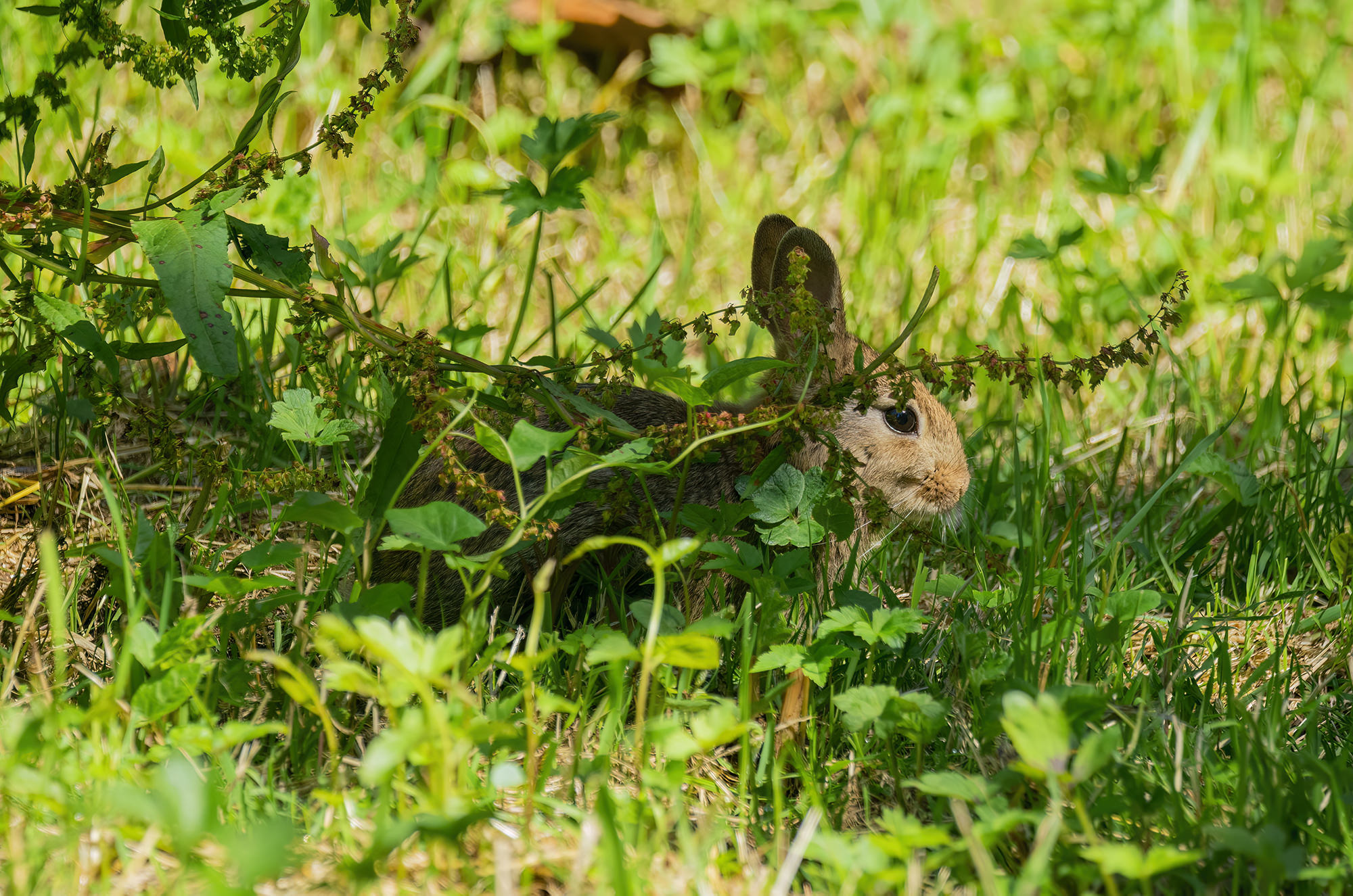
Some people may welcome fewer rabbits, particularly in areas where they’re seen as agricultural pests. But the decline has serious ripple effects. Predators like buzzards and stoats rely on rabbits as a key food source. When myxomatosis first arrived in the 1950s, those predators had more alternative prey to fall back on – but today, with much of our wildlife already under pressure, the drop in rabbit numbers is far more concerning.
Fittingly, as we explored the nearby modernist ruin of St Peter’s Seminary, a buzzard soared overhead – perhaps searching for what once was abundant prey.
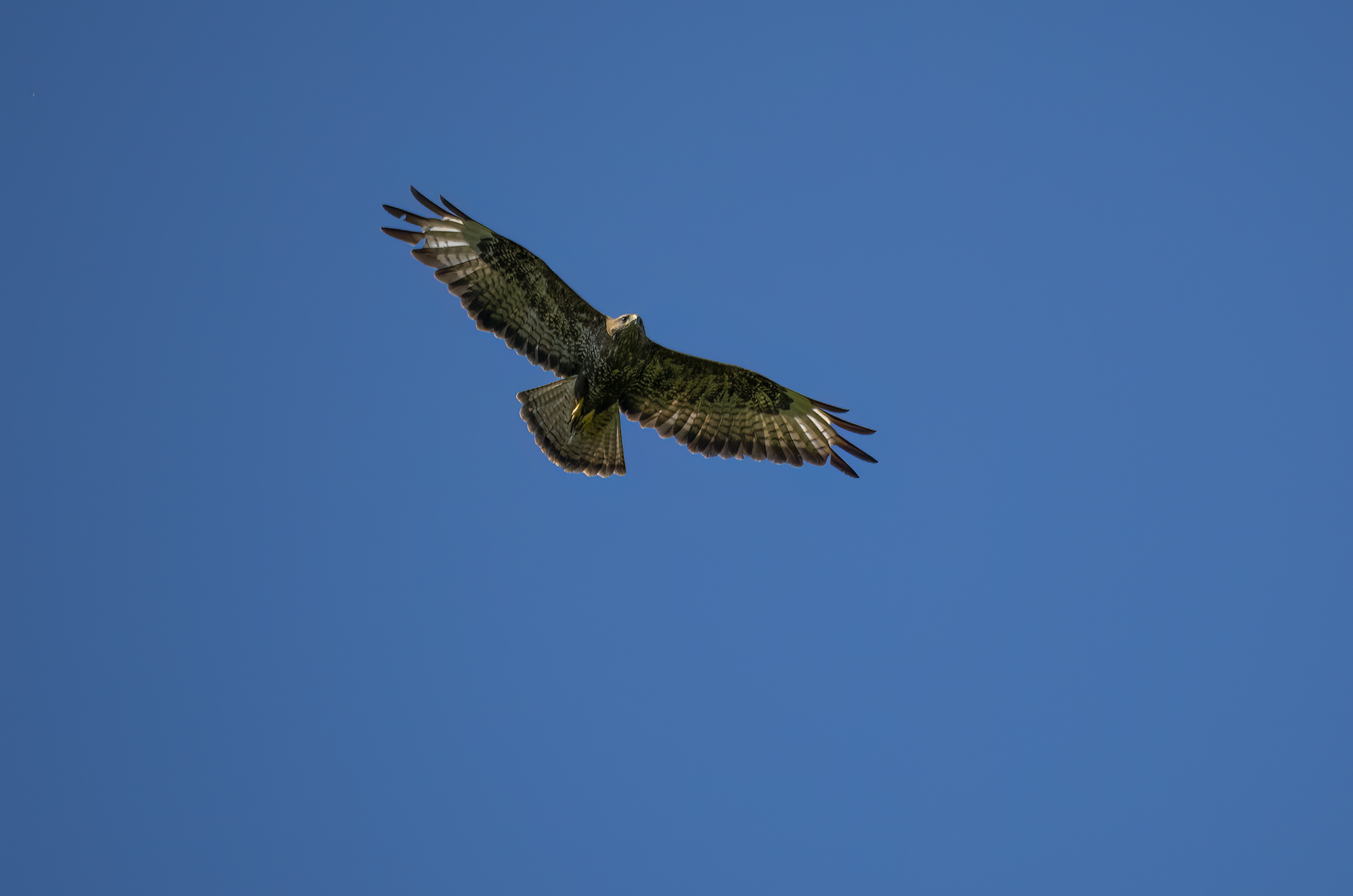
Bunny toiler
On our return walk through the stifling heat, a couple of rabbits reappeared, as if to reward my patience. After briefly chasing each other around in playful circles, they seemed to agree it was far too hot for such antics. One youngster flopped down on the path, offering me another perfect photo opportunity.
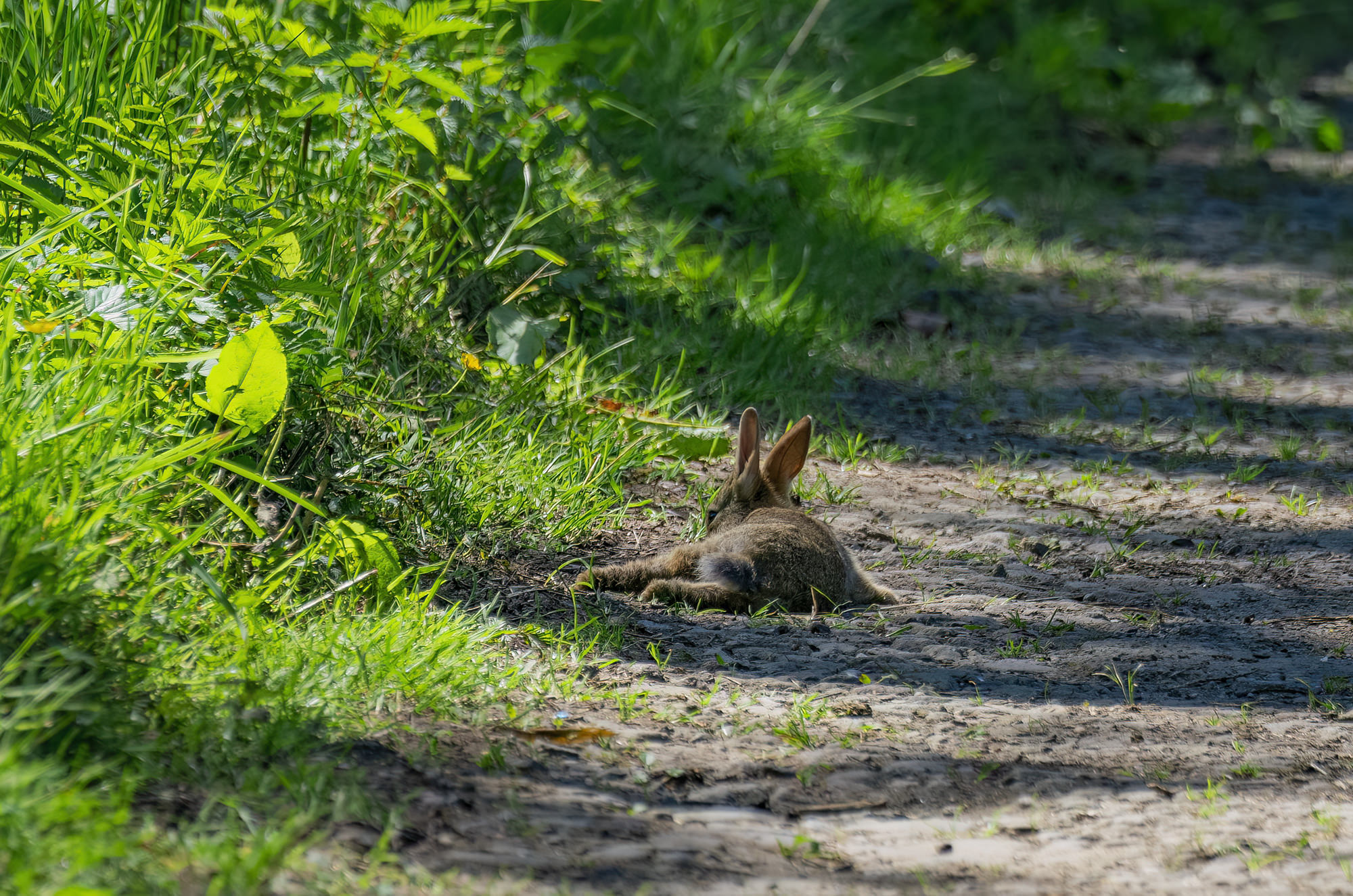
In the bright light, I could see the veins close to the surface of its large ears – part of a clever biological system for regulating body temperature. I, on the other hand, was simply sweating through my t-shirt.
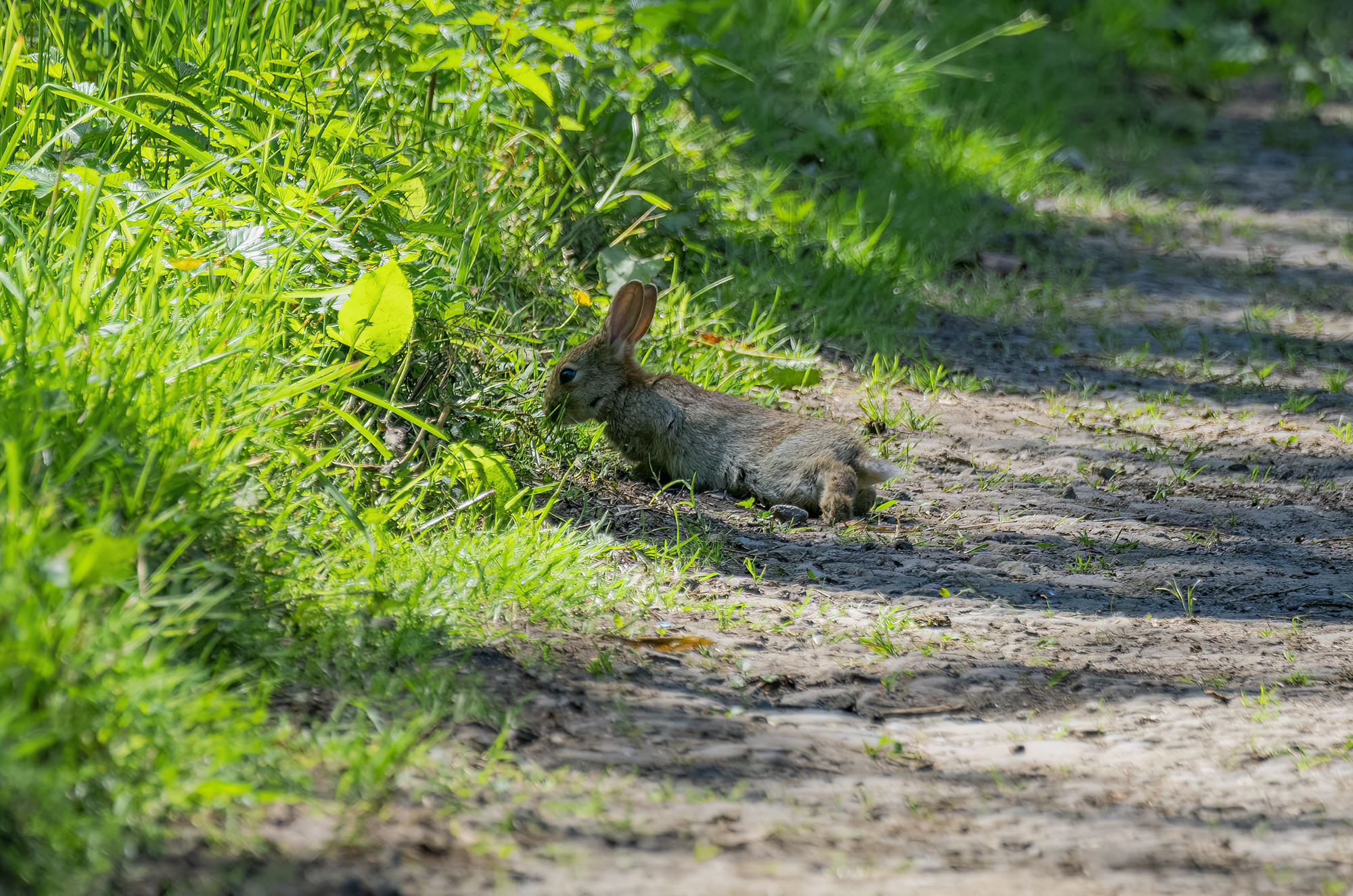
Unfortunately, the same couple from earlier passed by again, unknowingly scattering the rabbits back into the undergrowth. They probably thought I was a bit odd, crouched there in the sun with my camera, seemingly transfixed by a few brown bunnies. But their bold behaviour under the boiling sun was pretty cool to capture.
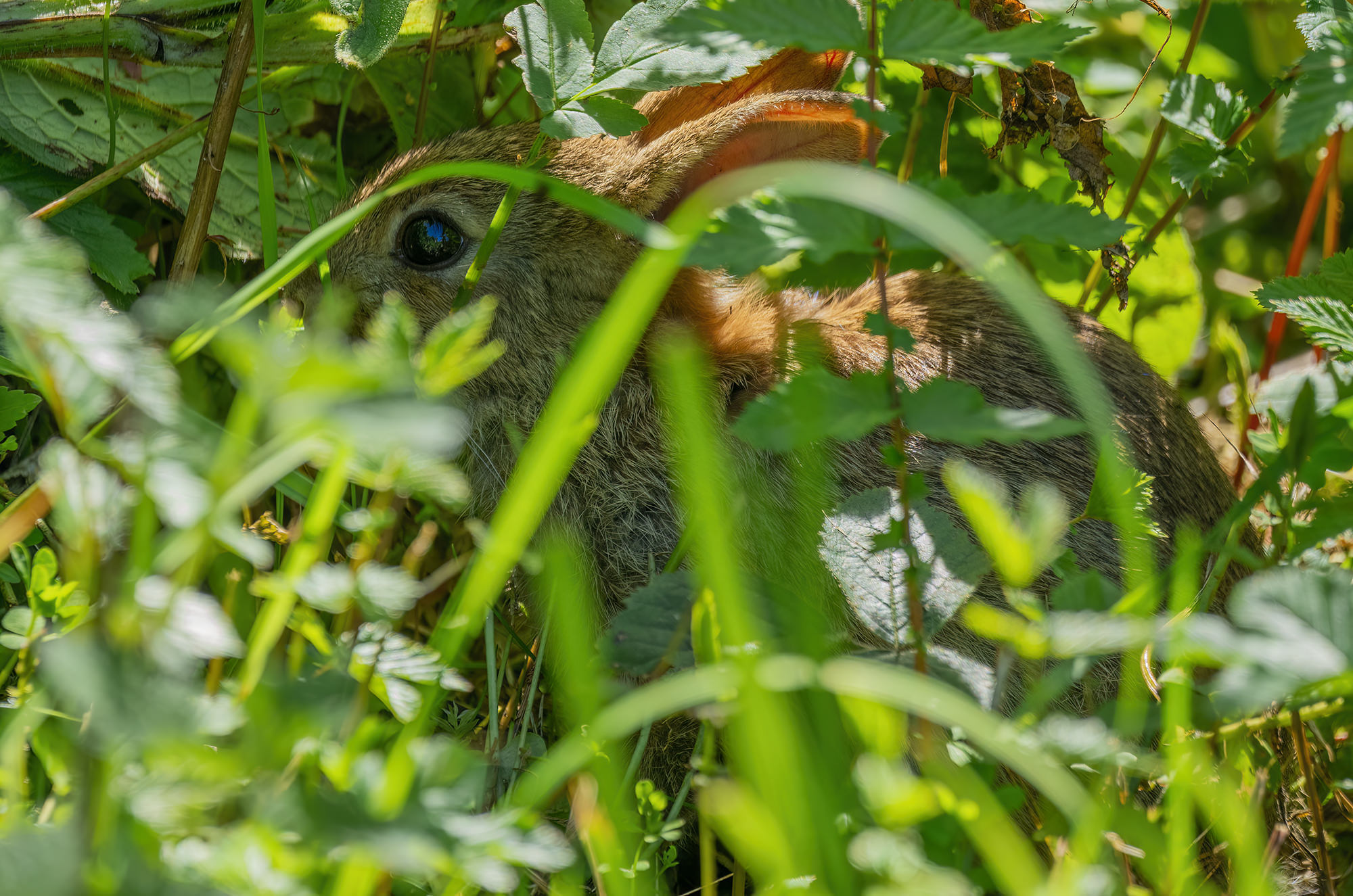
The humble rabbit may not have the Instagram appeal of its hare cousins, but these encounters remind me why they deserve our attention and appreciation. In a world where wildlife populations are increasingly under pressure, perhaps it’s time we celebrated the species that still grace our countryside, however common they might seem.