
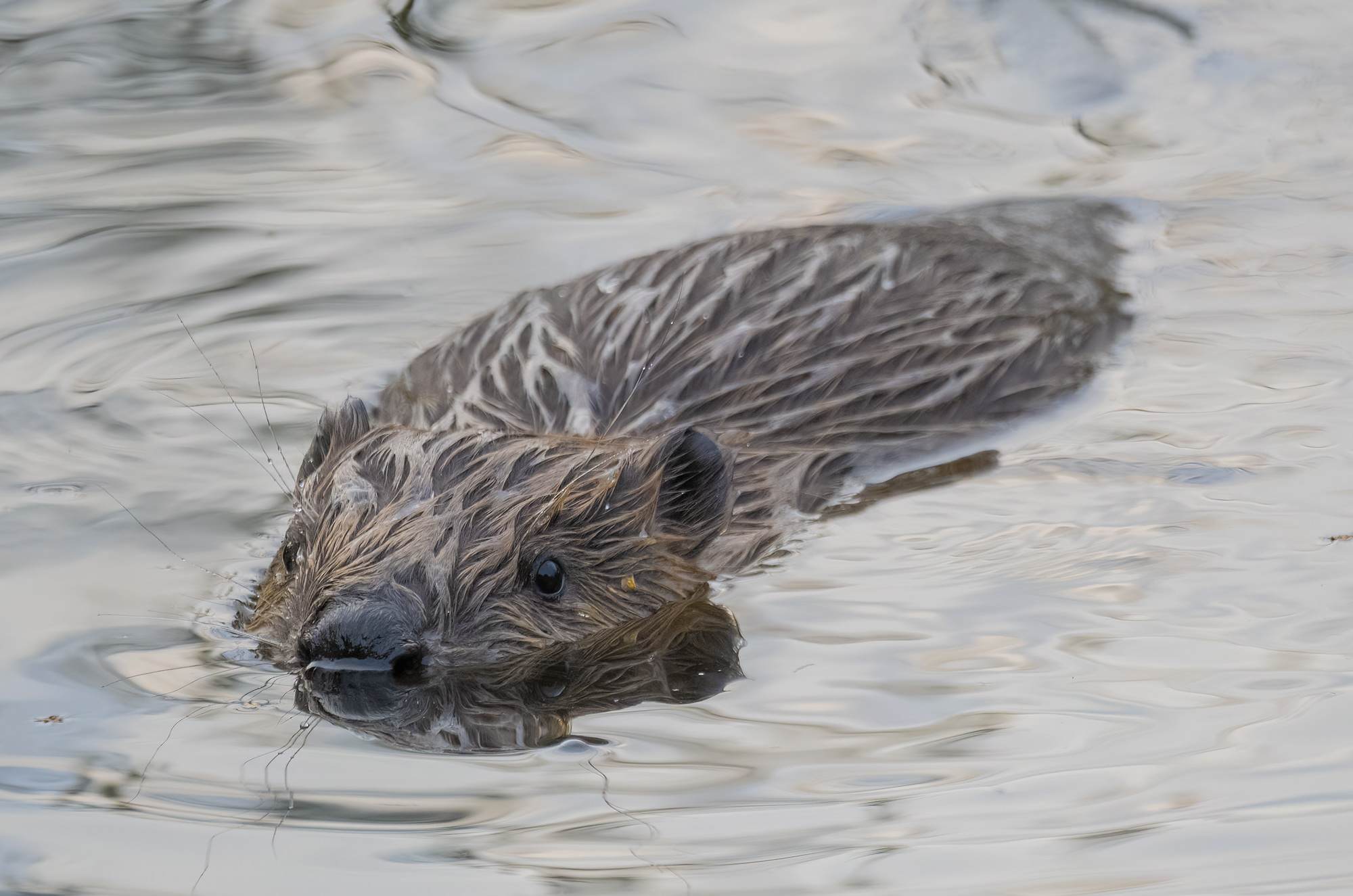
Beavers are back. Well, in parts of the UK, anyway. And while their reintroduction hasn’t been uncontroversial, enabling the reprisal of their role as ‘ecosystem engineers’ benefits a variety of species and habitats. It also rights a wrong, as their extinction in Britain was caused by humans. I, for one, am delighted that they have returned to our freshwater lochs, rivers and burns and that the Eurasian beaver is a European Protected Species in Scotland.
They may be back, but that doesn’t make beavers an easy subject to find and photograph. Beavers are the largest rodent in Britain, at around a metre long, so you’d think they would be easy to spot. However, they are also crepuscular – meaning they are most visible at dawn and dusk – and, with populations limited to a few locations in the UK, they aren’t an animal you’re likely to stumble across on a walk with your camera.
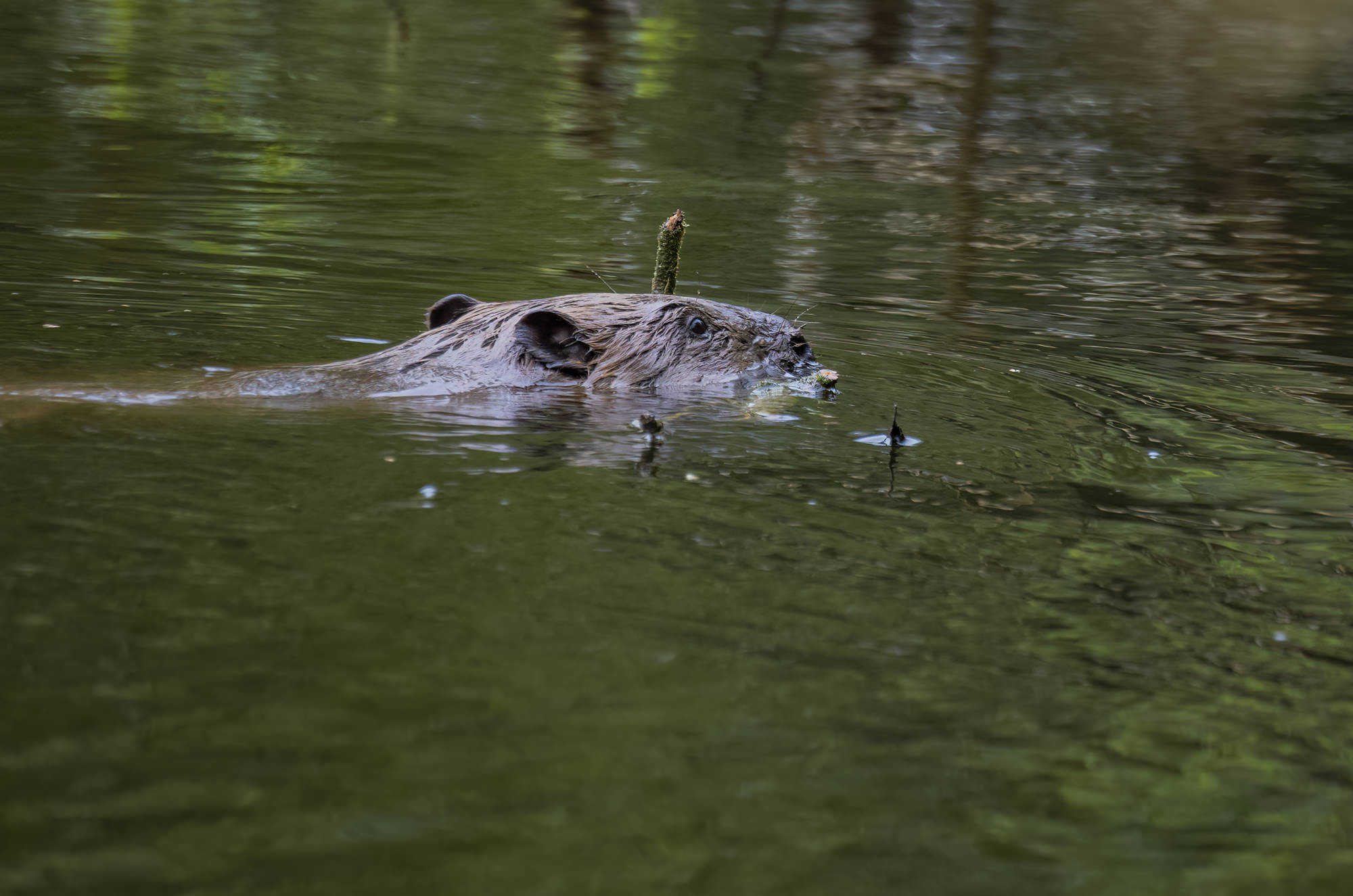
One way of increasing your chances of watching and photographing these elusive creatures is to book onto an organised beaver watching session. So, when Argaty Red Kites, who I know are both ethical in their treatment of wildlife and offer great opportunities for photography, announced they were offering tours to see one of their reintroduced beaver families, I was immediately interested. But it wasn’t until last month that we finally made it out to their farm to try to catch a glimpse of these enchanting animals.
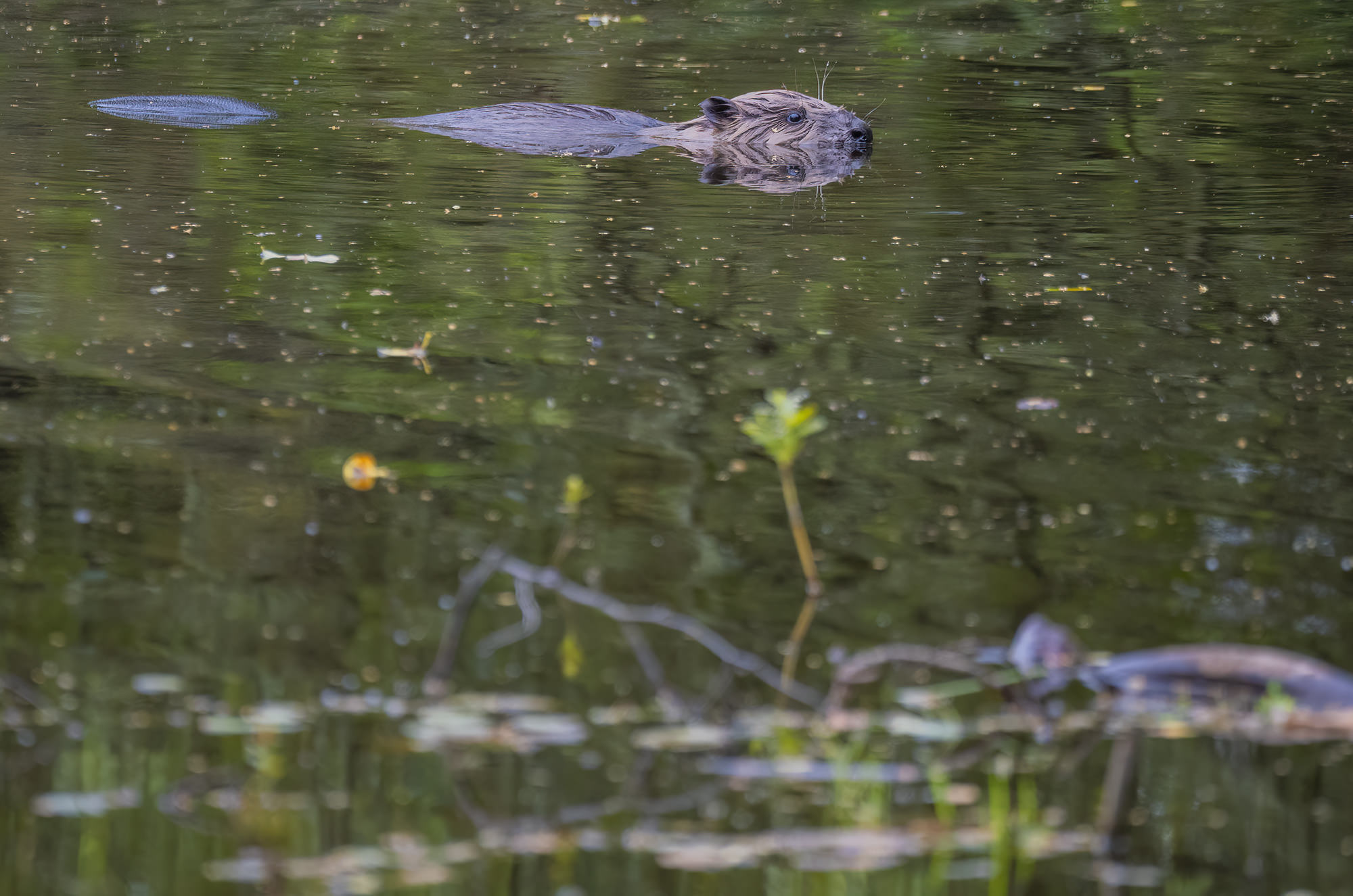
As we walked across the field towards the beaver’s wetland home, brown hares darted away. Usually, I would want to stop to watch them, but our small group had one thing on our collective minds – we wanted to get settled before the beavers appeared. The Argaty team have built a small and comfortable seating area next to the water – perfect for a couple of hours of beaver watching. Now we just needed the marvellous mammals to appear.
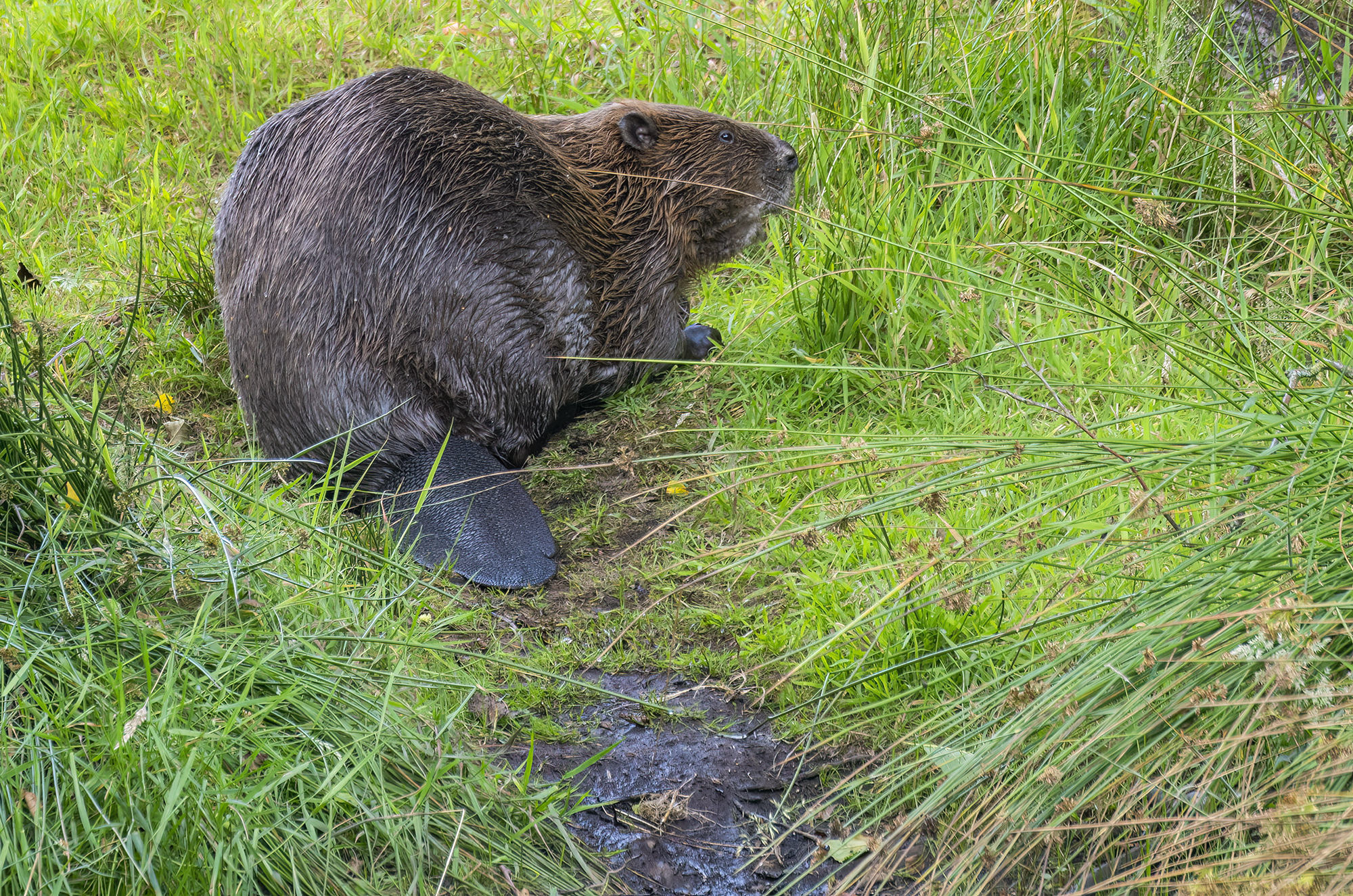
It didn’t take long. Tempted by a couple of carrots, the mother was first to appear, and she was shortly followed by one of last year’s kits. Our lovely guide informed us that the adult male wouldn’t come out until after we’d left, as he is incredibly shy.
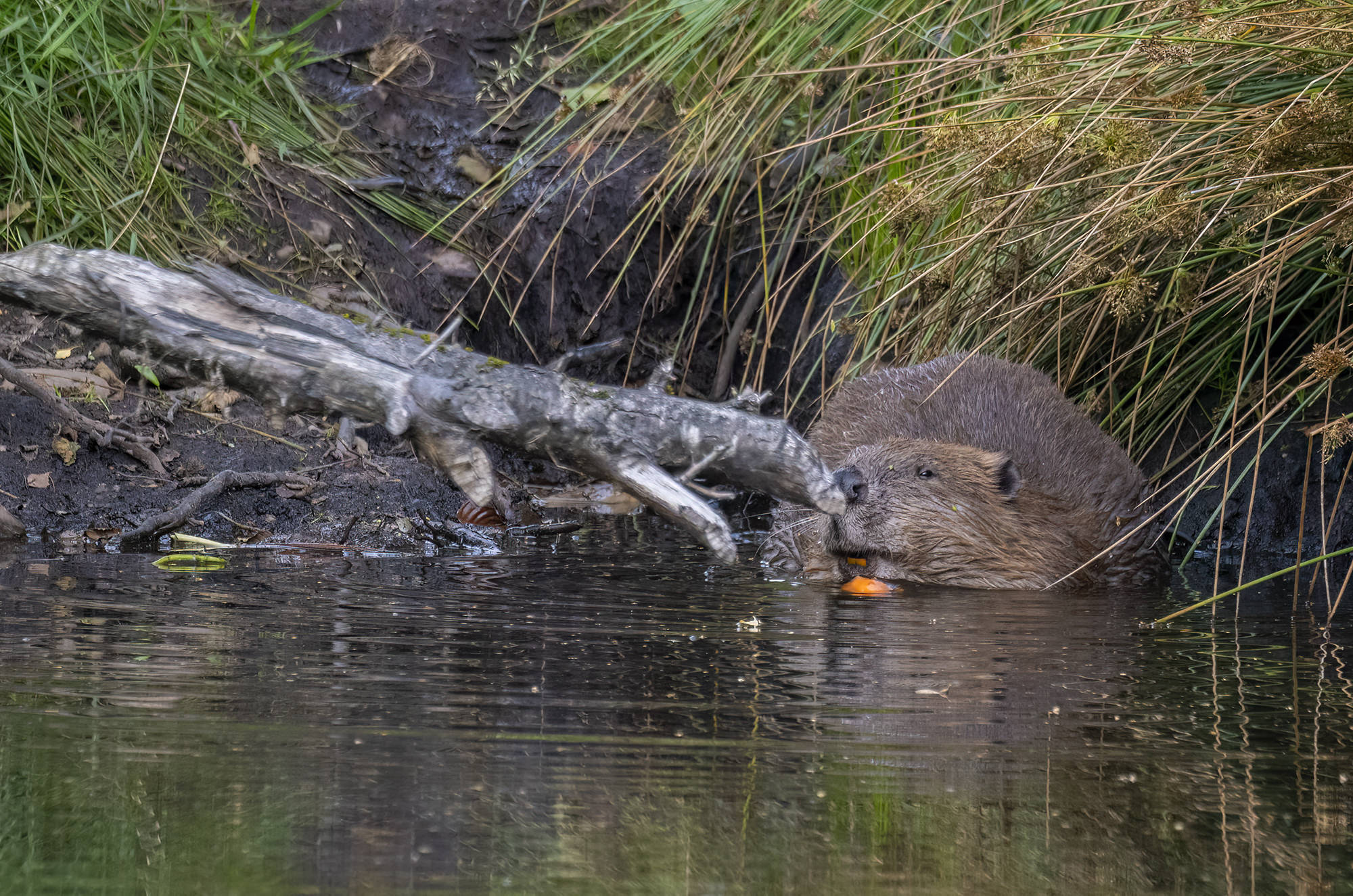
The carrots the female and kit were munching on provided us with the perfect view of their incredible incisors. The enamel is saturated with iron, which causes the orange colouring and provides the strength that allows them to gnaw the trunks of trees. These teeth also grow continually to compensate for the wear and tear that comes with their work.
It was fascinating to watch them moving about on land and to get a closer look at another distinguishing feature, the tail. Shaped like a paddle, it is broad, flat, hairless and scaly. It’s not only used as a rudder for swimming but also as a warning – when threatened, a beaver will slap its tail on the surface of the water to create a loud sound.
After a few minutes of activity on land, the beavers moved into the water. From this point onwards, our time with the beavers was spent getting to know the rhythm of their movements. To begin with, it felt a bit like whack-a-mole – staring out at the water, looking right and left, waiting for one to pop up for long enough to lock focus and capture a decent image. However, it didn’t take long to relax into it and appreciate when and where they were most likely to appear.
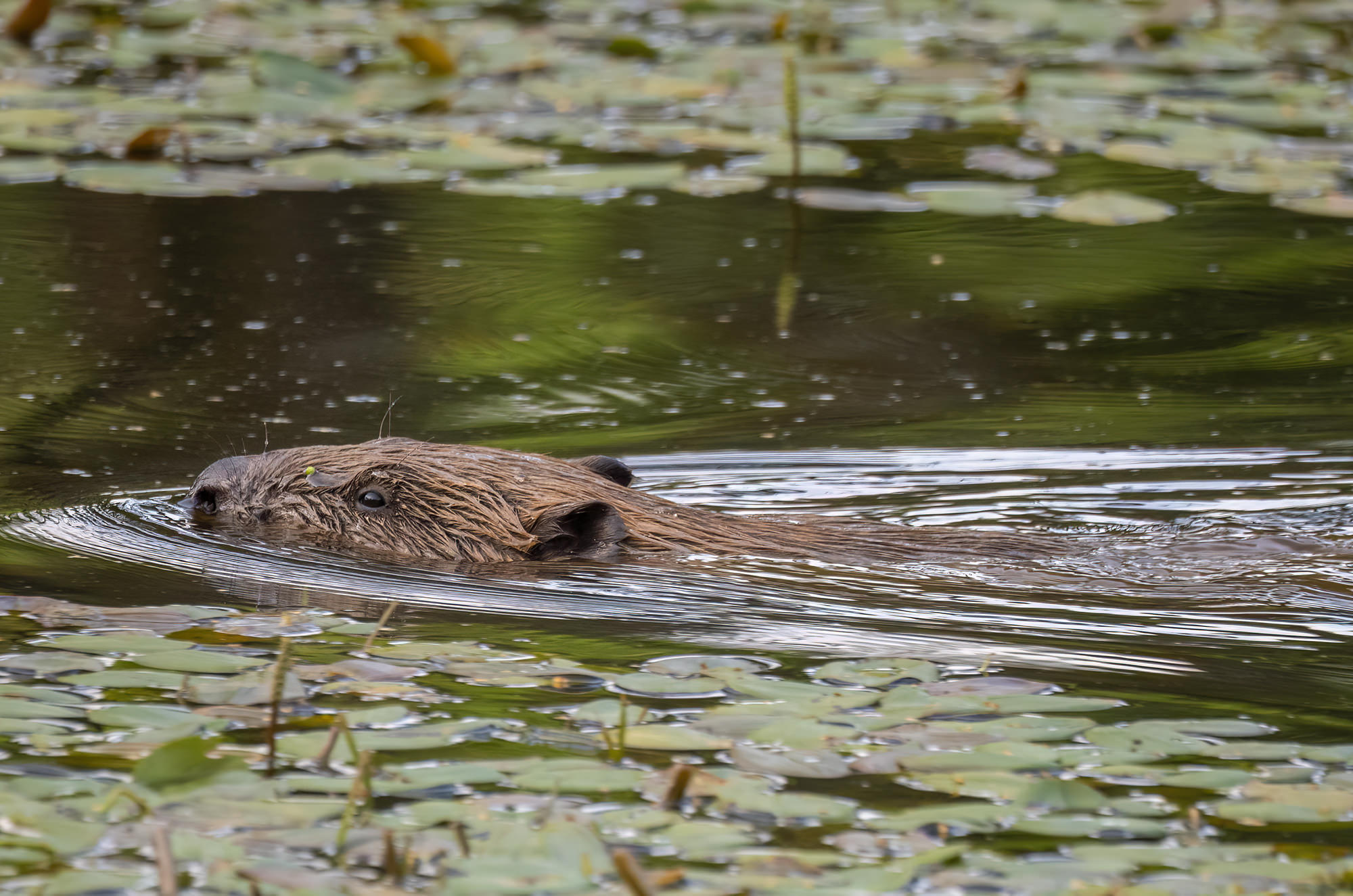
A key aspect of capturing the moment relied, as always, on having the right camera settings. I had already raised my ISO to 3200, and I was right to do so. A combination of fading summer evening light between 7pm and 9pm and occasional cloud cover meant that the conditions for photography were darker than they seemed sitting by the water. My main concern was to get sharp images, so the trade-off was taking the ISO higher than I liked, particularly for distant photos of the beavers in their environment, where the loss of detail would be obvious in the final images.
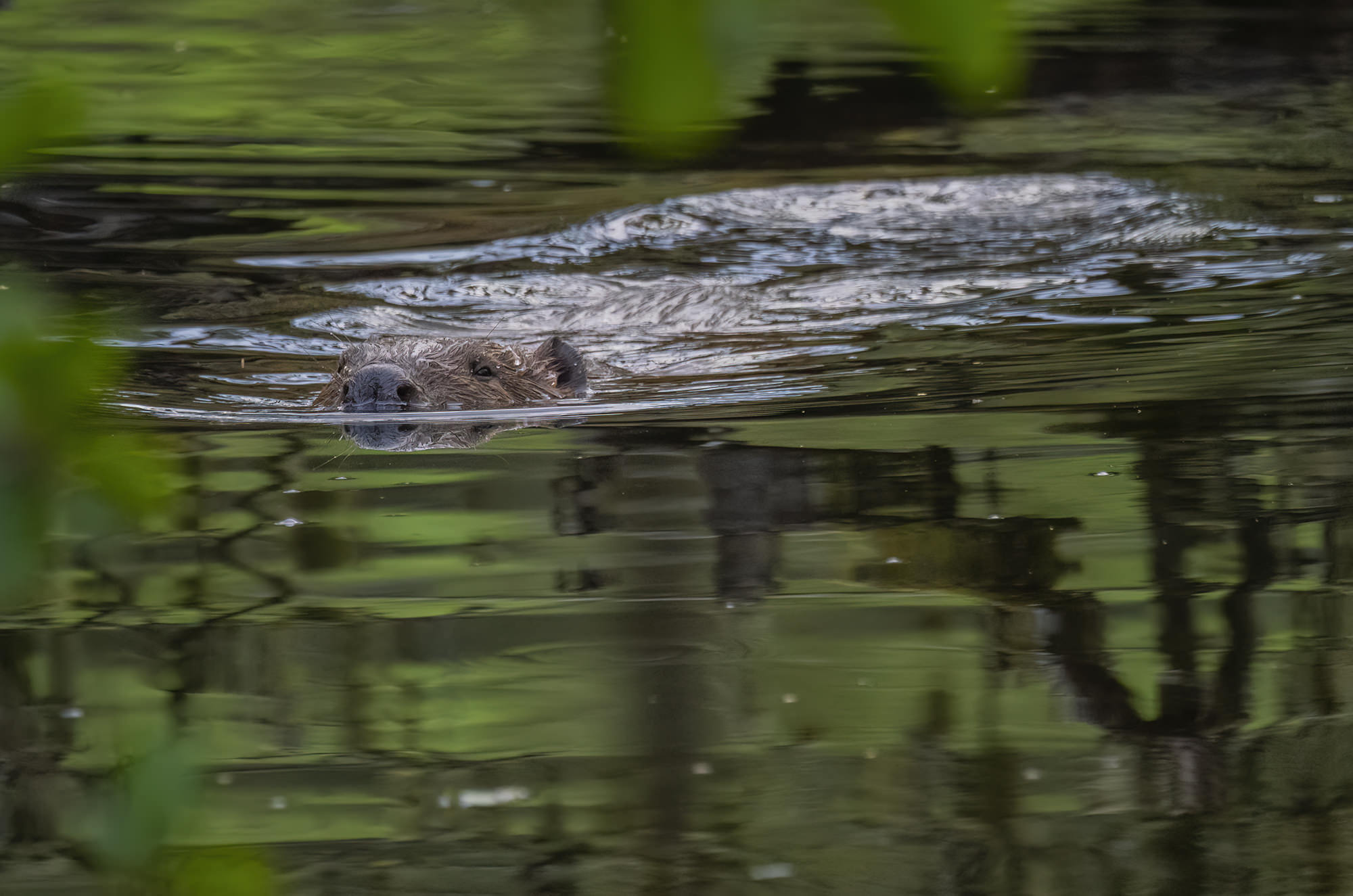
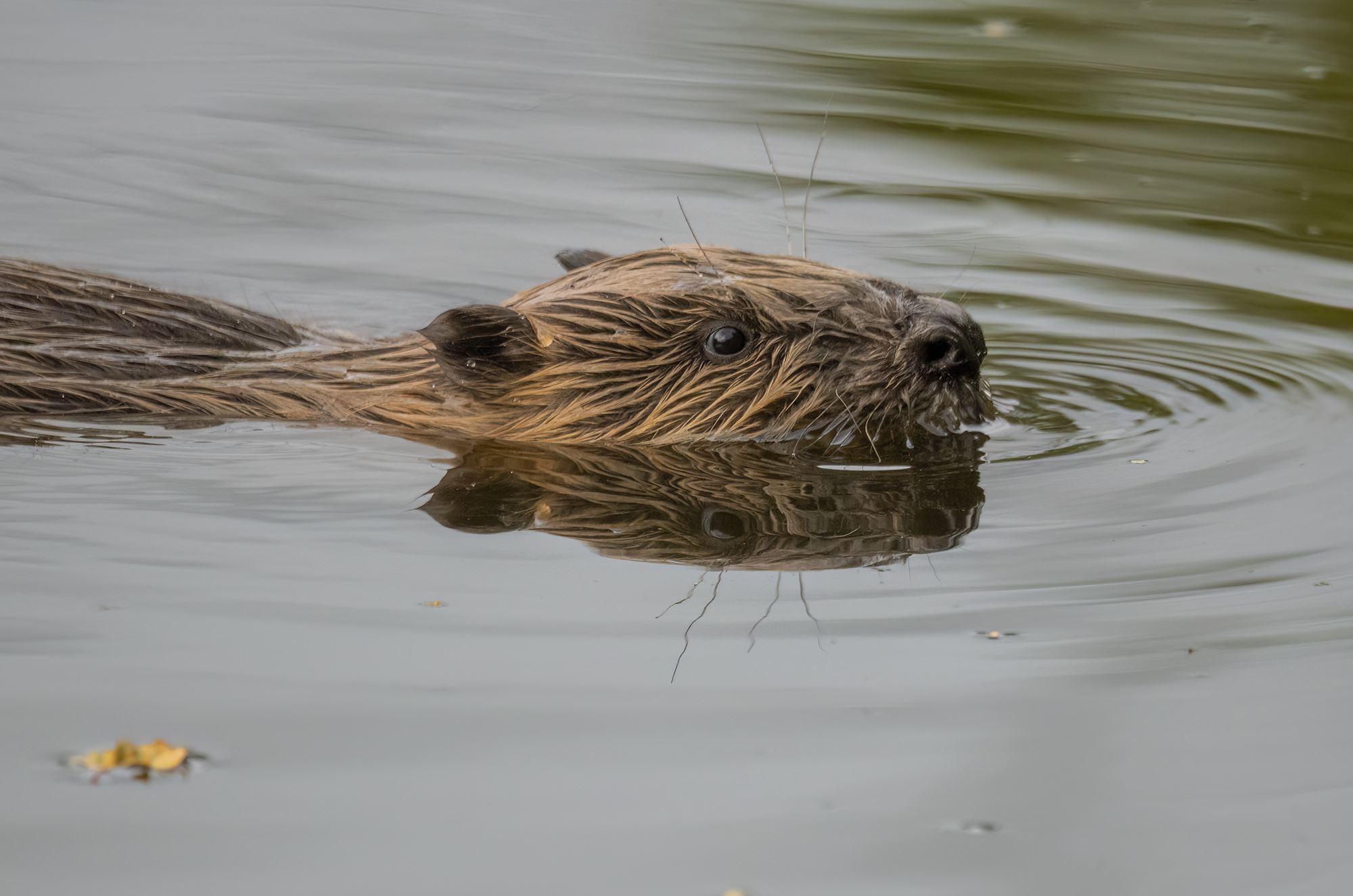
However, I shouldn’t have worried too much as I ended up with plenty of close-up shots, particularly of this year’s kits, which stayed at the surface the longest and also came closest to where we sat. It was as though they had moments of bravery where they would paddle over to us and stay close by at the surface for a few moments, before losing their nerve and diving underwater.
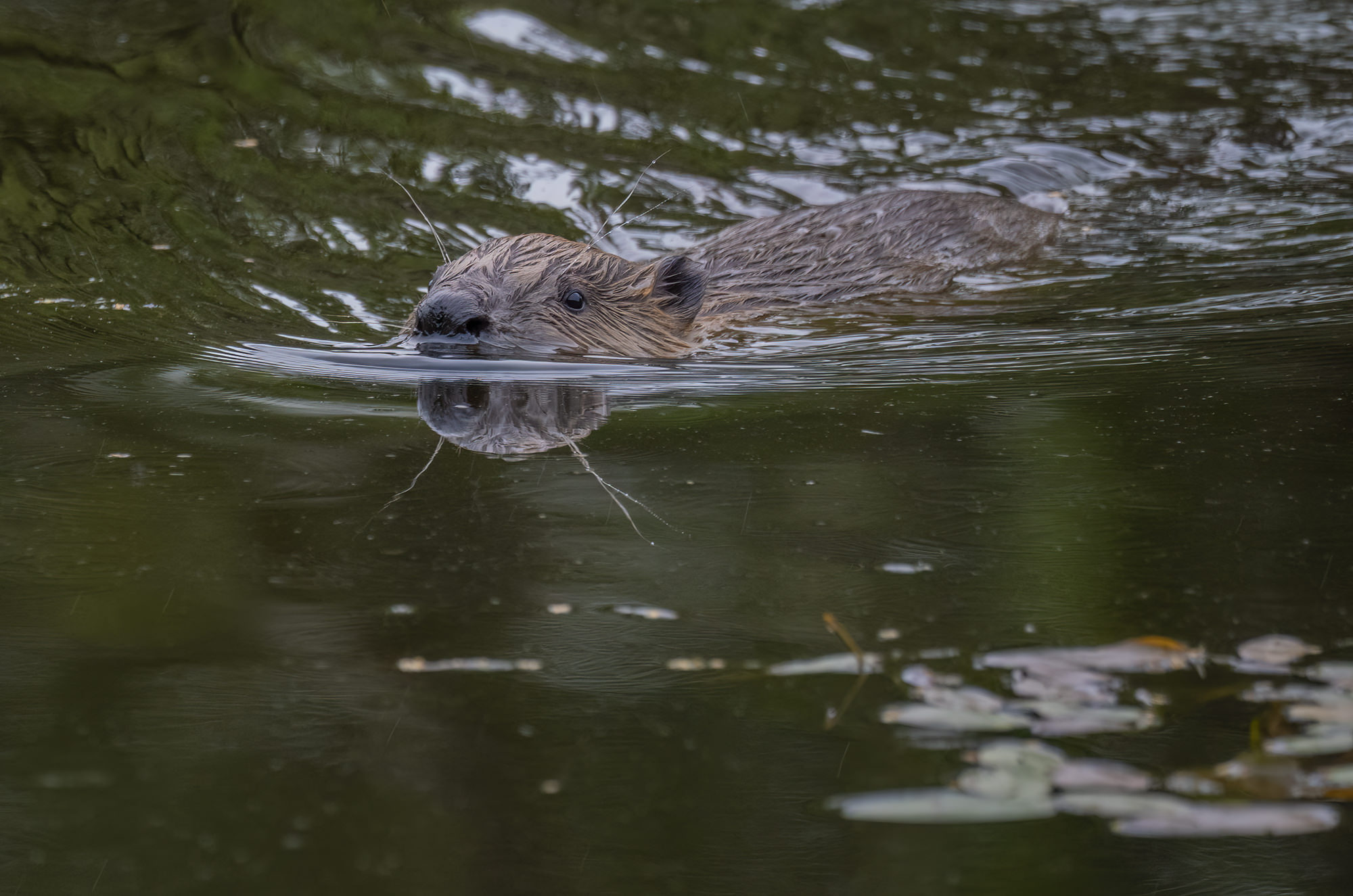
The fleeting confidence of the curious kits probably wasn’t helped by us all turning in unison to point our cameras and binoculars at them. The mass movement occasionally caused them to retreat under the surface, their brave pills all used up in the face of this suddenly shifting shape at the water’s edge. Their caution was understandable – beaver eyesight is poor, and they mostly rely on hearing, touch, and smell. They use their whiskers to detect objects underwater when visibility is poor. However, one bold kit did pop up right in front of our feet at one point. The silent shared delight on everyone’s faces was joyful.
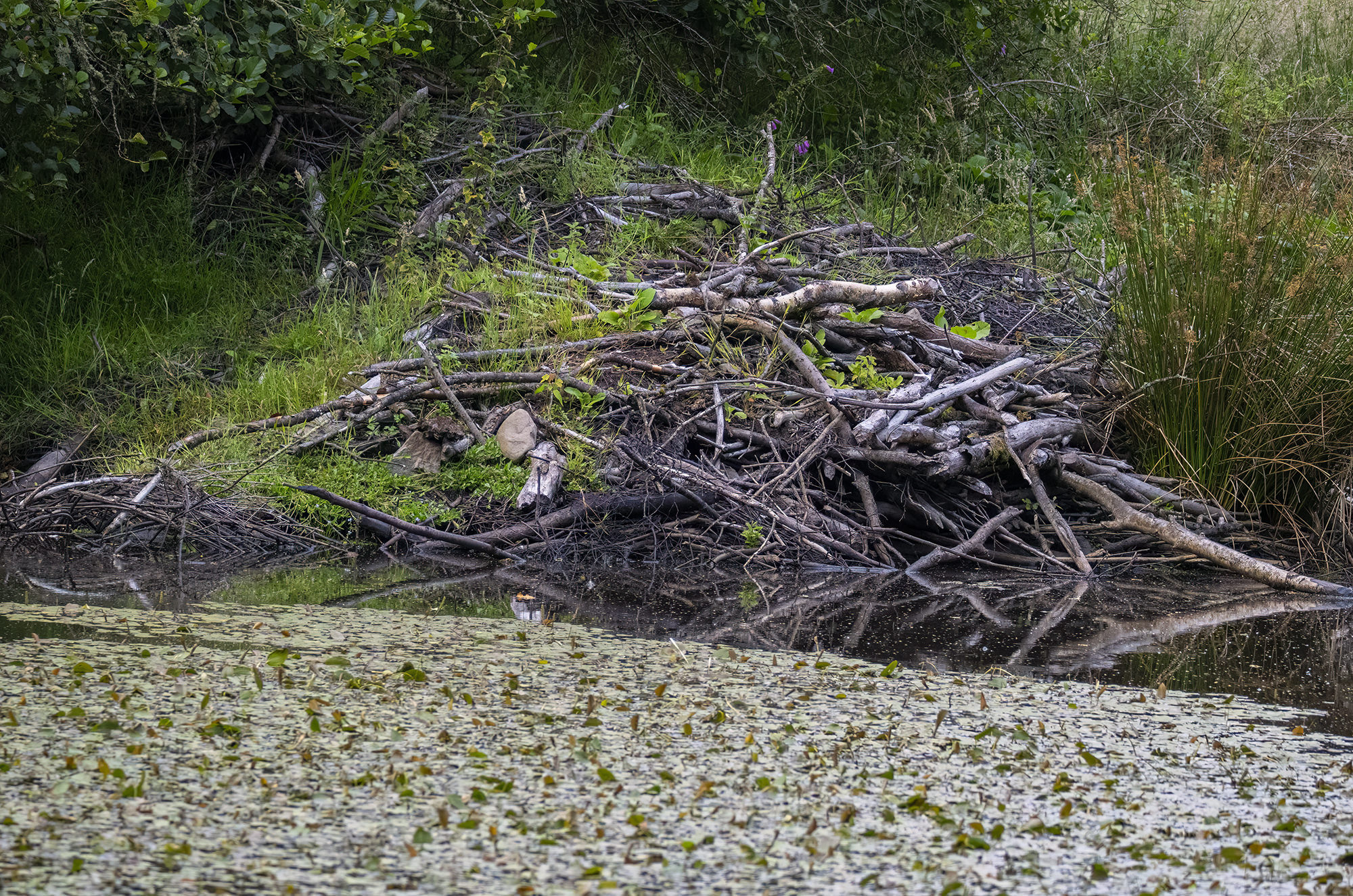
Eurasian beavers can remain underwater for up to fifteen minutes at a time. So, during the periods where everything was still and quiet, apart from the constant clouds of midges hanging in the still air above the water, I captured a few images of the beaver’s home. The lodge was a large pile of sticks and mud. This offers protection from predators, as it is surrounded by water, and the entrances can only be accessed from underwater.
Even when the beavers were moving around in front of us, the atmosphere remained serene. It was so peaceful, I could have stayed there all night, but it wasn’t long before the beavers started to make their way into the woods – our cue to make a quiet exit.
When we were literally out of the woods, we let out a collective expression of the joy we’d experienced watching the beaver family. The hares bounded ahead of us, escorting us out of the field. Our time with them may have been over, but we left beaver believers, eager to return.