
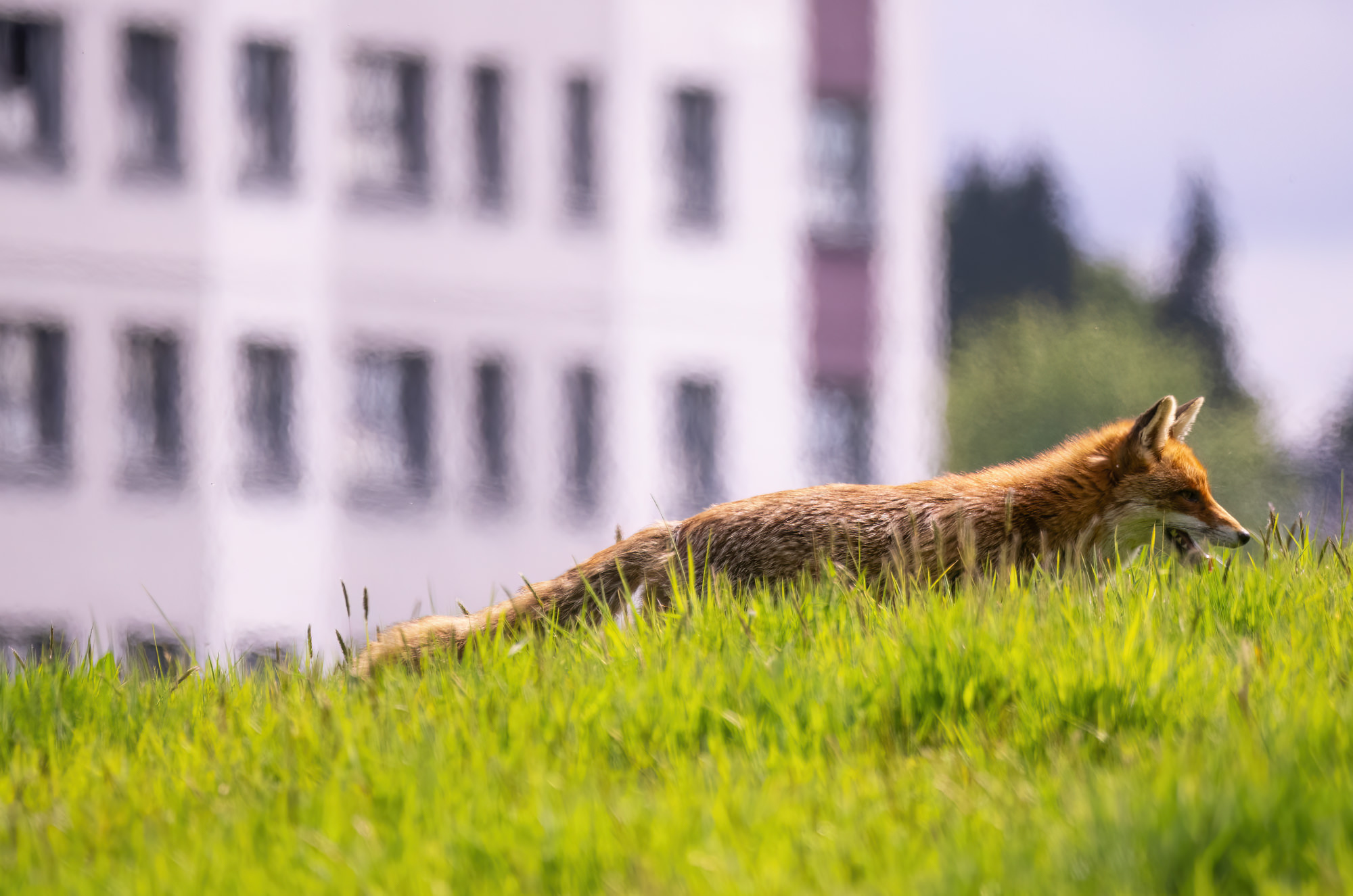
As a wildlife photographer, it can be hard to play it cool. Like those moments when you need to stay completely still while inside you’re jumping for joy, or when you have to force yourself to walk slowly because you’re so excited by an encounter that you want to run towards it.
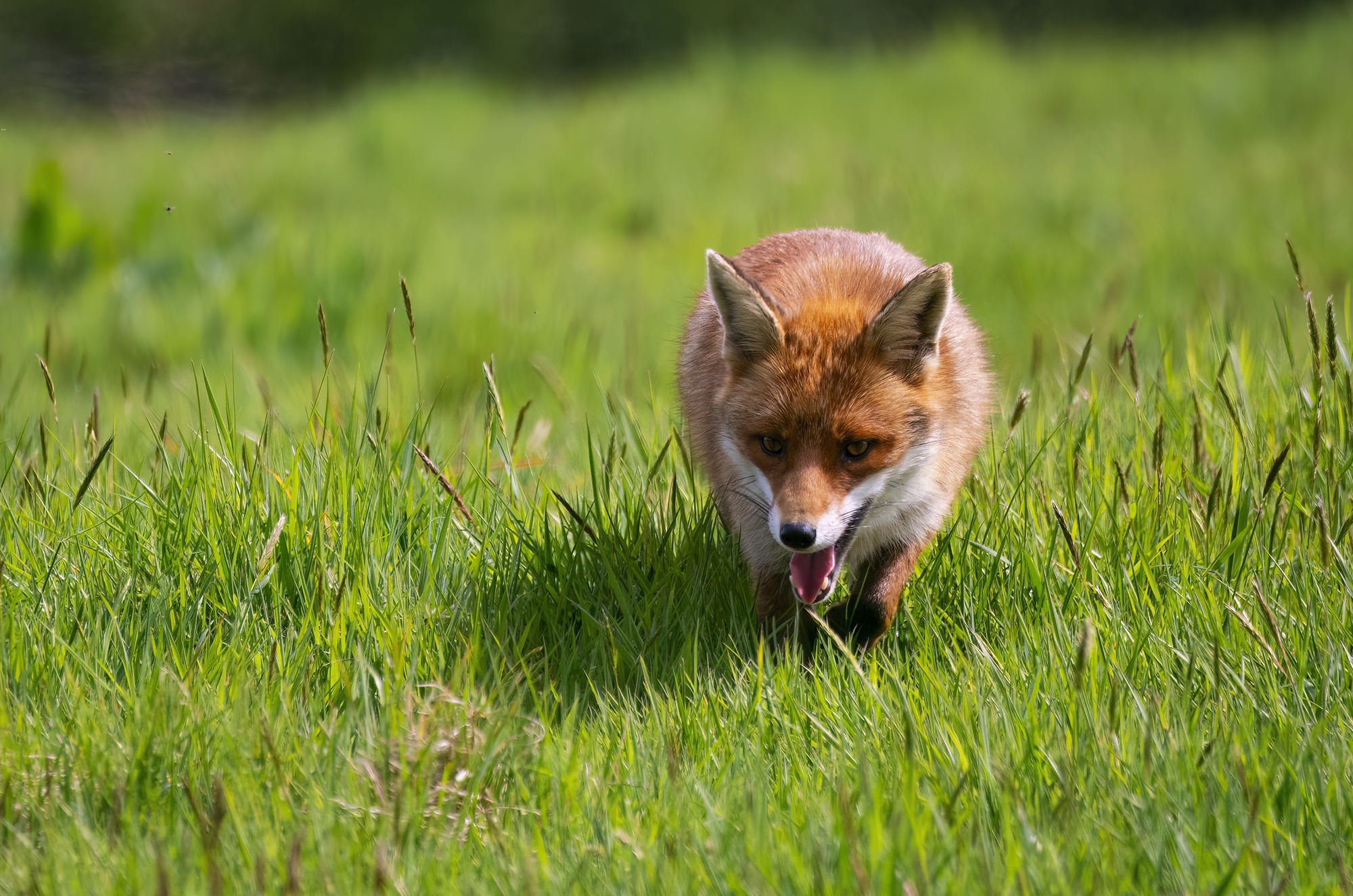
When I spotted the fox near the brow of the hill as I walked my usual lunchtime route, I struggled to contain my excitement. Its rust-red coat against the bright green backdrop of a field of lush spring grass drew my eye from a good distance away. I knew I had to get into the woods next to the field as quickly as possible if I wanted to capture any images of him. At the same time, I knew my movements had to remain calm and quiet to ensure I didn’t attract his attention.
The question was, would he turn and head back over to the other side of the field and out of sight before I could reach him?
As I walked further along the track, I looked at him through my viewfinder to try to work out which way he was heading. And that’s when I saw it. That’s when I realised that I would definitely need to get closer to capture any usable images. That’s when I noticed the shimmering effect that wildlife photographers all over the world dread: heat haze.
Hazy days
One of the joys of wildlife photography is that no two outings are ever the same. We spend plenty of time thinking about where the light is coming from, whether the wind is in our favour and how our subject is behaving. Yet there’s another factor that can quietly rob an image of sharpness before many photographers even realise what’s happening.
Heat haze is one of those frustrating phenomena that often isn’t obvious until you zoom into the back of the camera. The subject looked sharp through the viewfinder, autofocus appeared to lock on perfectly and your shutter speed was more than fast enough. But the final image somehow lacks the crisp detail you were expecting.
It’s a problem that catches out photographers of everything from garden birds to distant mountain landscapes. In wildlife photography, where we’re often working with long telephoto lenses across open ground, it can become one of the biggest limitations to image quality.
For example, I visited the Isle of May on a particularly hot day back in June 2018 and found that a combination of harsh light and heat haze had significantly reduced the quality of many of the images I captured of the seabirds on the island.
What actually causes heat haze?
Although we often associate heat haze with hot summer days, it’s really caused by differences in air temperature rather than heat alone.
Here comes the science bit – concentrate! Warm air is less dense than cooler air. As the ground absorbs energy from the sun, it heats the layer of air immediately above it. That warm air begins to rise while cooler air sinks to replace it, creating countless tiny currents that are constantly moving.
As light passes through these different layers of air, it is bent very slightly. Because the layers are continually shifting, the path of the light is constantly changing too.
The result is the familiar shimmering effect you might notice above roads, fields or the roofs of cars on a warm day. Through a long telephoto lens, that shimmer becomes much more obvious and can dramatically reduce the fine detail in a photograph.
The greater the distance between you and your subject, the more turbulent air the light has to travel through. That’s why heat haze tends to become much more noticeable when photographing distant wildlife with longer focal lengths.
What does heat haze look like in a photograph?
Heat haze rarely looks the same from one image to the next, but there are a few tell-tale signs.
Rather than looking simply out of focus, subjects often appear soft, smeared or slightly distorted. Fine details such as fur, feathers and whiskers can seem to melt together, while edges lose the crisp definition you’d normally expect from a sharp image.
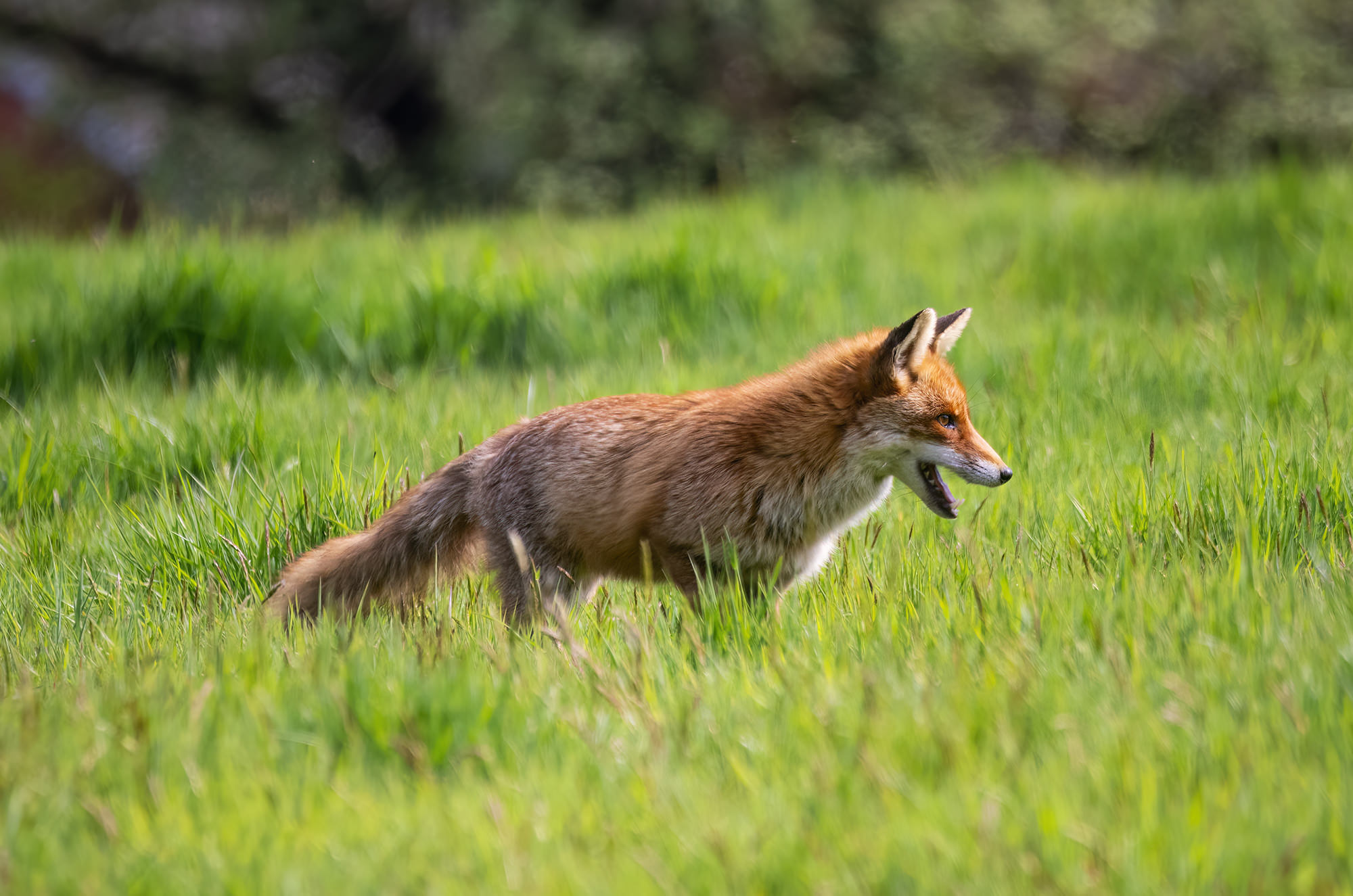
Sometimes only parts of the image are affected, while in stronger conditions the entire frame can take on a watery, almost painterly appearance. It’s also possible for images within the same burst to vary noticeably from one frame to the next as the air currents constantly change.
This is one of the reasons photographers can find heat haze so confusing. One image may appear reasonably sharp, while the very next frame, taken only a fraction of a second later, looks noticeably softer despite identical camera settings.
When is heat haze most likely?
Most photographers think of blazing summer afternoons, but heat haze can occur surprisingly often throughout the year. This encounter with the fox happened on a sunny, mild – but not hot – day in early May.
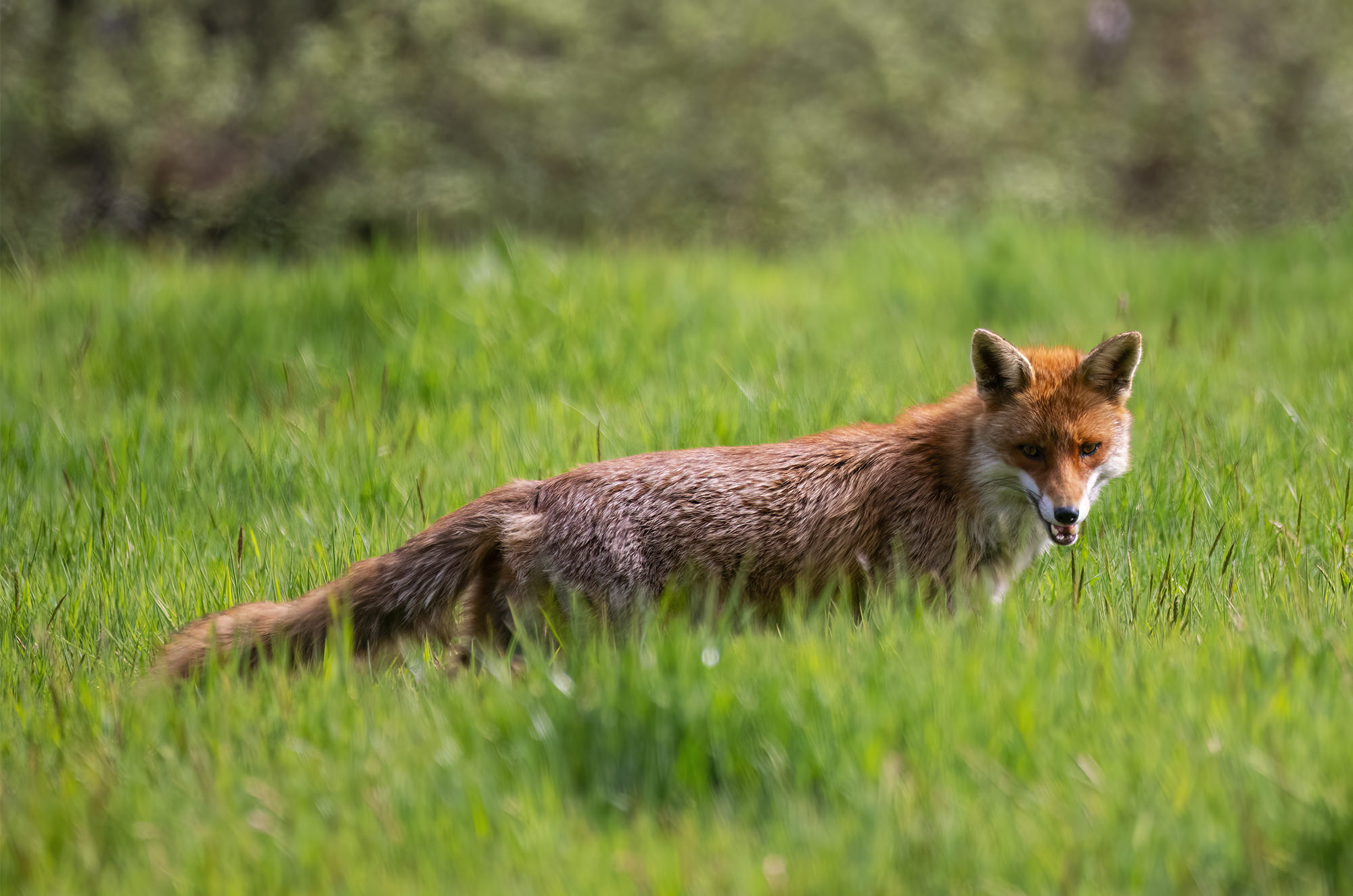
Heat haze is most likely when you are photographing across surfaces that absorb and release heat, including short grass, bare earth, sand, rocks, roads, rooftops and, under the right conditions, water. I often find it problematic when I’m photographing seabirds on the water during the summer months.
Bright sunshine and still weather tend to make the problem worse, particularly around the middle of the day when the ground has had time to warm up, which is exactly what I experienced while photographing the fox. On cooler mornings, overcast days or after rainfall, the effect is often greatly reduced because the air temperature is more uniform.
Urban environments can create their own challenges with heat haze. You may have heard of the urban heat island effect, where cities and urban areas experience higher temperatures than rural areas because heat accumulates there. Buildings, tarmac and concrete can absorb and retain heat before releasing it back into the surrounding air, creating pockets of turbulent air that may affect photographs even when the temperature feels comfortable.
Hot fuzz
The good news is that heat haze often gives itself away before you’ve taken a single photograph – as it did with this fox encounter. If distant objects appear to shimmer with the naked eye, there’s a good chance your photographs will also be affected. Looking through your lens in live view – as I did – can make the effect even easier to spot, especially at longer focal lengths.
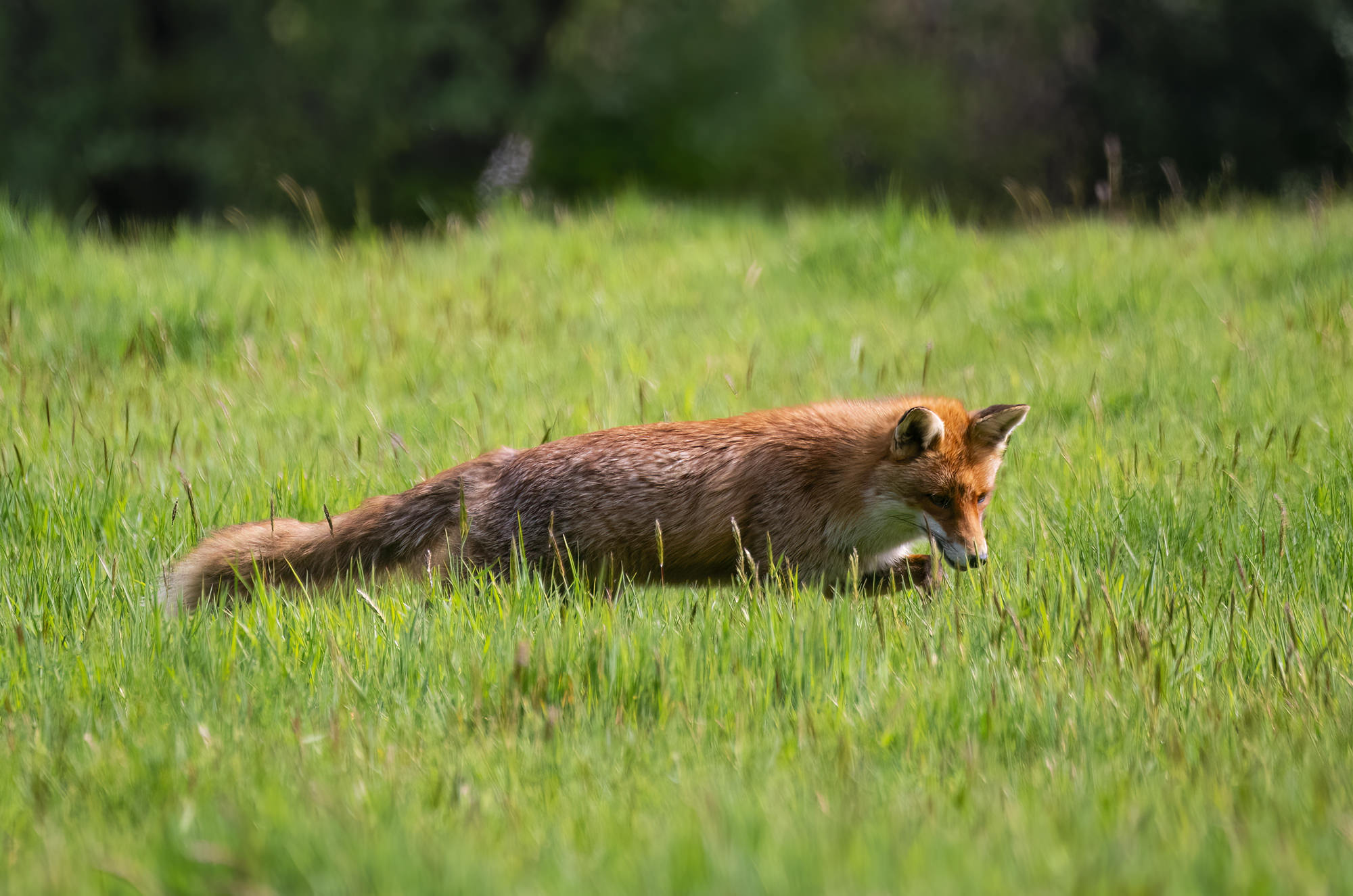
Another clue is inconsistency. If autofocus seems to be behaving normally but every image looks slightly different when you review them, atmospheric conditions may be the culprit rather than your camera or lens.
It’s worth remembering that no amount of autofocus accuracy can compensate for air that’s constantly bending the light before it reaches your camera.
Can you avoid it?
Heat haze is part of working outdoors, and there are occasions when the atmosphere simply won’t allow you to capture the level of detail you’re hoping for. There are, however, a few ways to reduce its impact.
Getting physically closer to your subject is by far the most effective solution. Reducing the distance means the light travels through less turbulent air before reaching your camera. Changing your shooting angle can also help. Even moving a few metres to avoid photographing across sun-baked ground can make a noticeable difference.
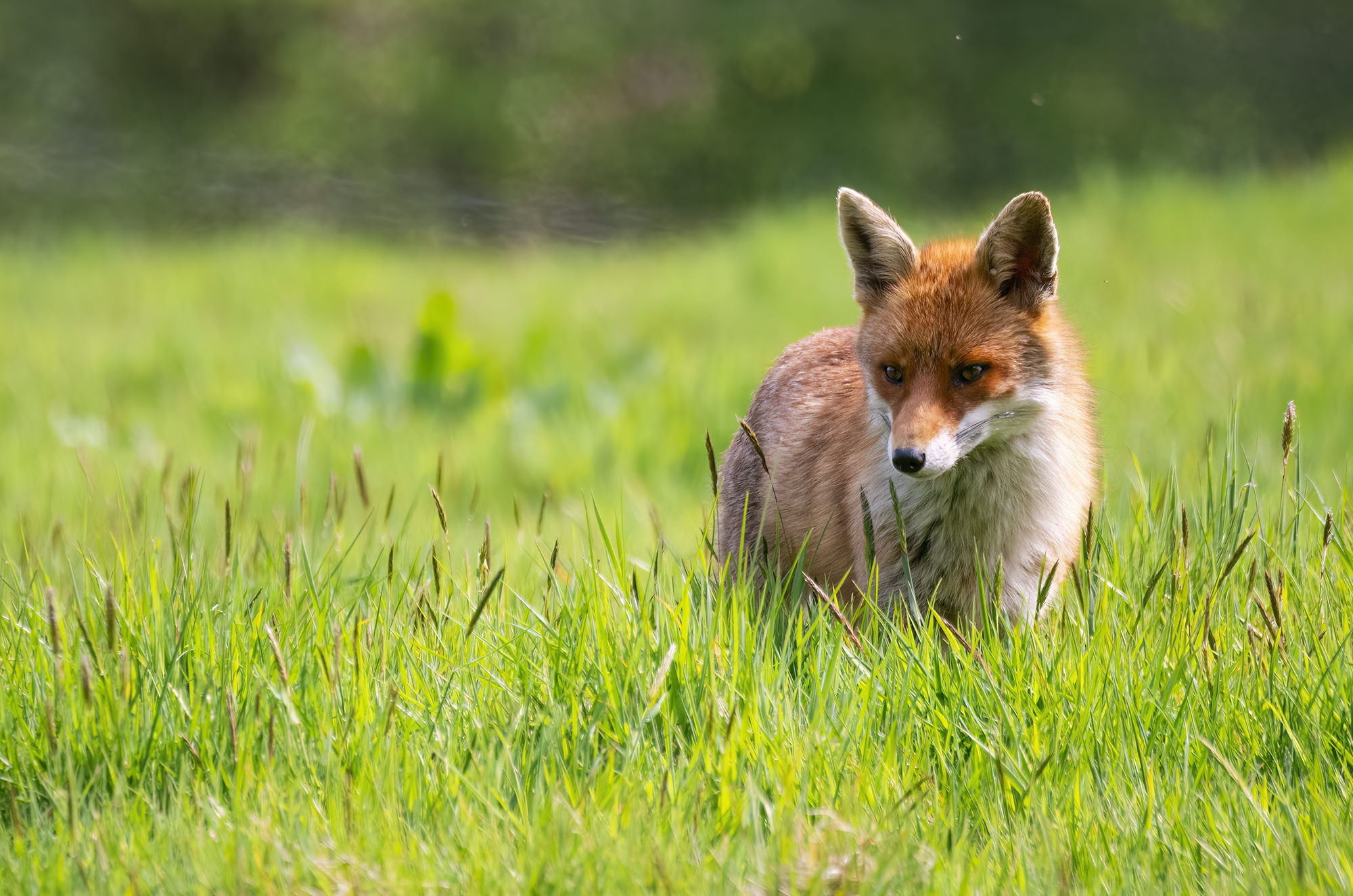
I was incredibly fortunate that the fox chose to work its way closer to me during this encounter and, in doing so, he also entered what I can only assume was cooler ground that would have been shaded by trees earlier in the day.
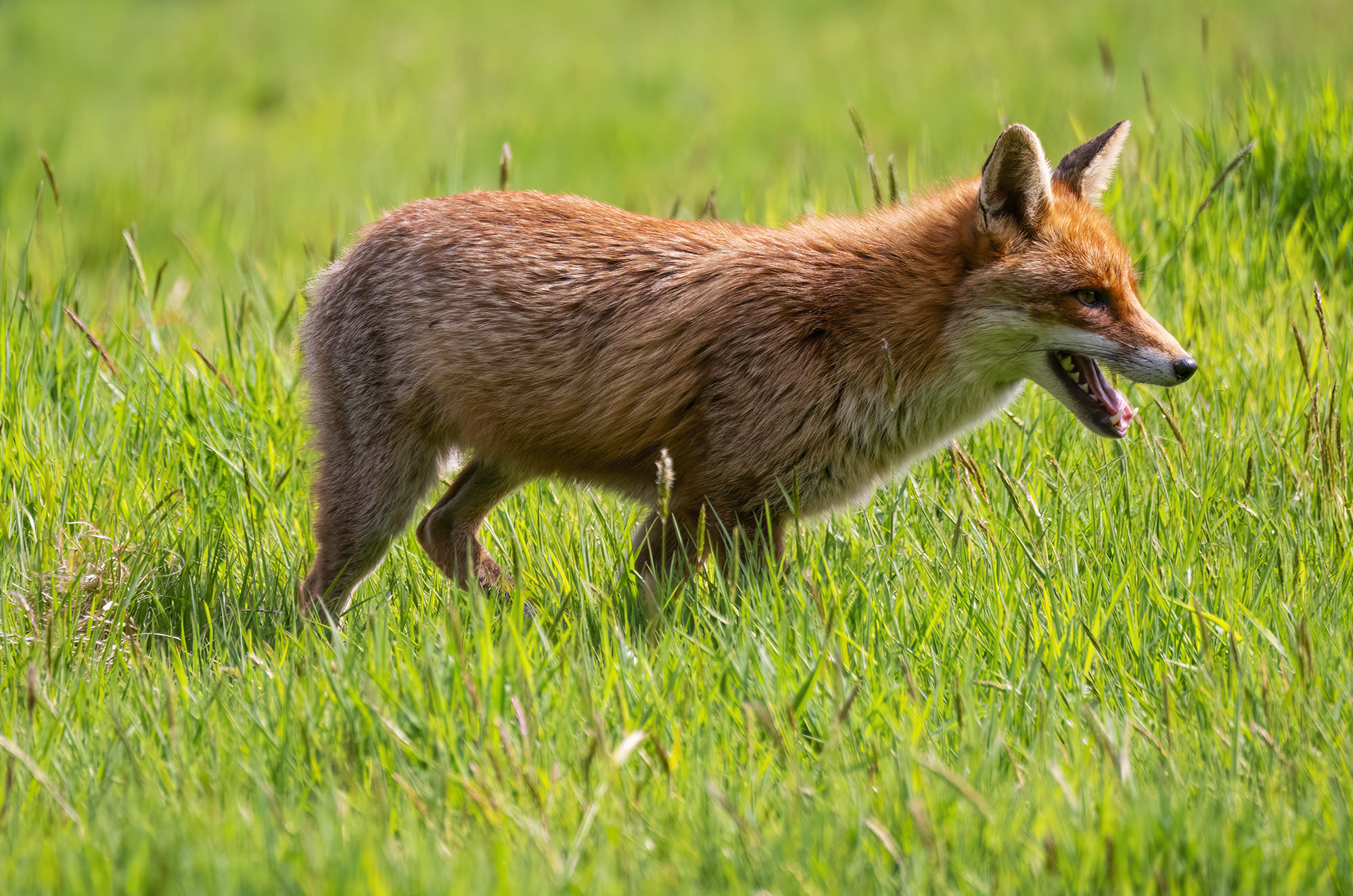
Another option is to return earlier or later in the day, when the ground has had less opportunity to heat up. Early mornings are often rewarded with calmer air as well as softer light. However, that wasn’t going to be an option in this case, with the fox presenting me with this opportunity on a lunchtime stroll. If I’d returned in the evening, there would have been no guarantee that I’d spot him again. I’m also often only able to get out with my camera in the middle of the day, so I rarely have the opportunity to choose a time when the conditions might be better.
Finally, don’t assume a longer lens is always the answer. Cropping an image taken from a shorter distance will often produce a sharper result than using a longer focal length through a greater distance of shimmering air.
Salvaging a hazy image
Unfortunately, heat haze isn’t something that can simply be fixed in editing. Sharpening software can improve the appearance of an image slightly, while modern AI denoise and detail enhancement tools may recover a little more texture than was previously possible.
For example, I used Topaz Labs’ AI-powered denoising software on these images, which helped to reduce some noise and add a little apparent sharpness. However, if atmospheric distortion has removed genuine detail, no software can recreate information that never reached the camera sensor. Once I reviewed the images from this encounter on a laptop, I had to delete plenty of them.
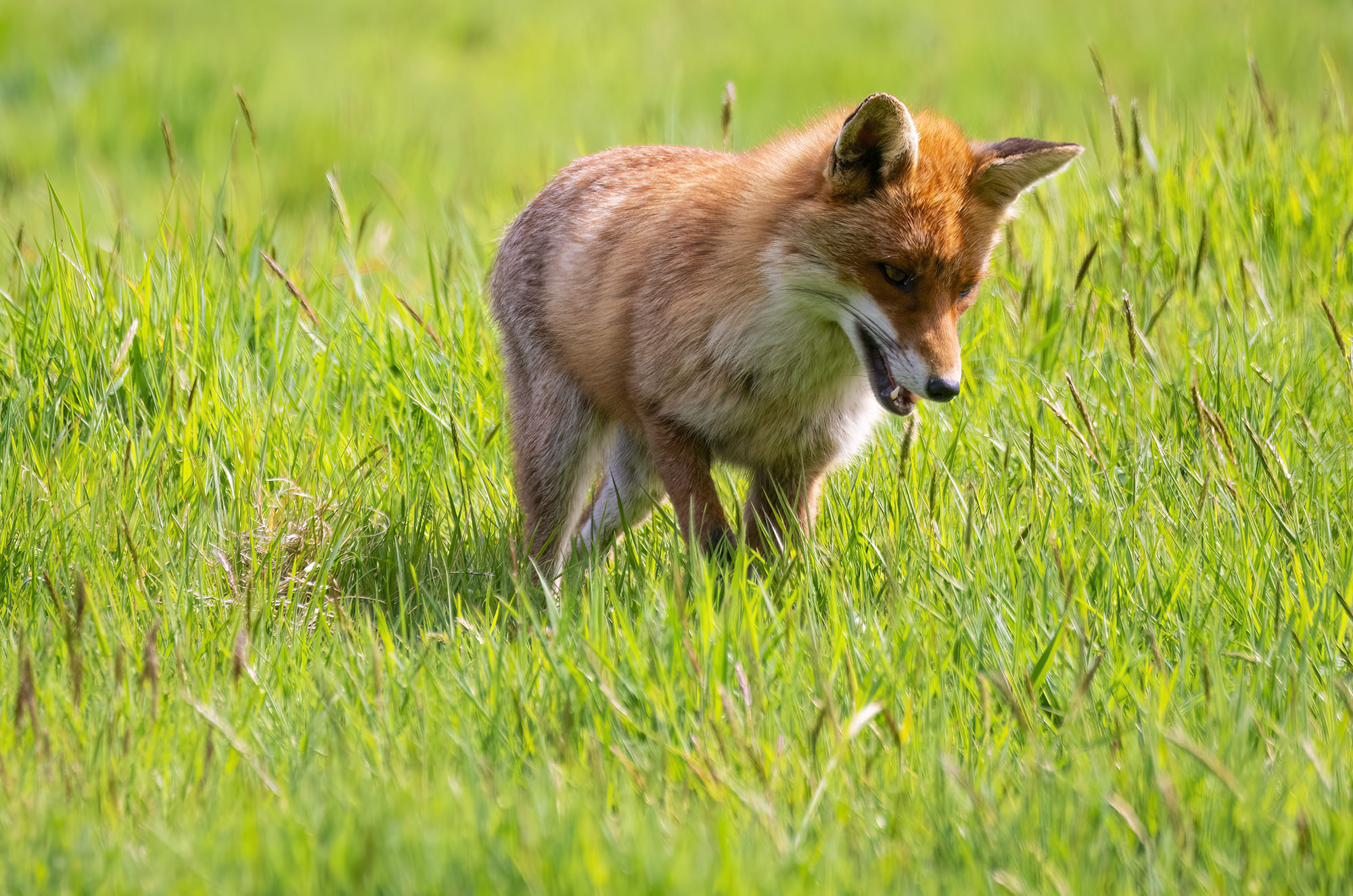
That said, I wouldn’t be too hasty when going through your images after a session like this. Sometimes the moment, behaviour or composition tells a compelling story, and a slight lack of sharpness becomes less important than the image itself.
When heat haze becomes part of the story
It’s also worth remembering that there are times when a technical challenge can become a creative opportunity. Strong heat haze can introduce an almost dreamlike quality to an image, softening detail and emphasising atmosphere over precision. It can evoke the feeling of oppressive summer heat, create a sense of distance or add an impressionistic character that suits the scene.
Having photographed foxes in this field a handful of times, I’d always wanted to capture an image with one in front of the flats. In the case of the image at the top of this page and the one below, I decided to ignore the slight lack of sharpness in my subject because the backdrop of the high-rise flats shimmering in the heat helped to tell a wider story of an urban fox hunting in the middle of the day.
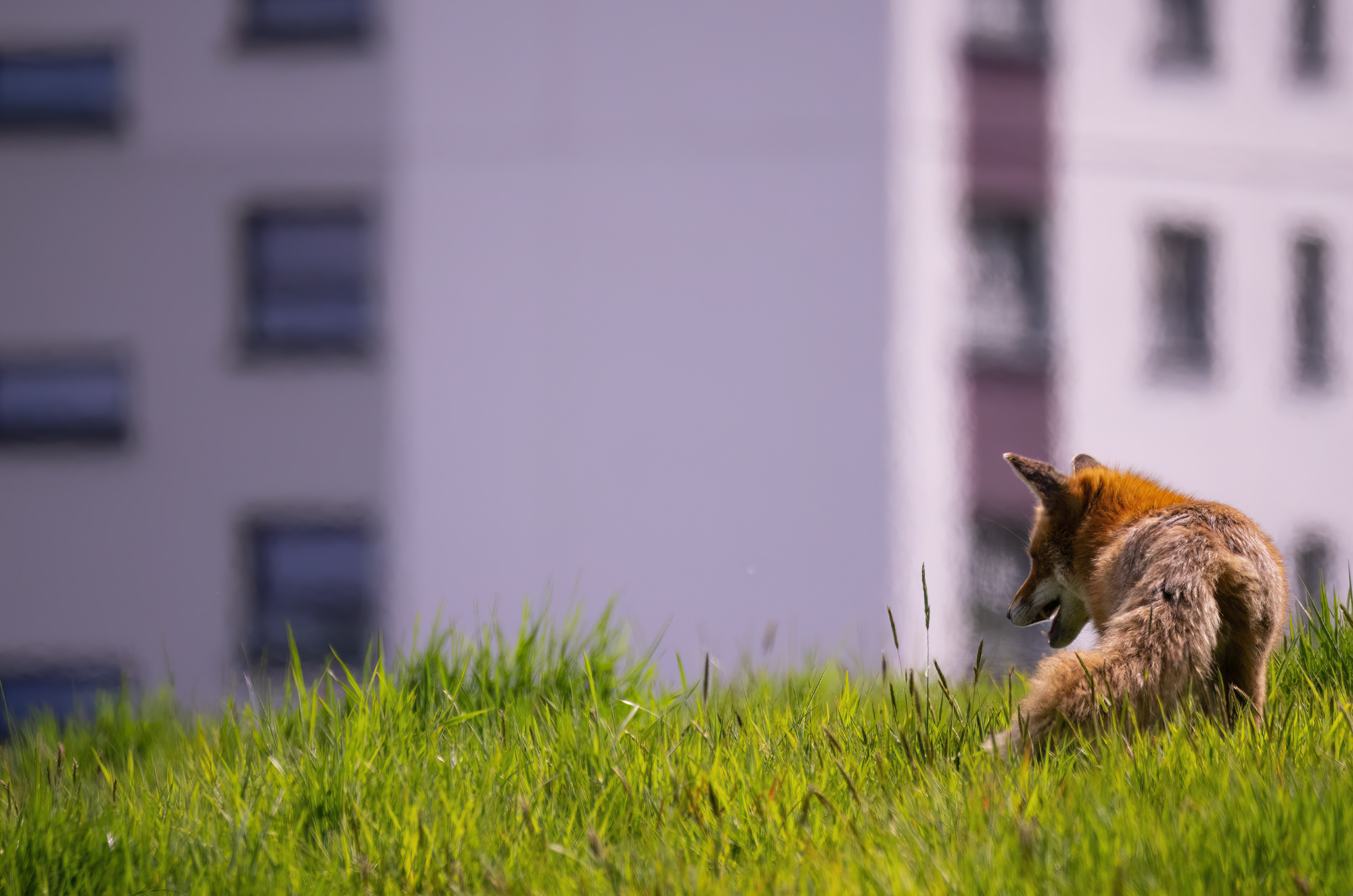
At that time of year, the fox may have had cubs nearby depending on him to deliver food, making the intensity of the scene feel even more significant. His mouth being constantly open, with his tongue hanging out, added to the impression of the heat and the effort involved. The high-rise flats also emphasised how closely urban foxes live alongside people and the built environment.
All in all, the heat haze may have detracted from some of the portraits I captured – and therefore deleted – but it also allowed me to tell a story that otherwise might not have been so striking.
So, rather than fighting it, there may be times when it’s worth embracing what the conditions are offering. Wildlife photography isn’t always about producing clinically sharp images. If, like me, you’re restricted in when and where you can photograph nature, it can sometimes be better to work with the conditions you’re given rather than wishing for different ones.
Often, it’s about capturing how a place felt at that moment. Sometimes conditions such as heat haze can even provide an opportunity to highlight the environmental pressures faced by our local wildlife.