It’s well documented that wildlife photography is a waiting game. You can spend hours, days and even weeks in hides or tracking your subject before you capture the images you’re after. However, I’m used to being time-limited in the field. Many of my images are captured on one-hour lunch breaks or outings crammed into busy weekends. Waiting time is a luxury I rarely have.
With that in mind, I try to be as philosophical as possible when wildlife doesn’t make an appearance during the time I’ve got. There’s always another day, after all. Except when there isn’t. Allow me to explain.
Woodland waiting game
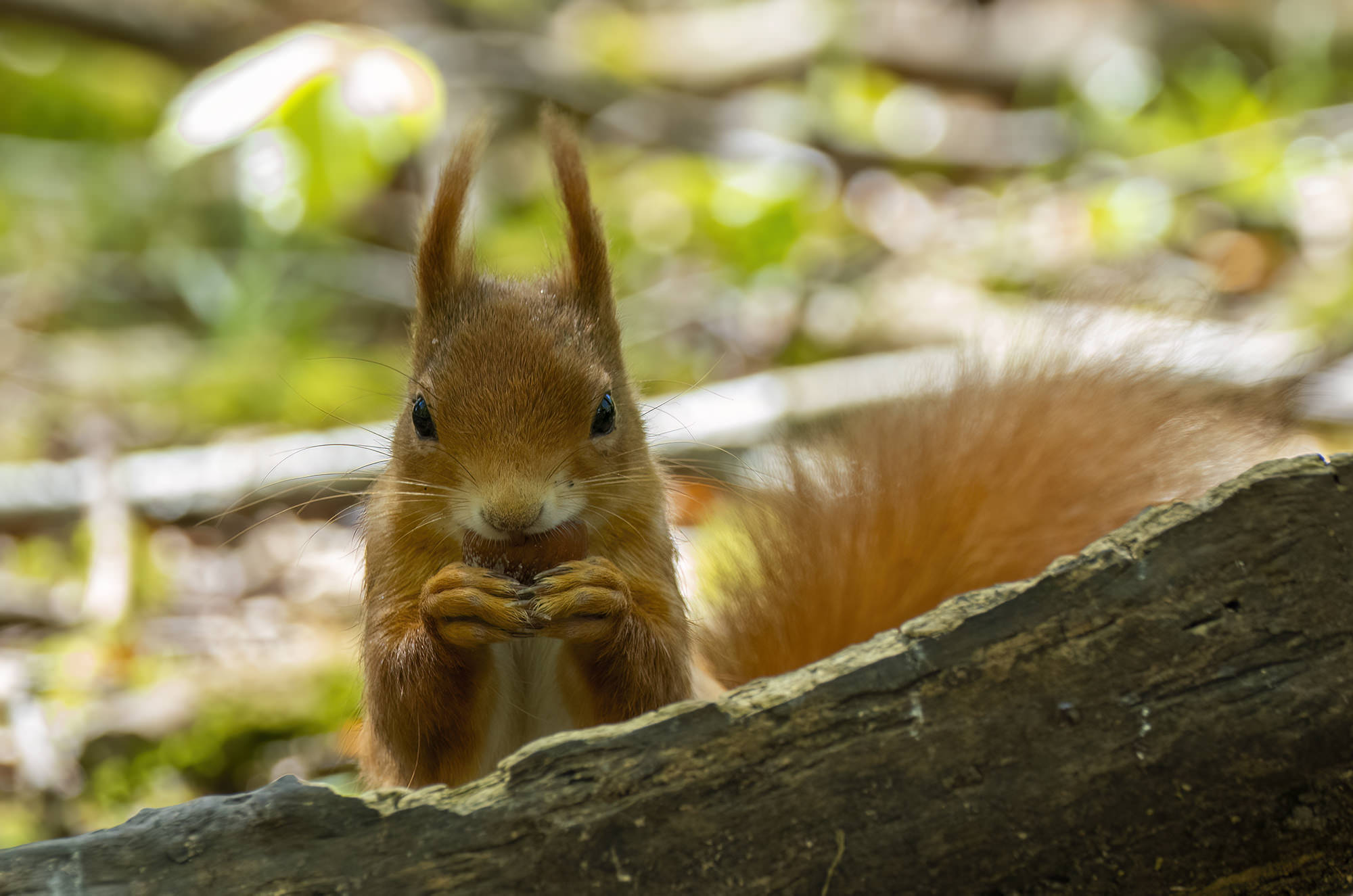
Earlier this month, we had family visiting from Hertfordshire and I thought it would be a lovely idea to take them to Argaty Red Kites, near Doune in Stirlingshire. We’d taken them there in 2017 to see the red kite feeding, but they hadn’t been back since – mostly because red kites have become a pretty common sight in the skies above their village.
However, my mum has never seen a red squirrel and wanted to see one, so I thought Argaty would be a pretty safe bet to help her achieve that. I mean, every time we’ve visited the hides at Argaty previously, there have always been a few individuals bouncing around.
Not this time, though.
We had 90 minutes in the lunchtime hide and 88 of those minutes were spent staring desperately into the shifting shadows as the wind buffeted the trees and the skies above the woodland darkened. While my mother attempted to reassure me about the lack of red squirrels and insisted that she knew wildlife encounters were never guaranteed, I felt guilty.
And the only outcome that could alleviate that guilt was a frantic whisper of “over there”, which came in the 89th minute of our time in the hide. My stepdad had finally spotted the elusive red squirrel and, while looks of delight spread across my family’s faces, I breathed a deep sigh of relief.
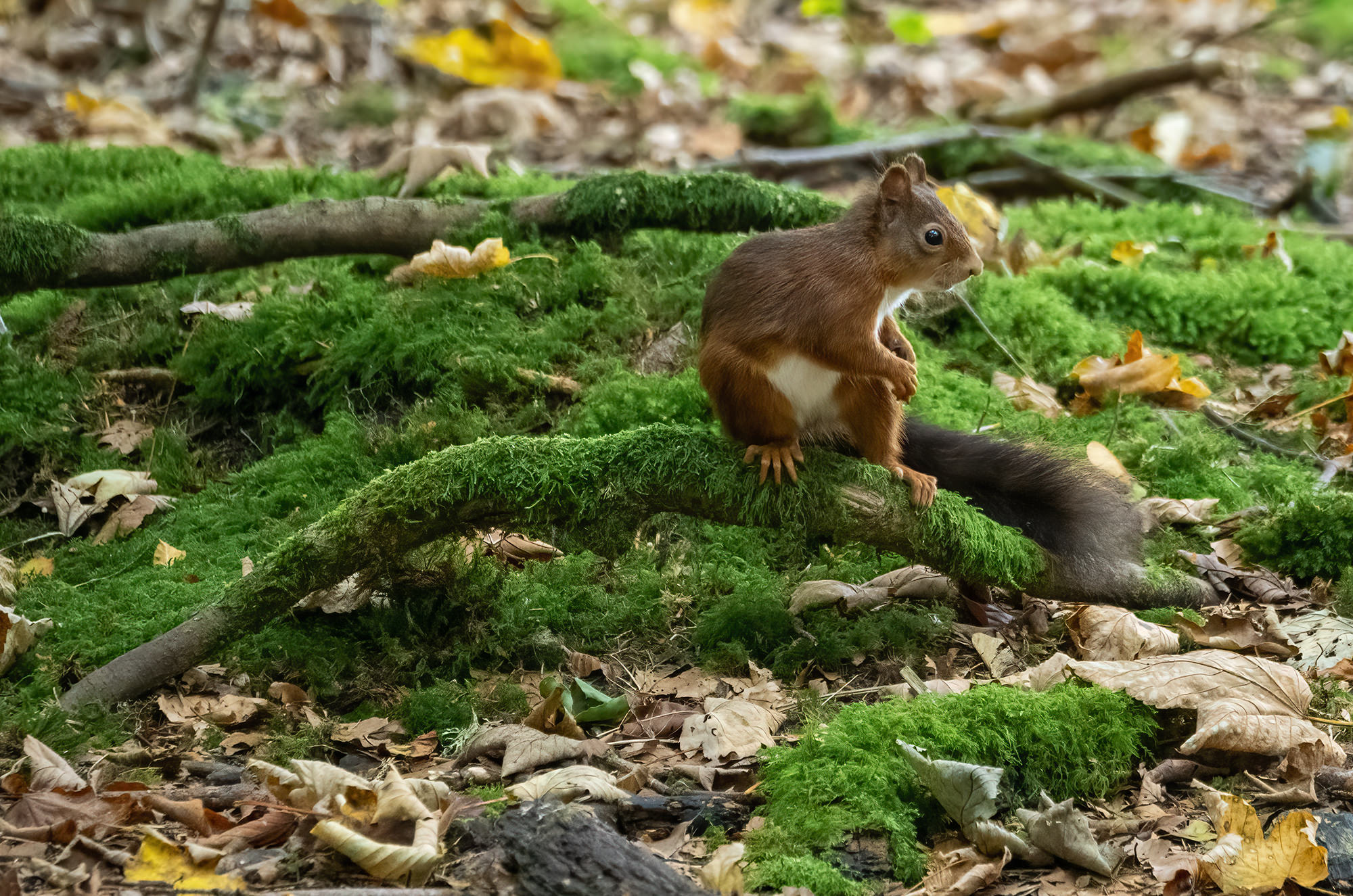
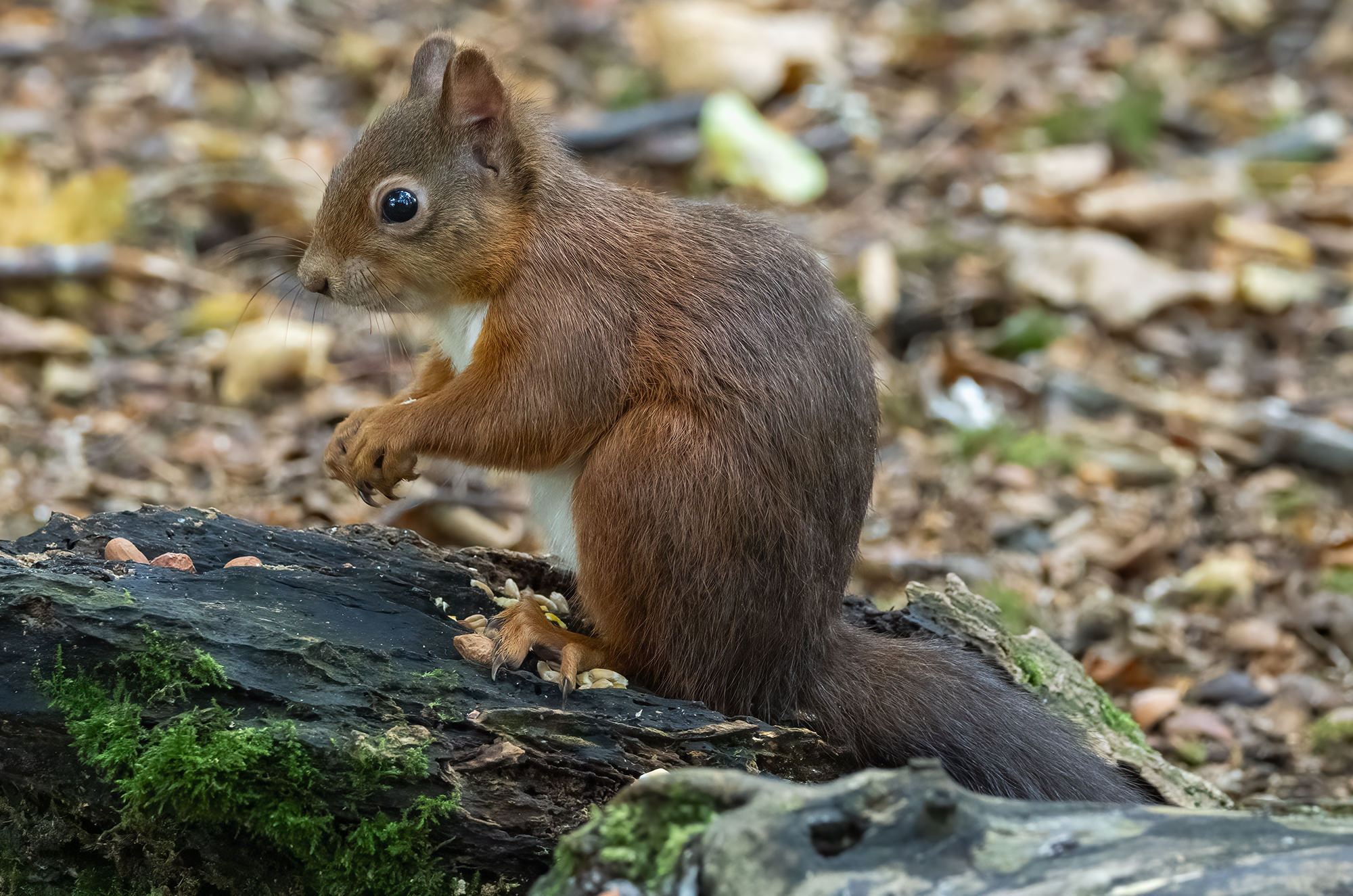
I’m going to be honest and say we did stay in the hide for a few more minutes than we’d booked – mostly because we didn’t want to scare away Squirrel Nutkin after he’d finally put in an appearance and risk depriving him of his nut-based reward. But also because I wanted to at least capture a few images that I could send to my mum afterwards of ‘her’ squirrel.
A squirrel in the shadows
While a red squirrel did show up for us in the end, one thing that didn’t was the light.
It was a grey September day and, with the woodland adding another layer of shade, it was actually pretty dark. So much so that I couldn’t see much without my glasses.
When the red squirrel appeared, I knew I would need to push my ISO up to try and get any decent images of his fast-moving antics. However, when I checked my images afterwards, many shots were in focus but suffered from too much motion blur. My ISO simply hadn’t been high enough.
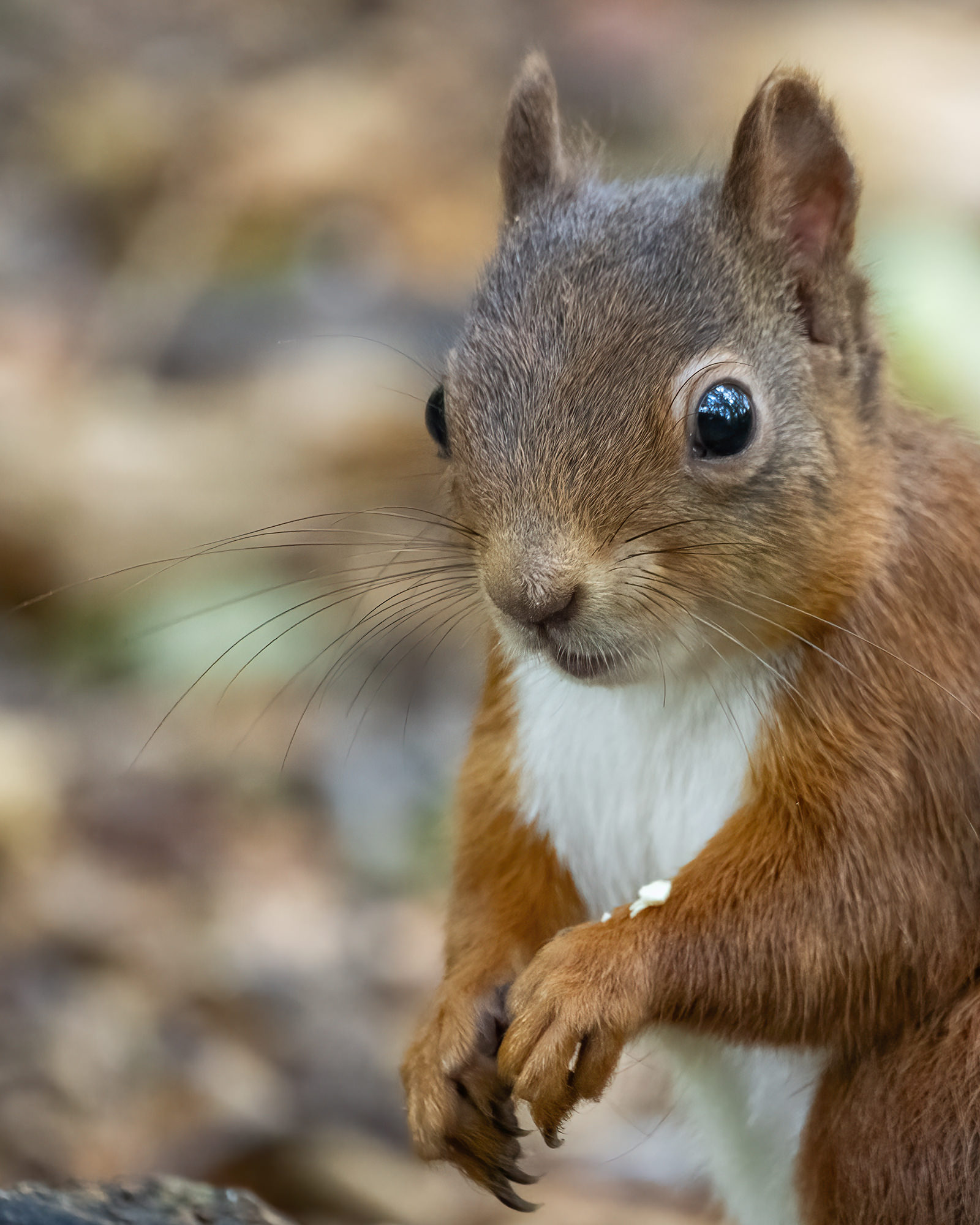
That said, I did manage some half-decent portraits considering the conditions, but no action shots of my scampering subject.
Learning from motion blur
Now, I’m well aware that photographing in woodland is always tricky. The years I’ve spent photographing roe deer and foxes in woodland have taught me that much at least.
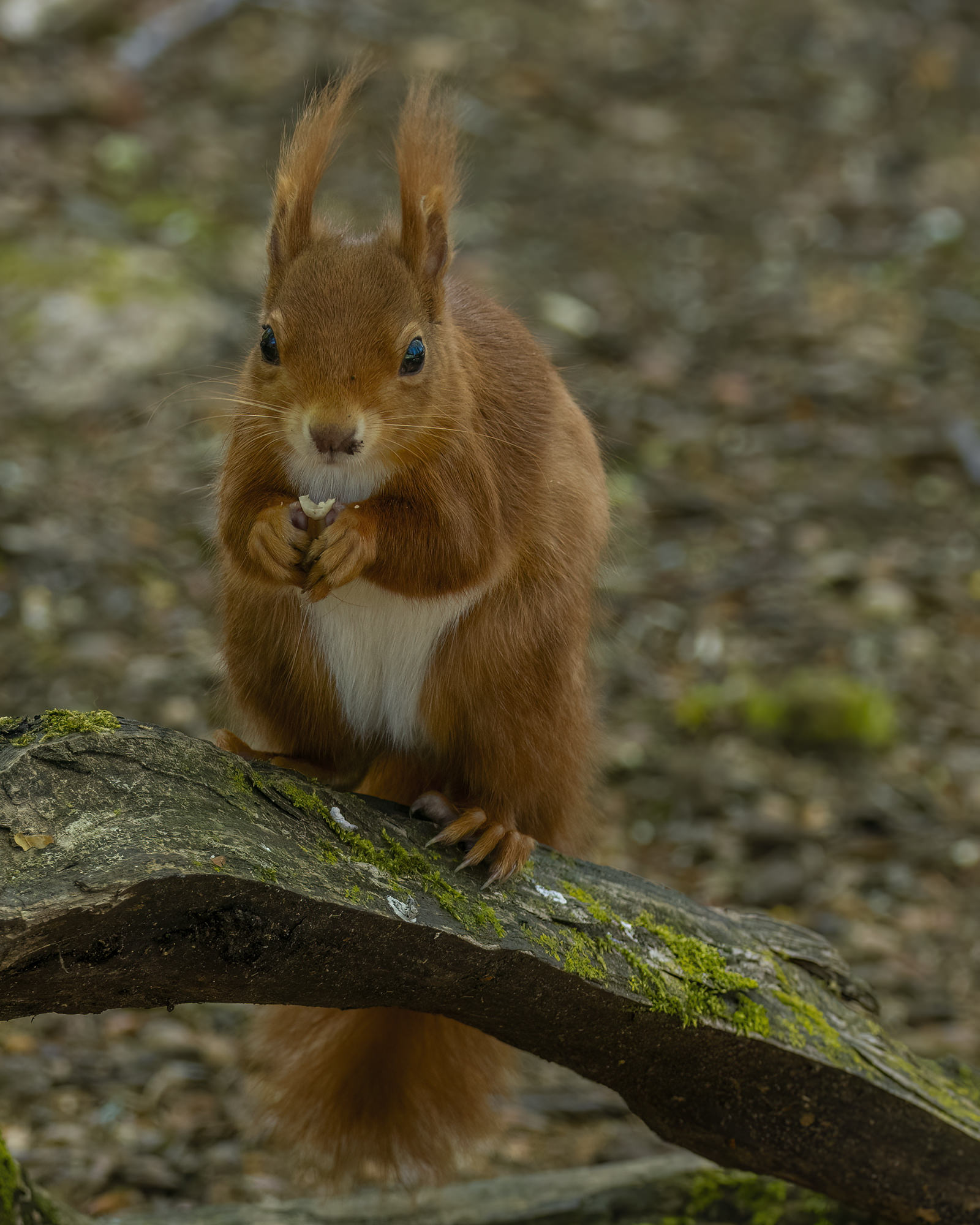
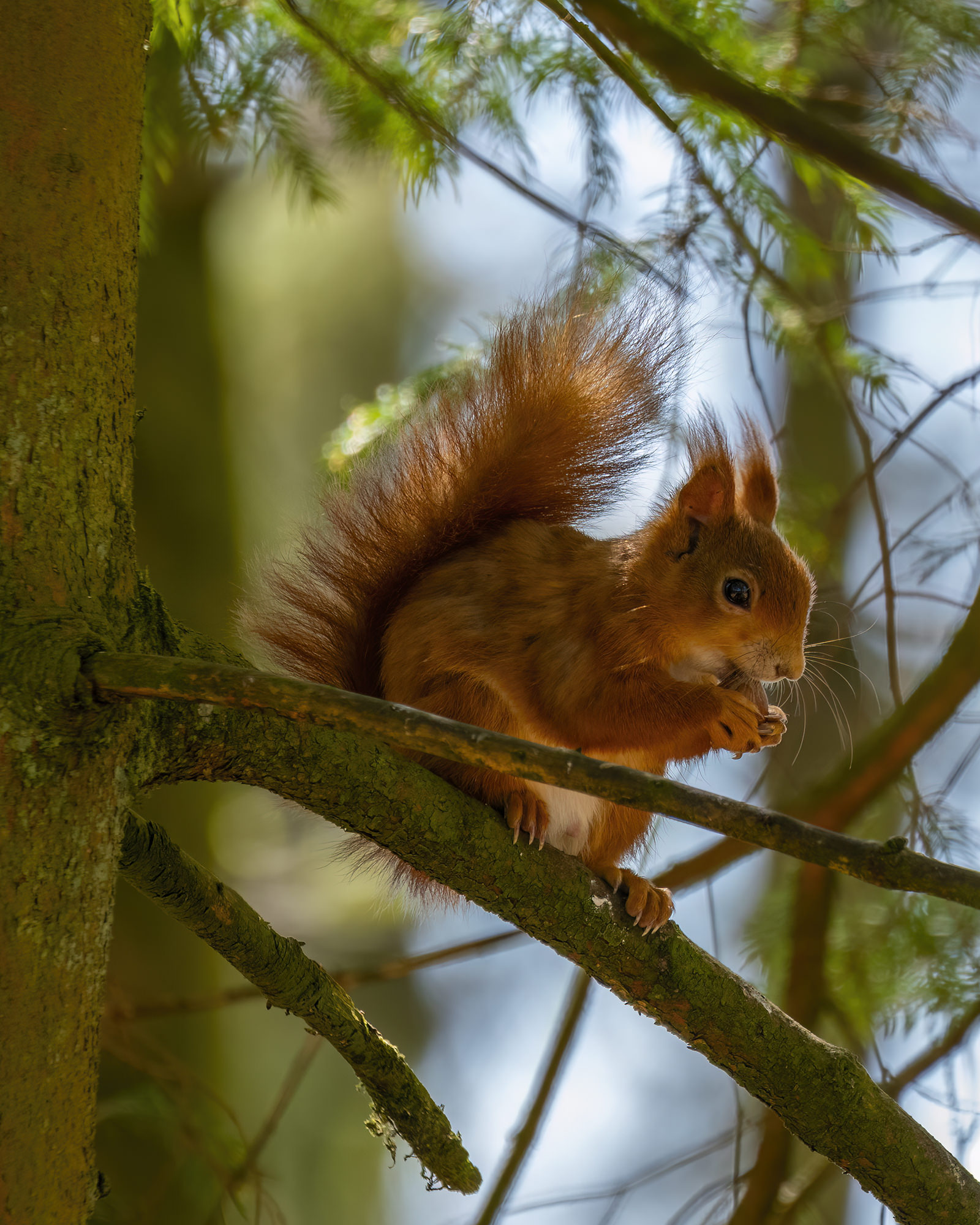
And it’s not just the lack of light that can be an issue – it’s the changing nature of light and shade. It’s bright one moment and dark the next or, as in some of my images from my last trip to Argaty back in April, ridiculously bright and dark in the same image.
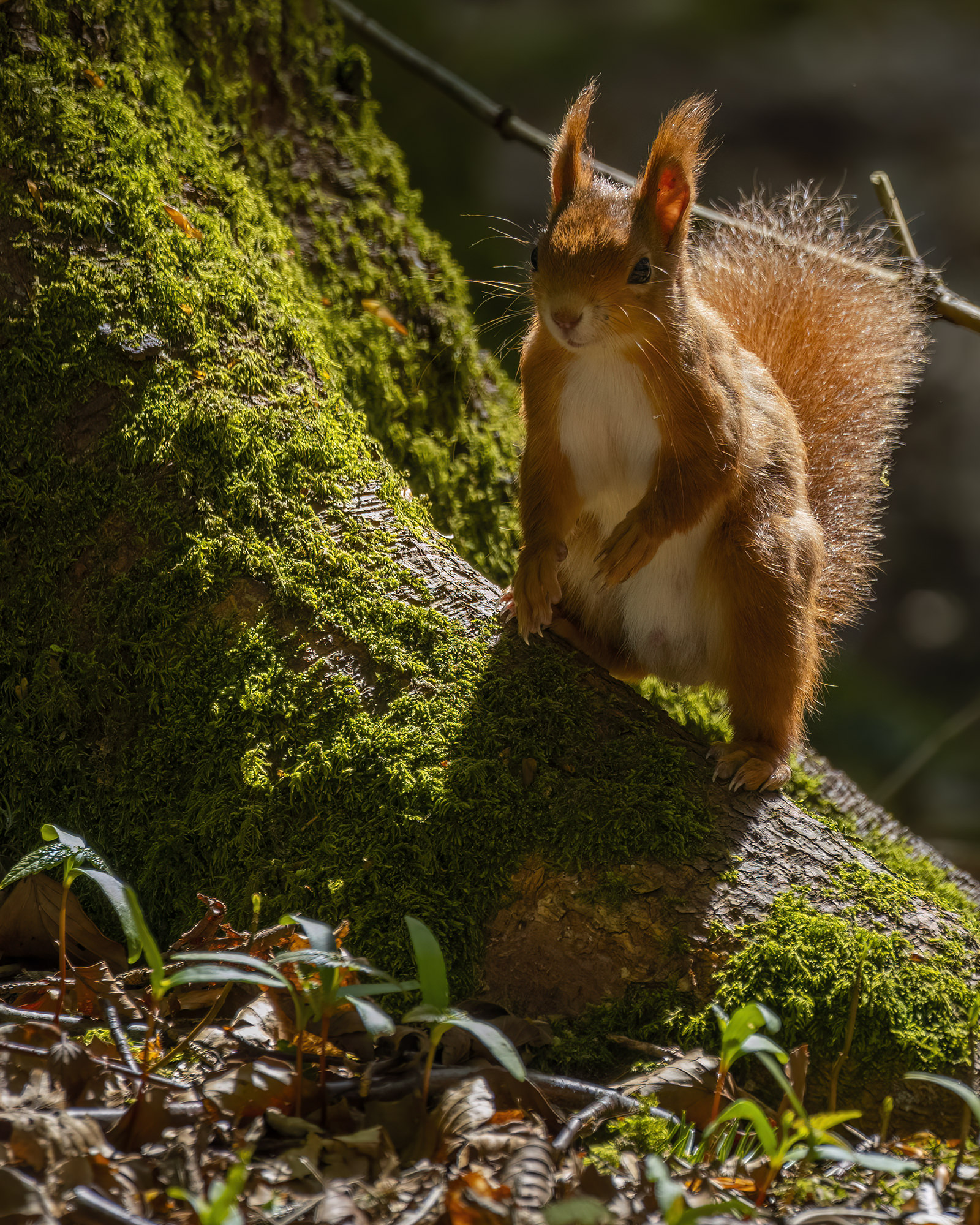
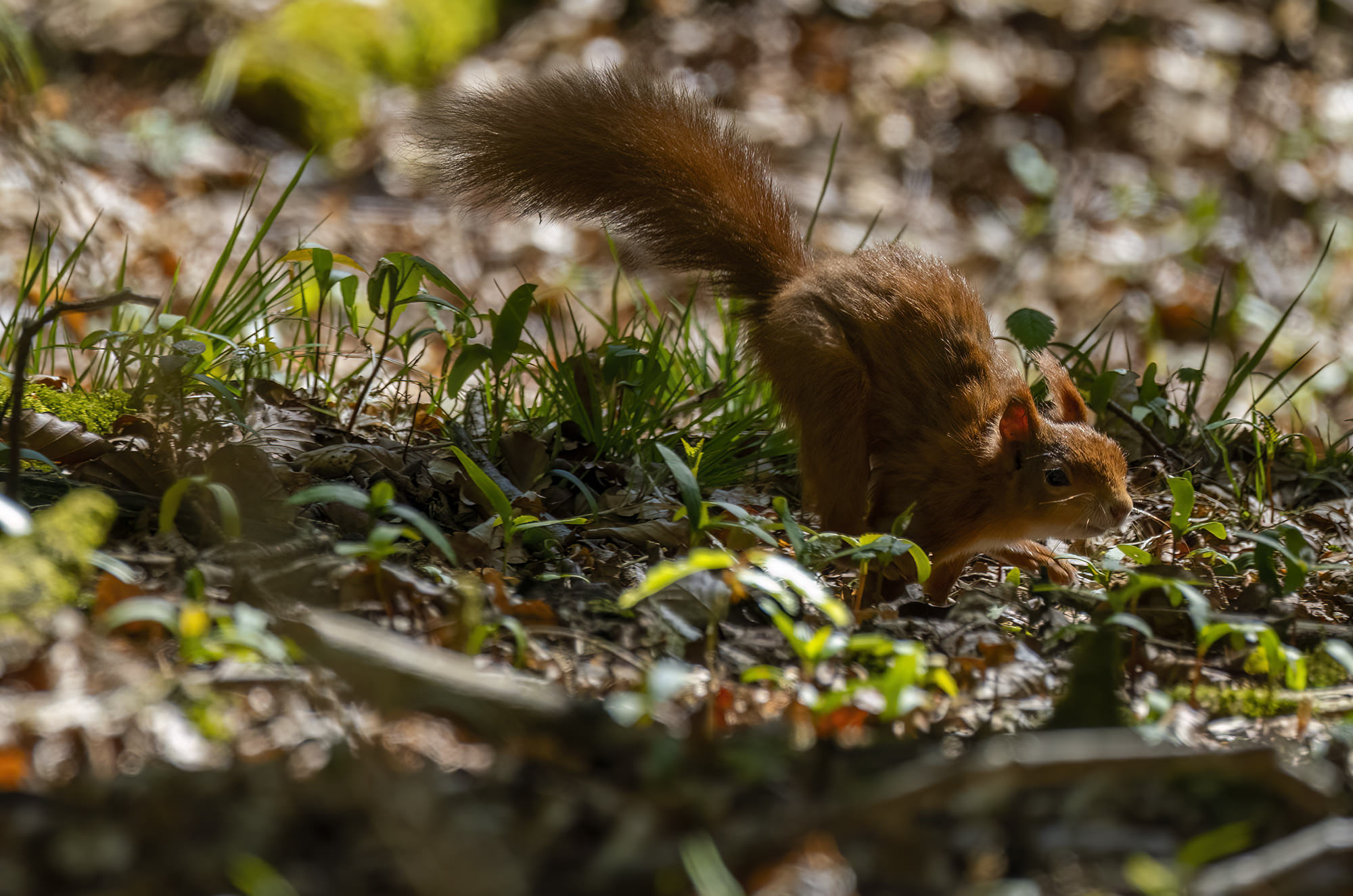
This also means that even on a sunny day, as it was back in April, you can still have issues with motion blur if you don’t get your shutter speed right. I only just got away with it back then.
So what’s the solution?
Well, obviously, keeping a closer eye on my shutter speed and increasing it accordingly would solve a lot of my problems. Although I have to confess that I do have a tendency to take my eye off my settings when I’m completely absorbed in a wildlife encounter. I also rarely change the mode I shoot in. Guilty as charged.
You see, I’ve always shot in aperture priority. I remember reading Chris Weston’s book Digital Wildlife Photography when I got my first DSLR and, in the section on starting out, he recommended using aperture priority alongside multi-segment metering as a good way of taking more control over exposure while still allowing the camera to handle some of the work.
So, I set my camera up using aperture priority and have done so with every camera I’ve had since then.
I know that by controlling the ISO in aperture priority, I can indirectly control my shutter speed. But I’m often cautious about pushing up my ISO. I’ll try to get away with a slower shutter speed before I have to give in and push it higher.
My approach is fine if I’m with a subject for a period of time where I can keep making adjustments until I’m happy. But, as with the fleeting red squirrel, I should have gone with a higher ISO straight away.
As Andy Rouse says over and over in his tutorials, these days you can fix noise in an image during editing – or learn to love the grain – but you can’t fix an image that isn’t sharp in the first place.
A little manual motivation
So, what else can I try?
I think giving myself a couple of options might help me to make decisions about settings more speedily during encounters when I need to react quickly to my subject and the changing light conditions.
Espen Helland made the point in his newsletter that, although he has recently started using aperture priority, he still prefers to revert to his manual setup for birds in flight and other fast action. So, I’ve decided to set up my camera with custom modes so that I can easily switch between aperture priority, where I’m setting both the aperture and ISO, and manual mode with auto ISO.
I’m hoping this will enable me to quickly see what is working best in each situation, and force myself to be less cautious about changing my settings.
I’ll be honest and say I don’t use half of the available functions on my OM-1, and it’s about time I did – including the custom settings. So, that’s my challenge to myself for the next few months.
I’ll let you know how I get on.
It’s funny how a wildlife encounter that lasts only a few minutes can leave you thinking about your photography for much longer afterwards.
How about you? What are your ‘default’ settings, and do they work for you all the time? Are there any functions on your camera that you know you should make more use of? I’d love to hear your thoughts – and advice! – so please let me know in the comments.