
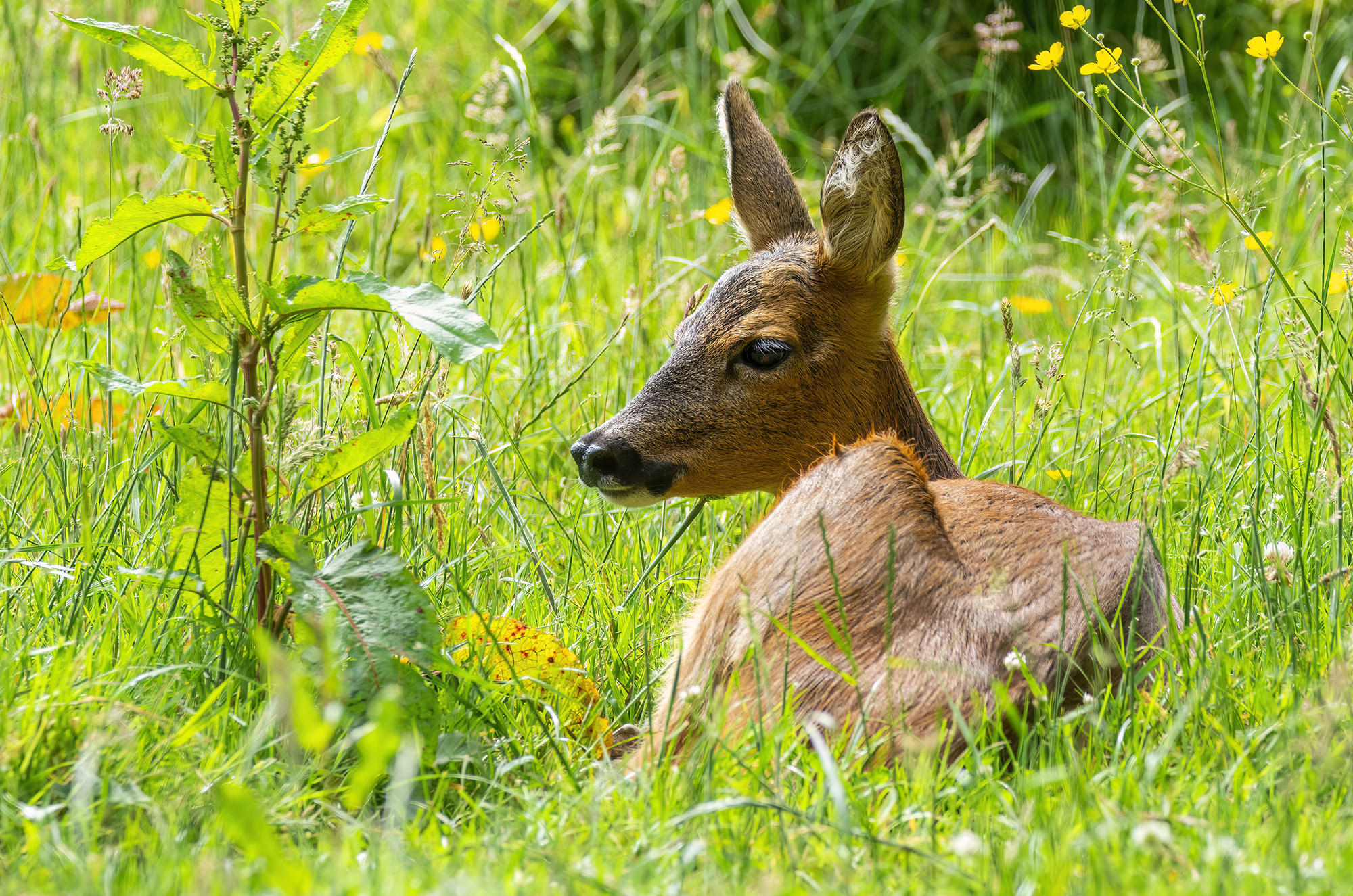
In the first part of this series, I wrote about how three roe deer transformed ordinary lunch breaks into a project that would shape the next four years of my wildlife photography.
What I didn’t appreciate at the time was that finding the deer was only the beginning. The real challenge wasn’t getting close to them. It was learning how to behave in a way that allowed them to carry on with their lives.
Roe deer fieldcraft begins with observation
People often ask how I managed to photograph wild roe deer at such close quarters. The answer is surprisingly simple. I didn’t make them do anything. Instead, I spent four years trying to become less of a disturbance. That wasn’t something I learned overnight. Like every wildlife photographer, I made mistakes.
There were days when I walked too quickly around a corner and found myself face to face with a startled doe. There were times, particularly before I acquired my thermal monocular, when I took one step too many into the woods and watched a white rump disappear into the distance. I had flushed a well-hidden deer without even realising they were there. Those moments were incredibly frustrating, and I often beat myself up over them, feeling that I had let the deer down. But, looking back, those mistakes also taught me so much.
Every deer reacts differently. Some tolerate people more readily than others. Some are naturally cautious, like the doe Red. Others seem to have never-ending patience, like the old doe Blue. They also appeared to have moods, just as we do. Learning to recognise those differences became every bit as important as recognising the individuals themselves.
Every deer is different
Young buck Russet was probably the best example of this in action. As a kid, he was curious and sometimes so confident that he would march right up to me to get a better look and a whiff of my scent, while his sister Ruby hung back.
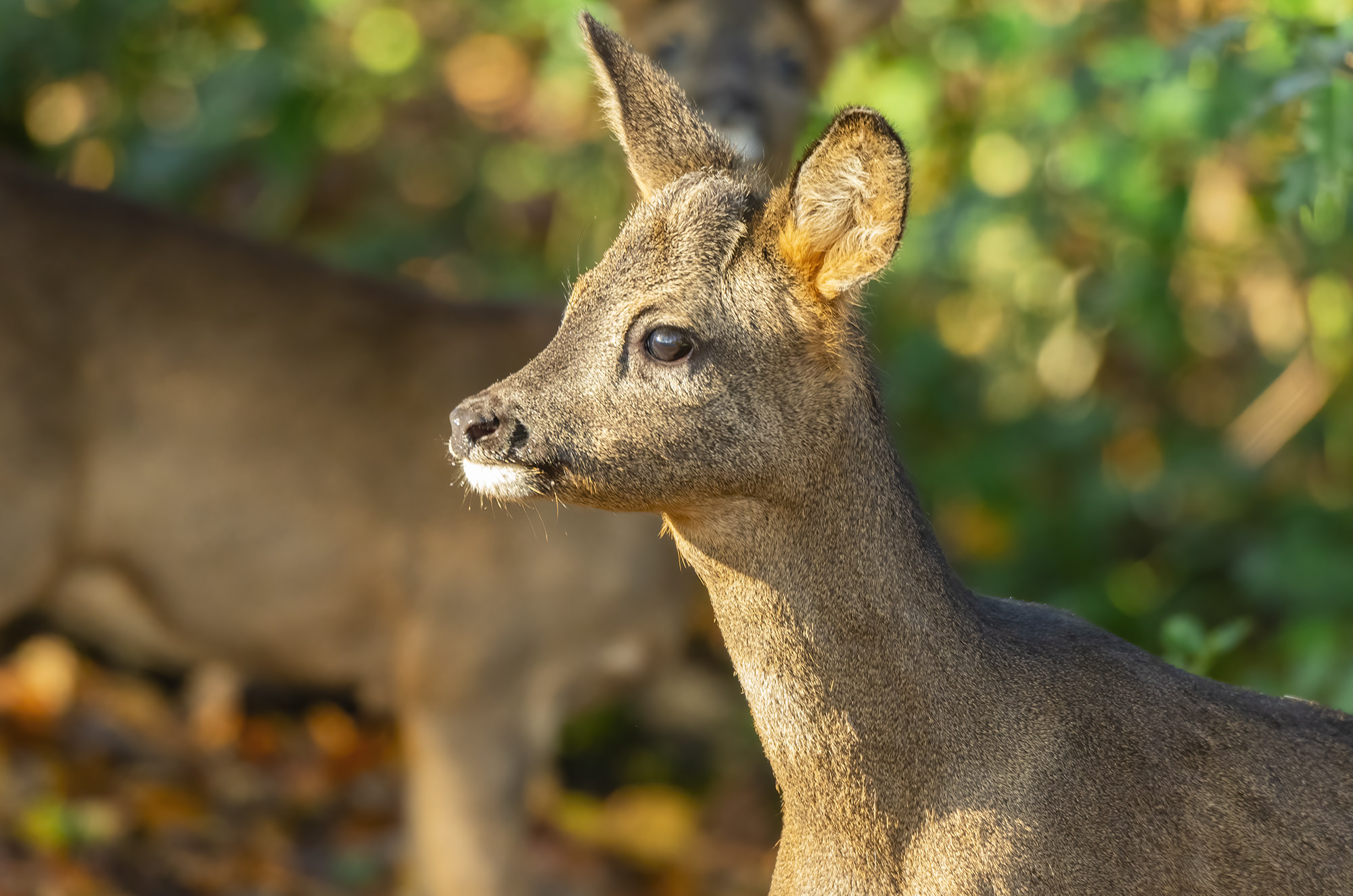
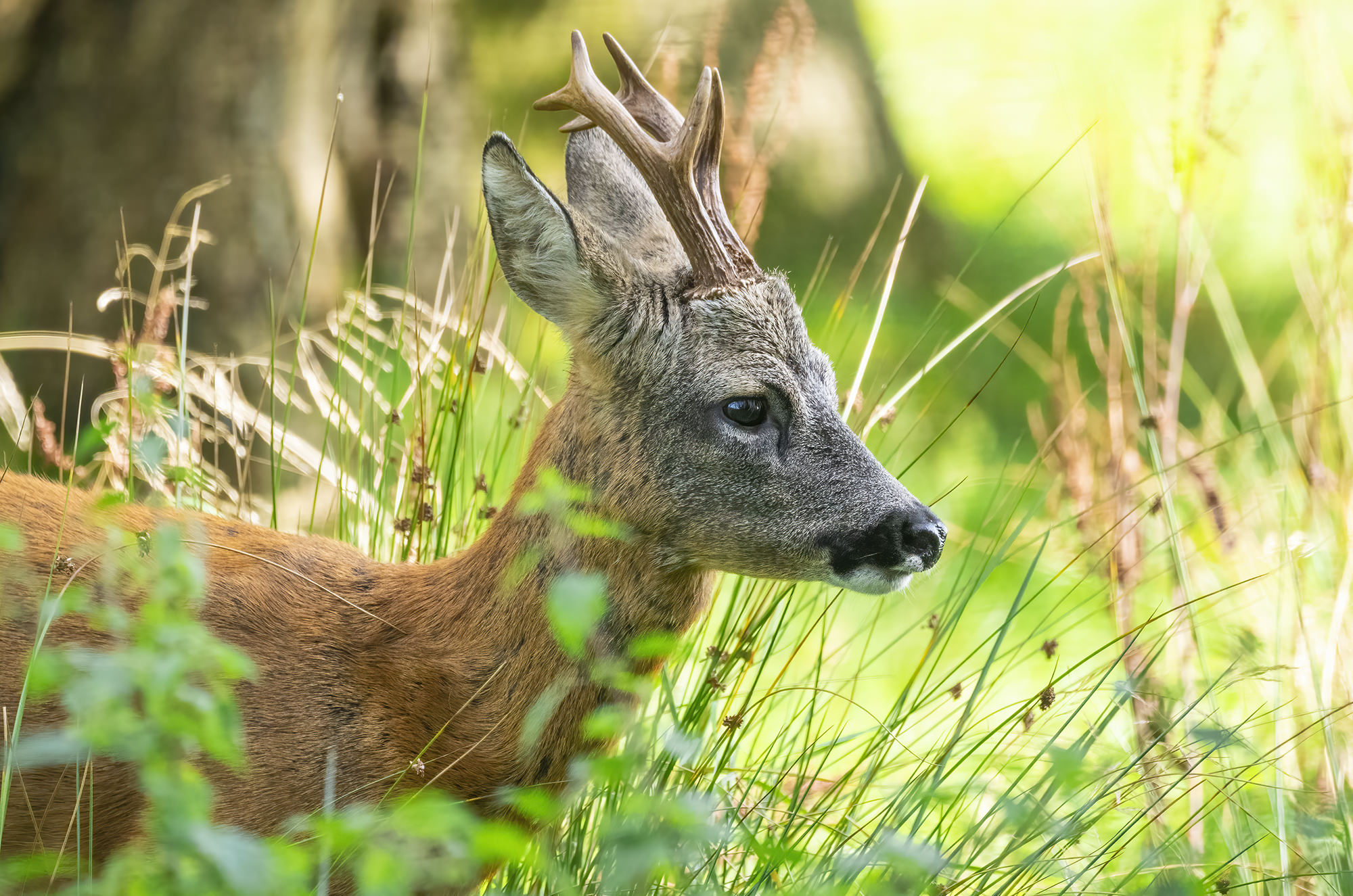
As Russet grew into an adult buck, I began to see a more cautious and territorial side to his character. Using a thermal monocular to spot him from a distance certainly helped, but capturing decent images without disturbing him also required me to pay close attention to his mood. Some encounters with him were relaxed, and his guard appeared to drop quickly in my presence. On other days, he would tolerate me only at a certain distance, slowly walking away to indicate his preference for more space. Occasionally, I knew straight away that he would rather not have me around at all. On those days, it was my job to leave him to it and move away as quickly and quietly as possible.
Over time, I found myself paying more and more attention to the deer’s body language: the position of their ears, the angle of their heads, whether their posture was relaxed or stiff, and whether they continued browsing uninterrupted. Those small details taught me things that no field guide could have taught me about these individual deer.
I also began to realise that wildlife photography isn’t always about moving forwards. Sometimes the best decision is to stay exactly where you are. Sometimes it’s to take a step backwards. And sometimes it’s to quietly admit that today simply isn’t your day. That wasn’t always easy. When you’ve only got an hour before work calls you back, every encounter feels precious.
But I quickly learned that leaving a deer undisturbed was never a missed opportunity. It was an investment in the next encounter.
Learning when to leave
Early on, I made a conscious decision to try to always be the first to leave. My reasoning was simple: if the deer learned that I would arrive, spend some time nearby and then leave without causing them any harm, perhaps they would gradually become more relaxed in my presence. I worried that if I regularly caused them to move away first, they would never have the opportunity to learn that I was simply a familiar and non-threatening presence in their environment.
For example, after taking the photograph shown below, curious baby doe Gamma came a little too close for comfort. Although Blue remained calm while I was nearby, I decided to move away before either she or Gamma became uncomfortable with the situation.
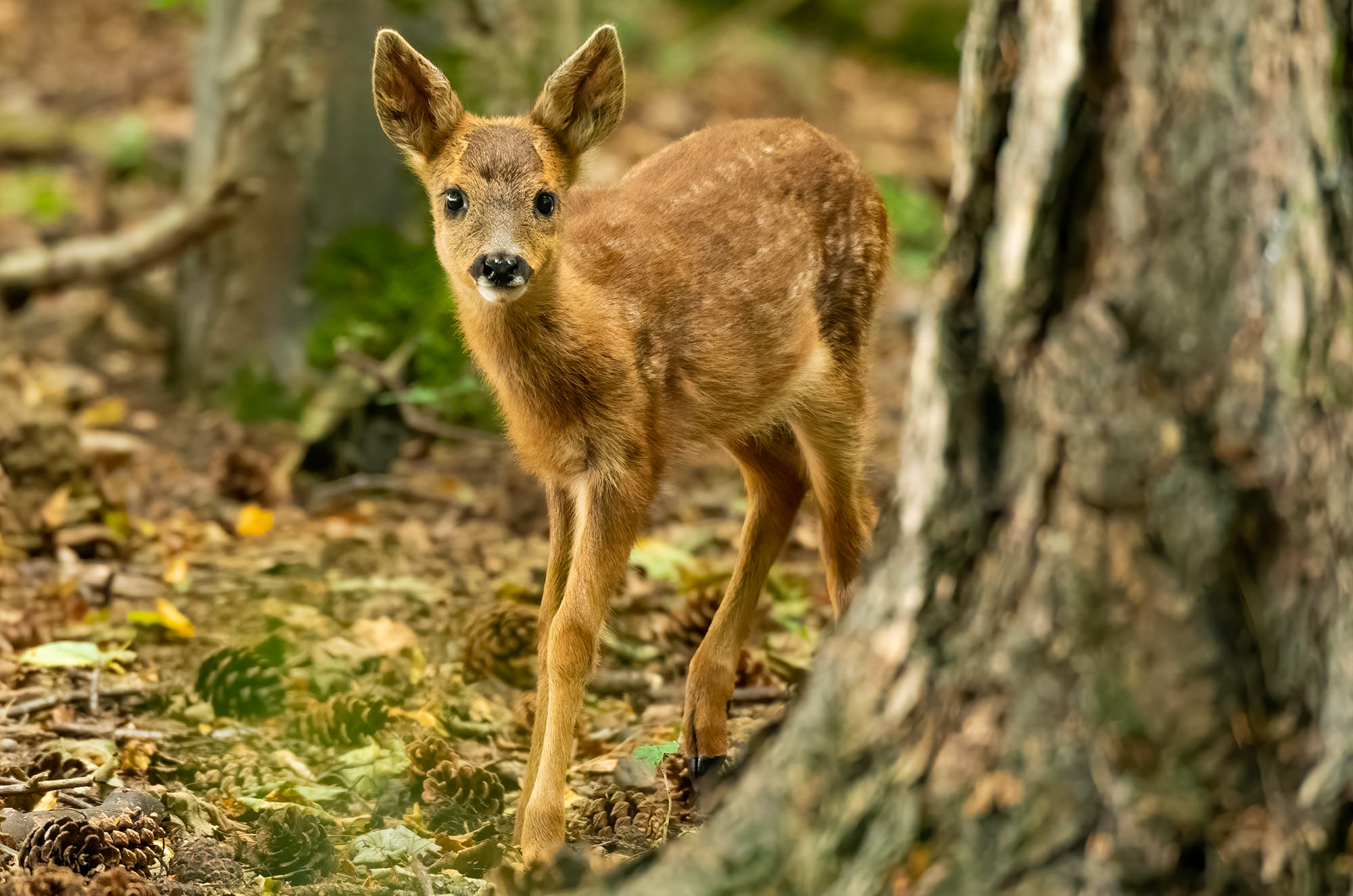
The consistency of my approach seemed to make a difference. The same gentle pace. The same predictable movements. Even the same quiet greeting – “hey deer, it’s only me”. I’ll never know whether the deer recognised my voice itself or simply learned that its familiar sound wasn’t associated with danger. What I do know is that, over time, they increasingly appeared comfortable continuing to feed, browse or rest while I quietly observed from a respectful distance.
As Blue’s babies grew, this consistency was reflected in encounters like the one shown below, where Blue and her daughter Gamma continued their normal behaviour while I photographed them nearby.
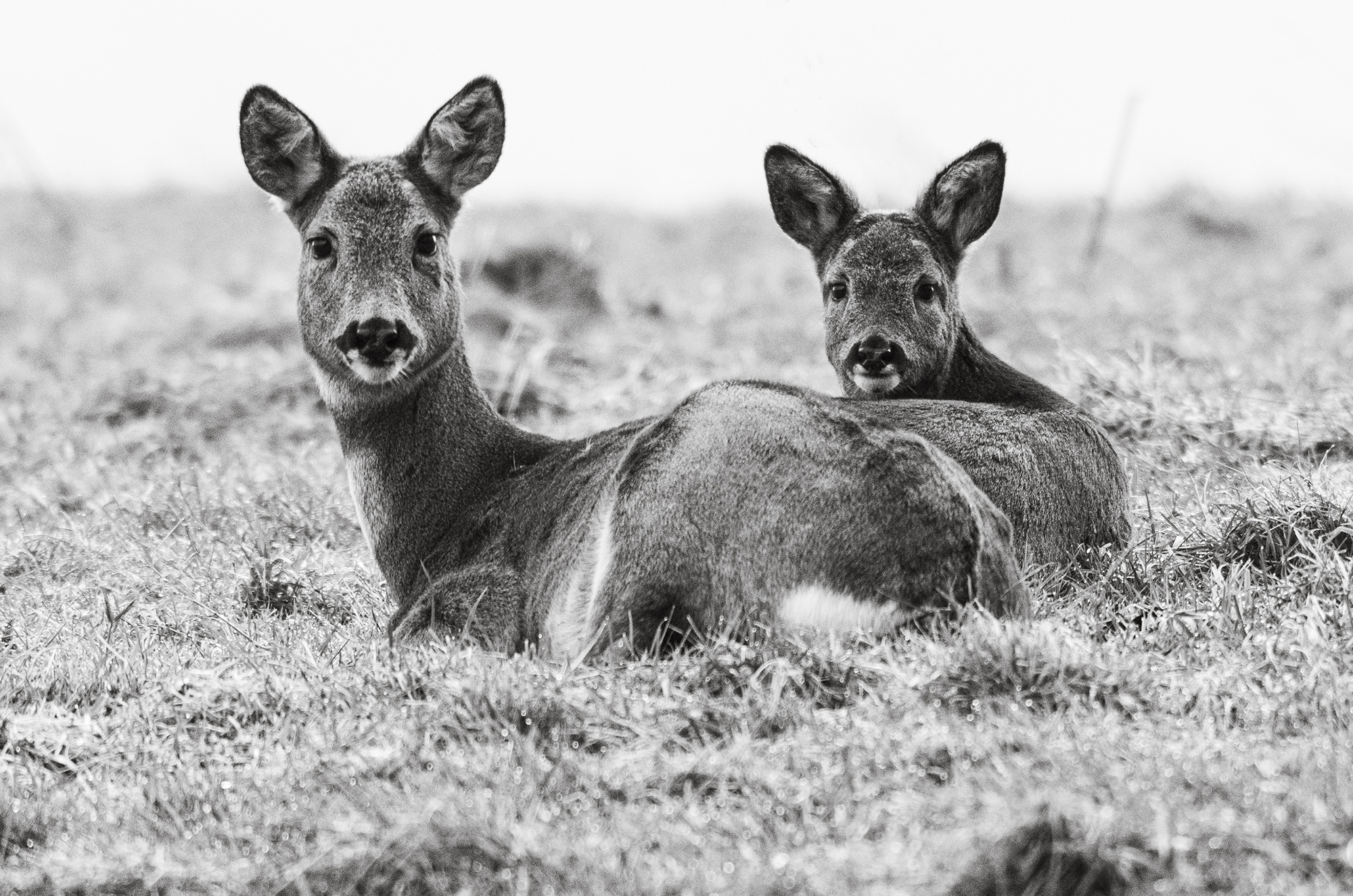
Those moments never felt routine. If anything, they became more special. Because every close encounter still depended on a decision that wasn’t mine to make.
The privilege of being allowed to stay
The image below shows the relationship coming full circle.
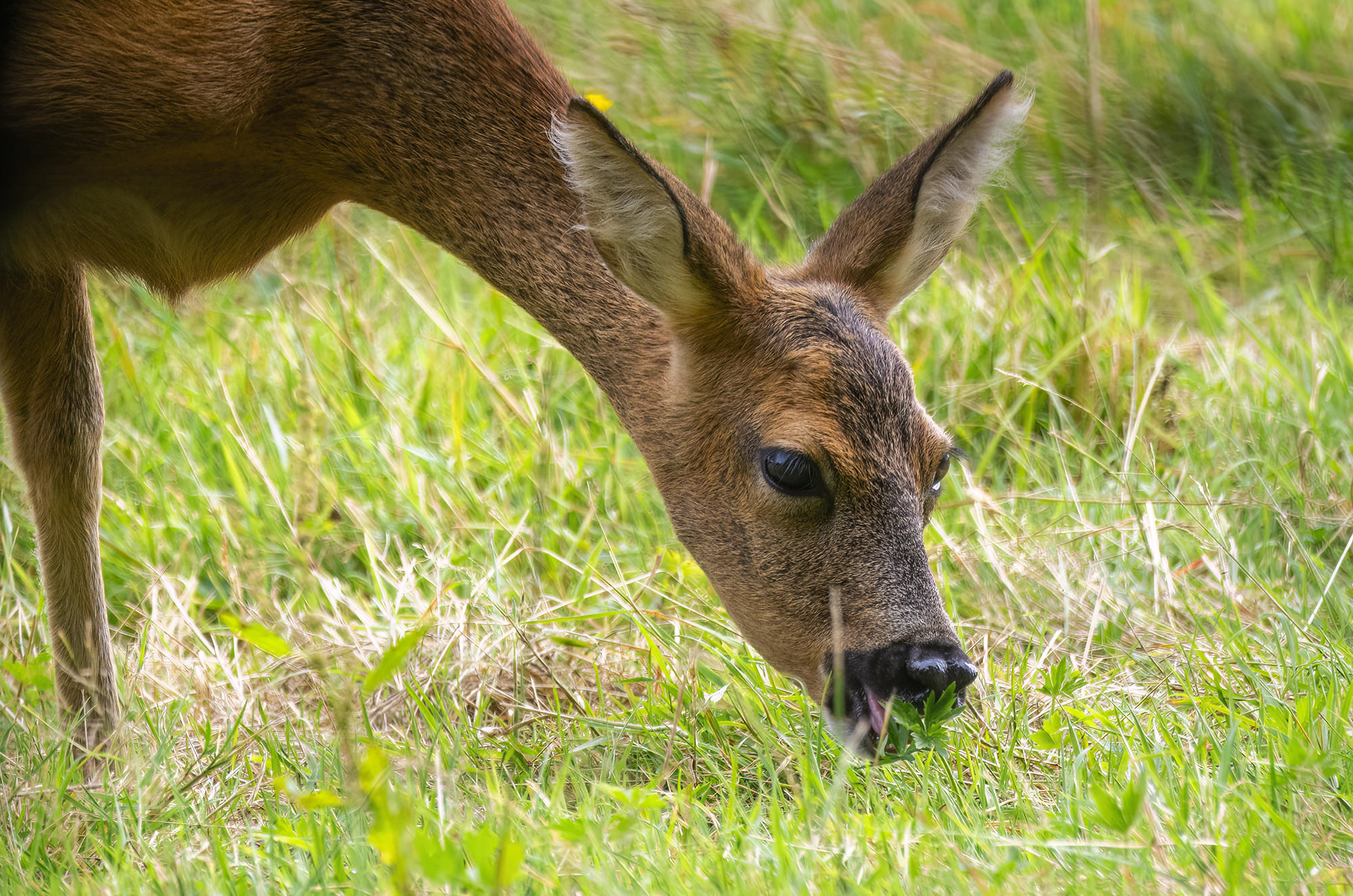
It was captured during an incredibly close encounter with Gamma after she had grown into a beautiful adult doe. She was slowly feeding her way across the field towards where I stood at the woodland edge. I was able to capture images as she fed just a few metres away. Having encountered me since she was a tiny kid, she was well used to the strange woman with the camera hanging around nearby and appeared comfortable continuing to feed in my presence.
People sometimes talk about earning an animal’s trust, but I’m not sure the deer ever truly trusted me. Perhaps an understanding is a more appropriate phrase. I knew that every encounter gave them another opportunity to assess me. Every calm moment was another chance they gave me to remain part of their world for a little while longer.
Even at the time, I realised that the greatest privilege wasn’t the photographs. It was witnessing ordinary moments and sharing space with these stunning creatures. Beta grooming herself. Hellboy sitting down while I stood nearby. Quint calmly listening to my humming while he fed just metres away, his ears flicking backwards and forwards. Gamma’s kids snoozing in my presence.
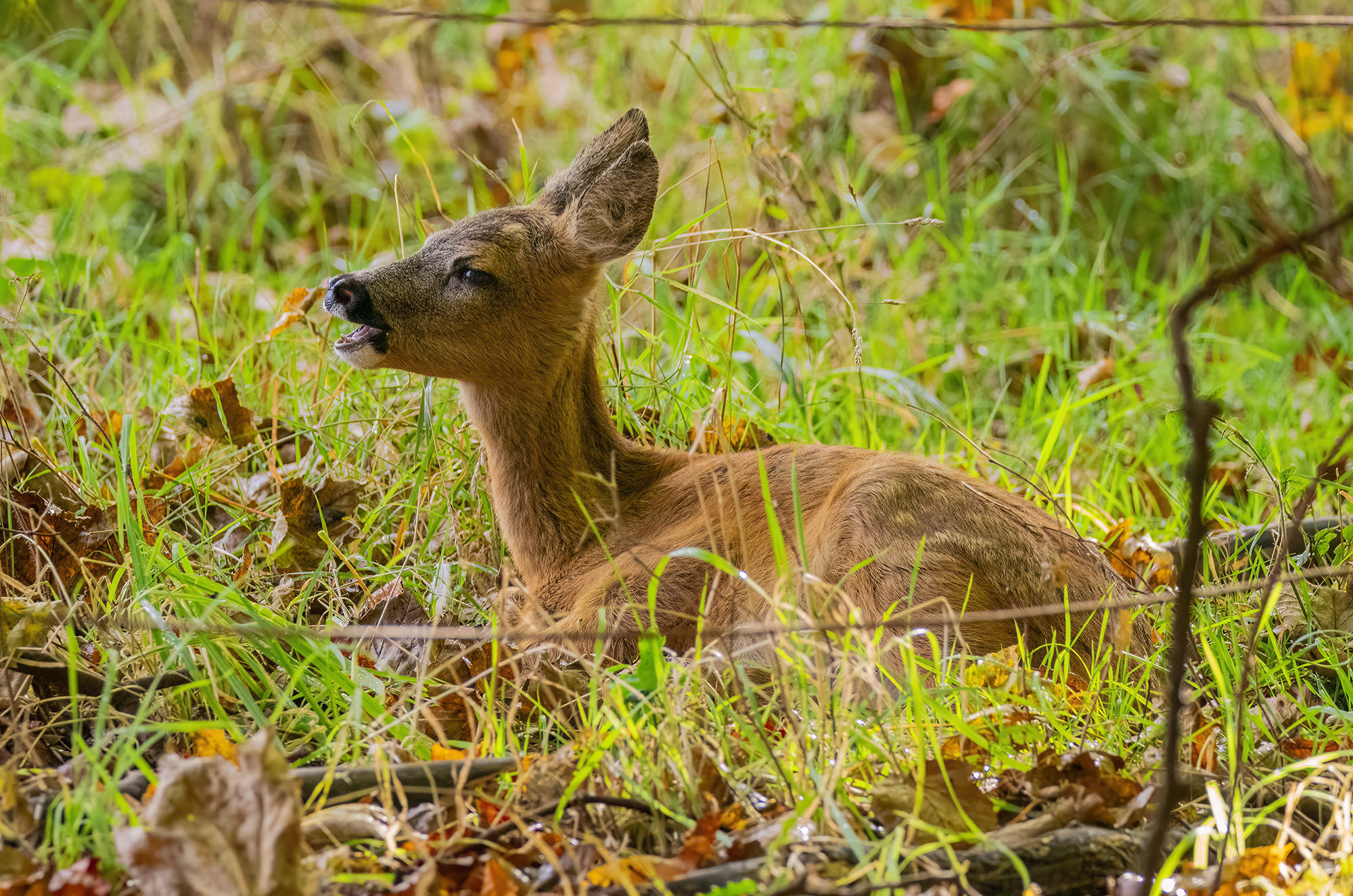
Those moments couldn’t be demanded. They could only be received.
The deer taught me that wildlife photography isn’t really about getting closer. It’s about giving wildlife enough time and space to choose whether to let you stay. That lesson has stayed with me ever since. Now, whenever I photograph any wild animal, I try to remember that the encounter isn’t happening simply because I found it. It’s happening because, for a few brief moments, that animal has decided my presence is something it can tolerate. For me, that is a far greater privilege than any photograph I could ever take.
The image below was captured after I sat down on the ground near to where Gamma had tucked herself up.
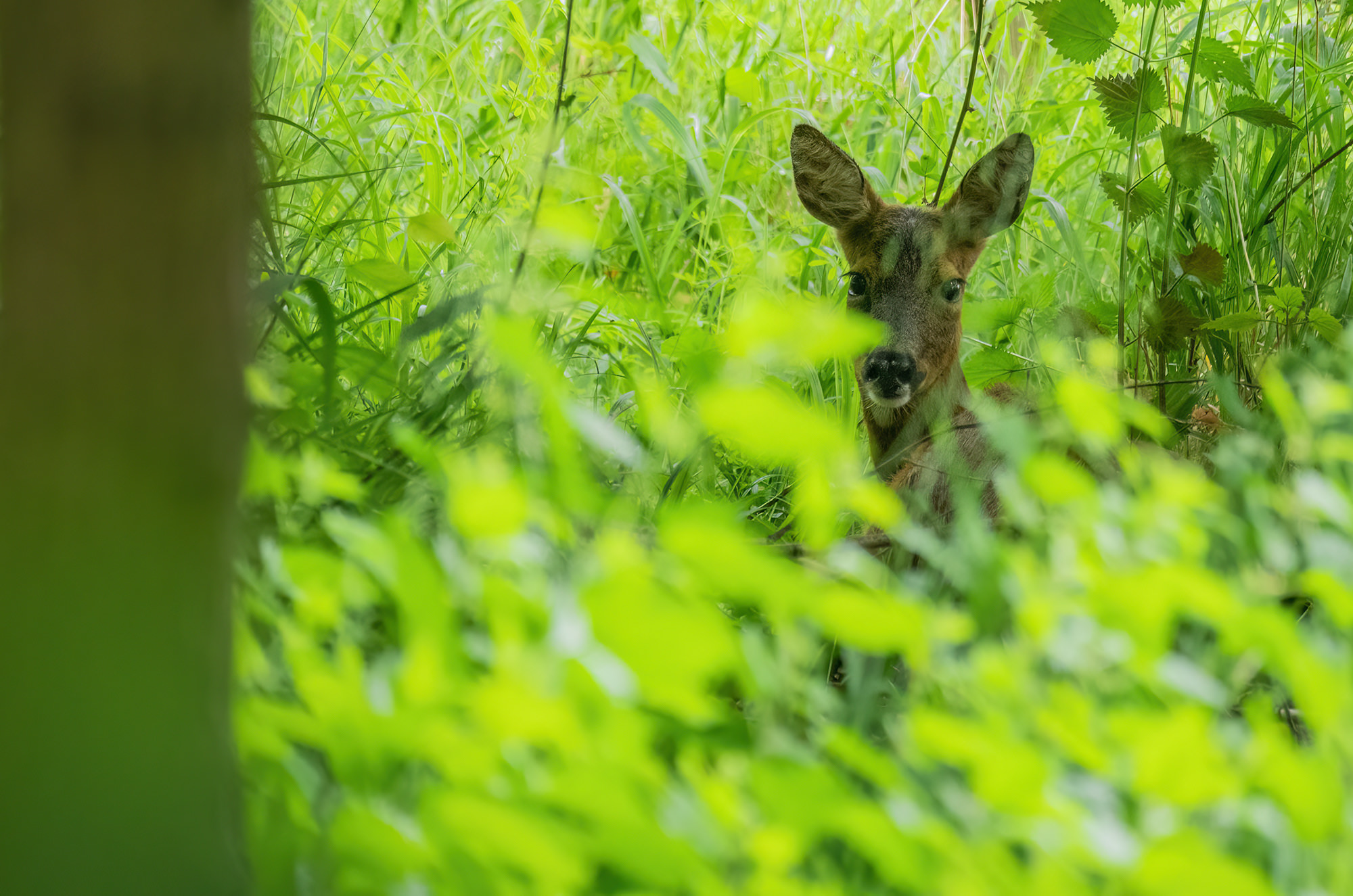
I’m going to be honest and say that I didn’t take many photographs during this encounter. This wasn’t about photography. It was about sitting with her for a while as she remained tucked up and undisturbed. It felt like a gift, and I accepted it gratefully and quietly. For a while, we simply shared the same space. After some time, I got up quietly and left her exactly where I had found her.
In the next part of this series, I’ll explore how learning to watch the deer also taught me to read the clues they left behind. From hoofprints and bedding areas to well-used paths through the woodland, the landscape was telling stories long before I saw the deer themselves.