By this point in my relationship with the roe deer, I had learned two important things. Firstly, the deer were very good at spotting me when I made a mistake. Secondly, they were considerably better at hiding from me than I was at finding them.
For a long time, my lunchtime visits involved walking through the woodland hoping to catch a glimpse of a familiar face. Sometimes I was lucky. Often I wasn’t. But gradually, I began to realise that the deer were leaving clues behind. A flattened patch of vegetation. A set of hoofprints disappearing into the undergrowth. A well-worn path through the long grass. A freshly browsed branch. A patch of dirt that looked suspiciously like somewhere a deer had spent the night.
The woodland was full of evidence. I just had to learn how to read it.
Learning to look for clues
At first, I probably walked past most of these signs without noticing them. I was looking for deer, rather than looking for evidence of deer. But once I started paying attention, I couldn’t avoid noticing the clues.
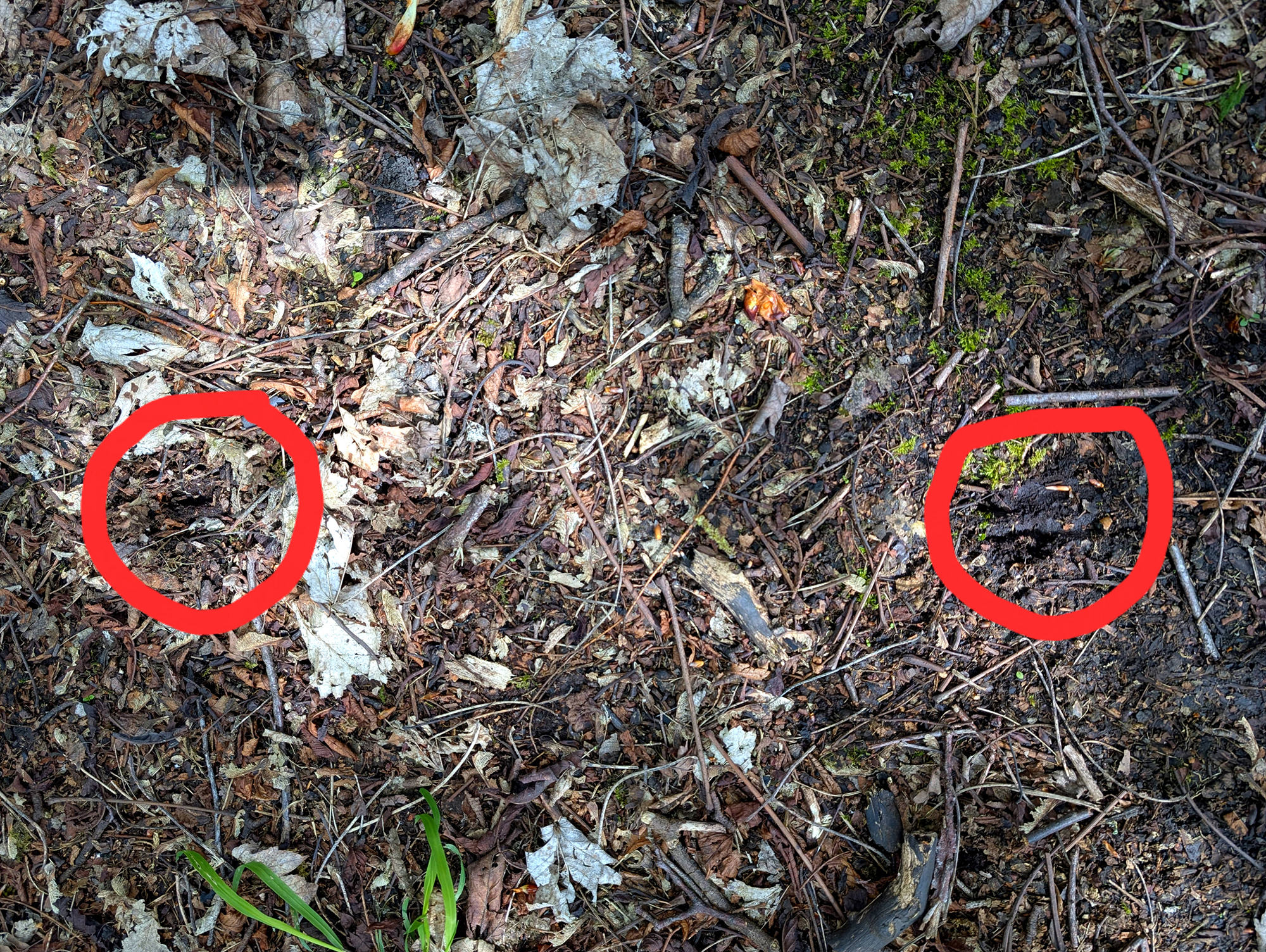
I remember when I first saw young buck Hellboy tucked up on the woodland floor. The next day I returned to that spot and found a perfectly clear area in the leaf litter where his body had been.
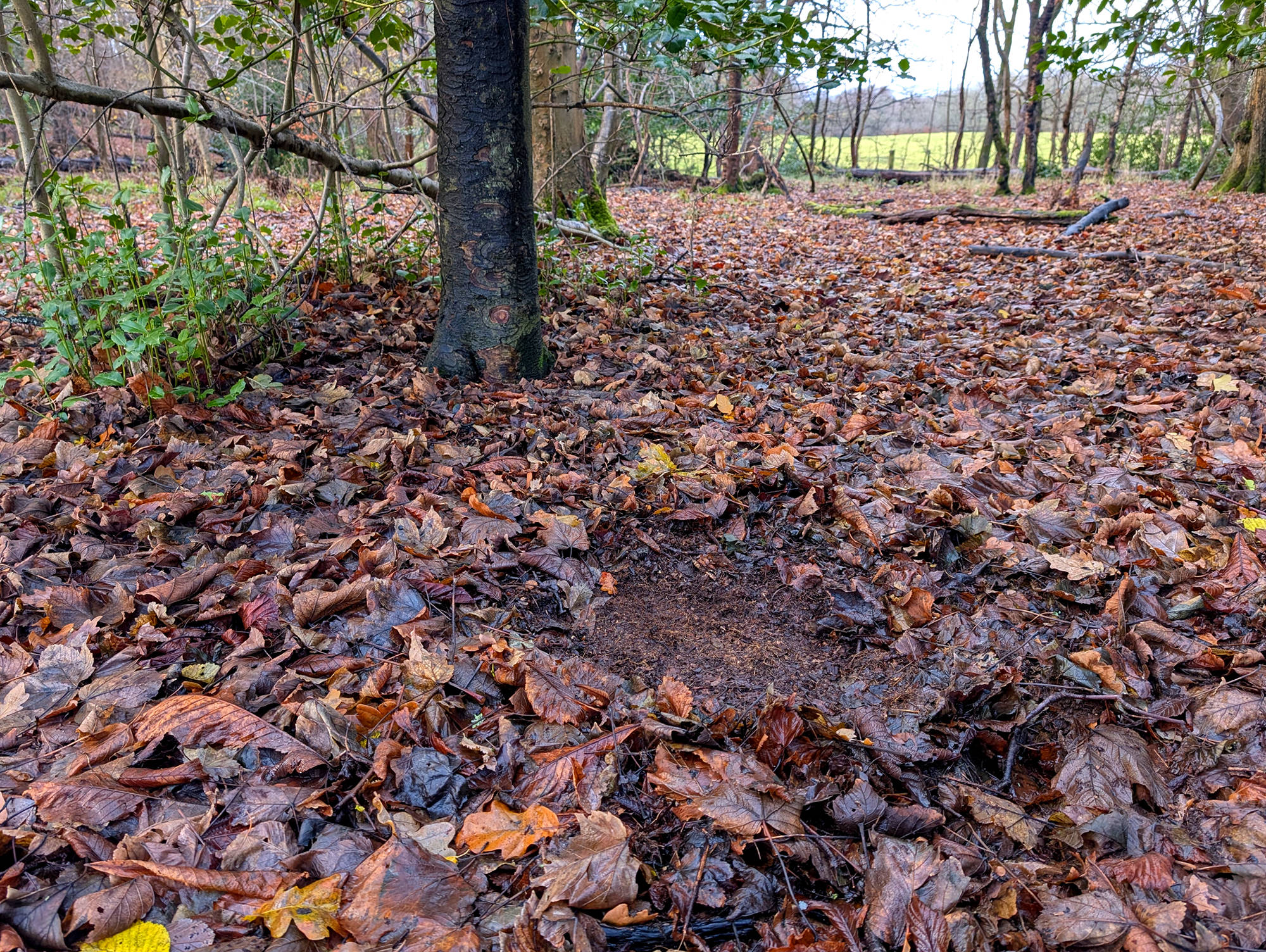
These bedding areas, sometimes called couches, became particularly interesting to me. A patch of dirt or a flattened area of vegetation might look insignificant to someone walking past, but once I’d learned what to look for, I began noticing them everywhere.
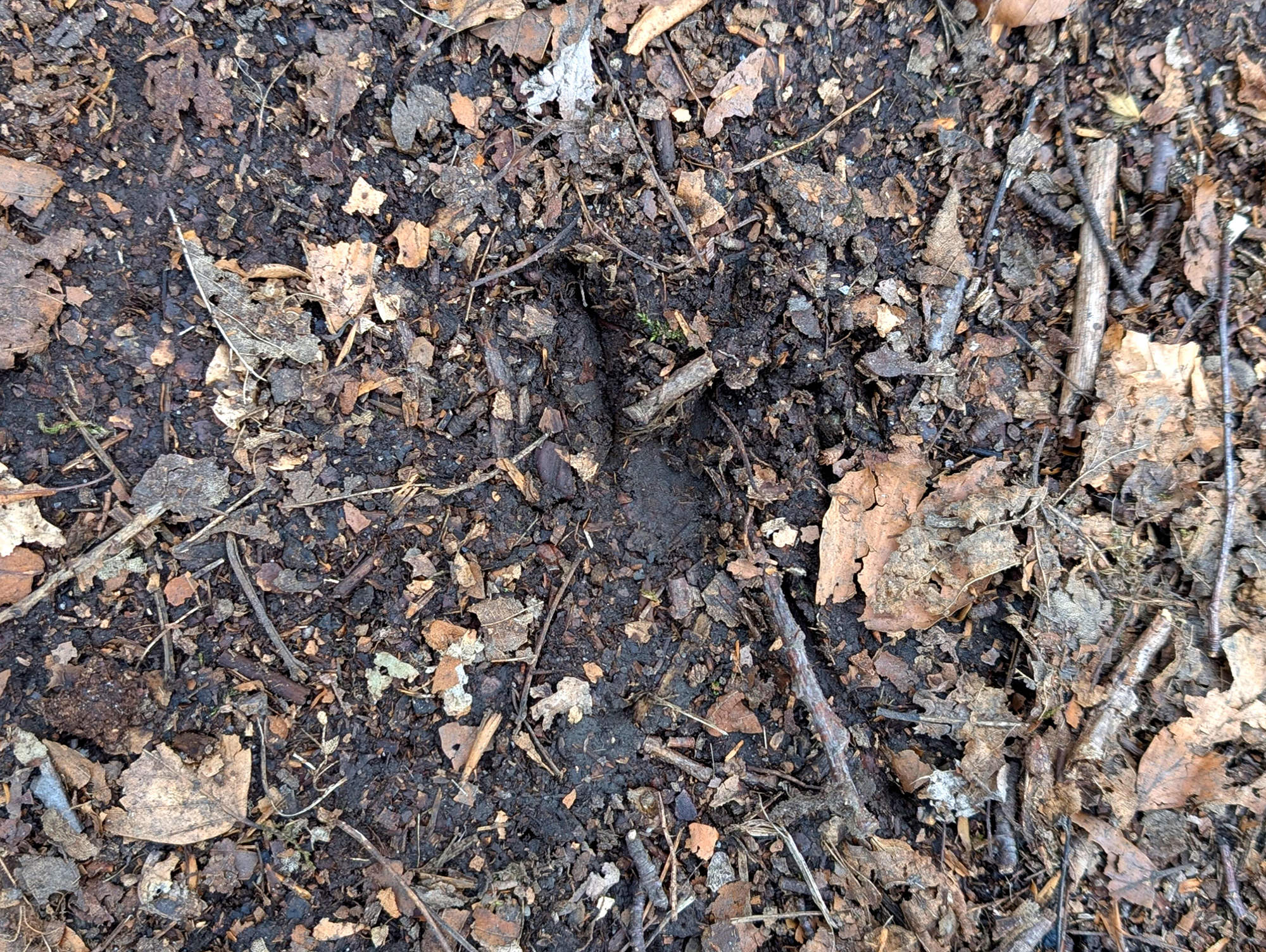
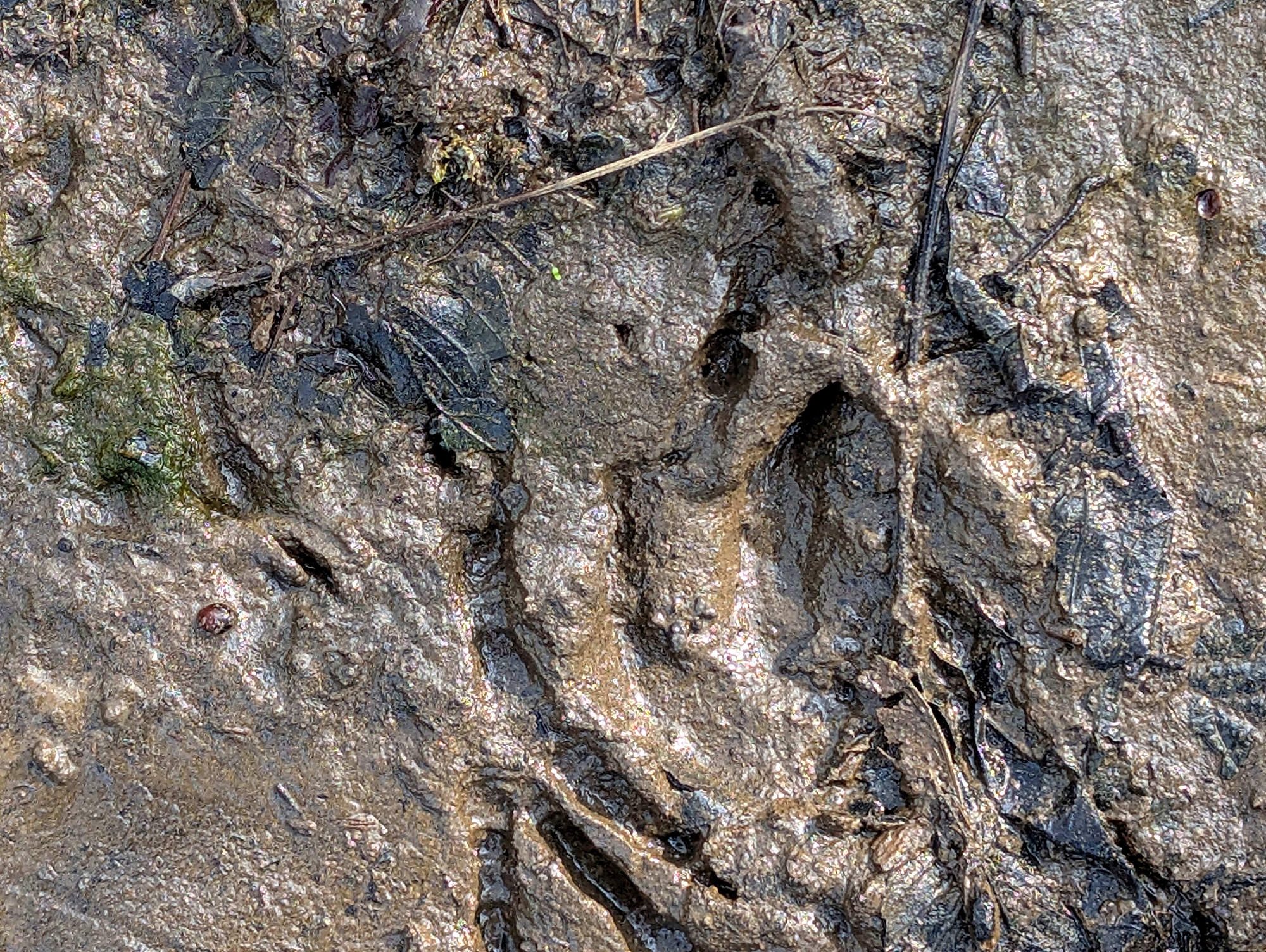
Hoofprints were another useful clue. The soft ground around muddy paths could reveal where deer had travelled. In one area of woodland that became particularly boggy during the winter months, it was easy to spot their prints in the wet mud.
I also began noticing the less obvious signs. The plants that had been nibbled. Gaps under fences where deer had repeatedly passed through. Places where the ground had been disturbed. Frayed branches, where the bucks had thrashed and rubbed their antlers – both to leave scent marks and to advertise their presence to rivals before the rut.
Individually, each clue was easy to dismiss. Together, they started to tell a story of where the deer had been and what they’d been getting up to.
Seeing what wasn’t there
The biggest change came when I started using a thermal monocular. Before that, I had been relying almost entirely on my eyes. In a woodland full of shadows, dense vegetation and deceptively deer-shaped lumps of fallen branches, this wasn’t always particularly successful.
I always joke that my eyesight makes me similar the Tyrannosaurus rex in Jurassic Park, as our vision relies heavily on movement. And the roe deer are a bit like that too – they don’t see in fine detail either. Unfortunately for short-sighted me, the roe deer’s first tactic when they sense a potential threat is often to freeze. And boy, does that tactic work. I’ve seen people walk past a deer standing stock still just a couple of metres away from them and be completely unaware.
This meant that if I was walking through the woods and there was a deer standing completely still, even if I was being careful and looking hard for them, I would occasionally miss one and flush it by accident.
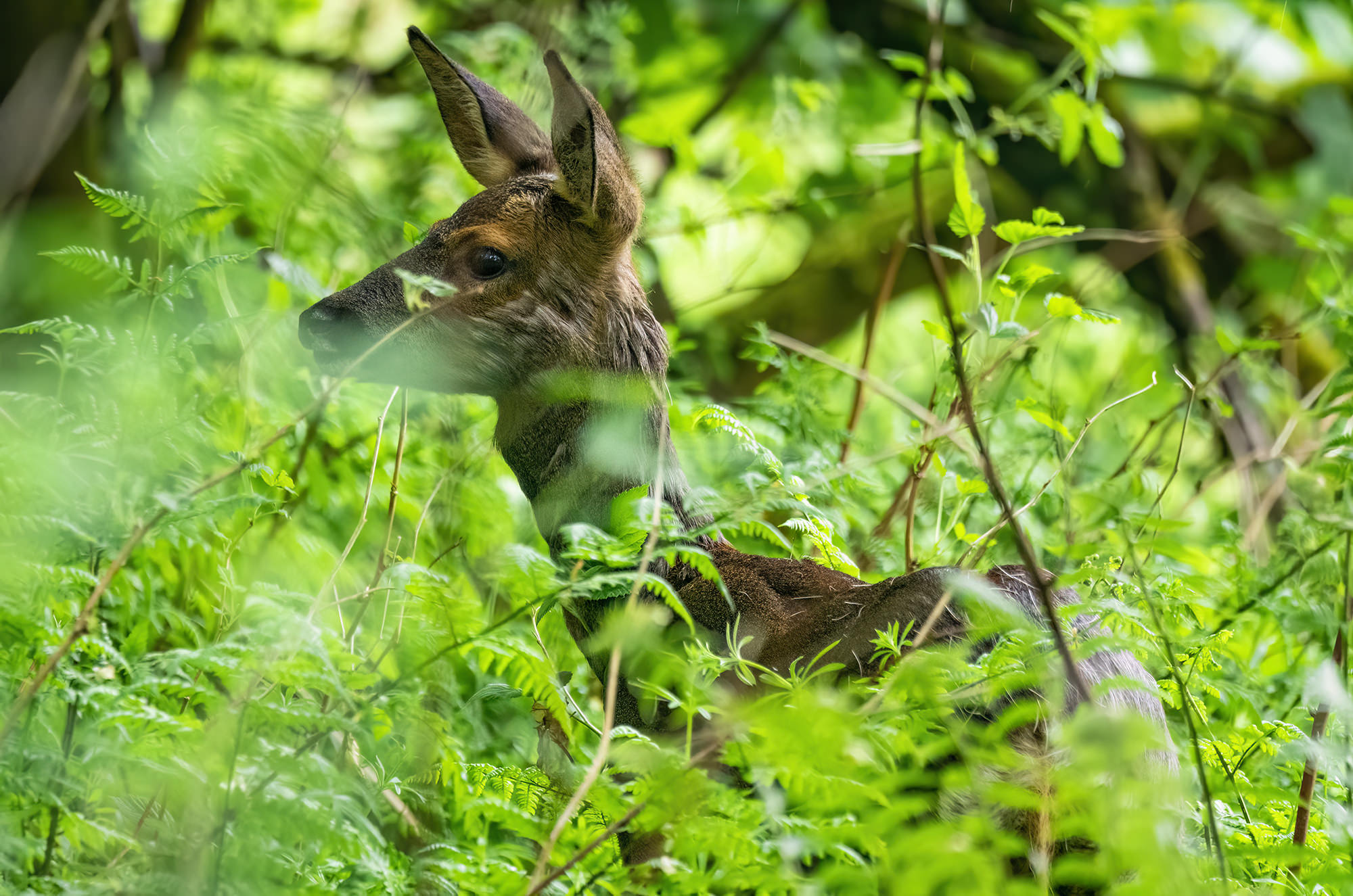
Thermal changed everything. The image above is an example of one of these encounters. Ruby was well camouflaged as she moved silently through the thick bracken, pausing occasionally to munch on tree leaves. I spotted her walking through the vegetation from a distance using the thermal monocular. I then moved slowly and quietly into a position to capture some images. Before she got too close, I spoke quietly to alert her to my presence. It obviously didn’t bother her, as she continued steadily towards me until I slowly moved away and left her to it.
There were, of course, limitations to relying on the thermal monocular. Warm weather can render it almost useless, and it can’t pick up heat signatures through solid objects such as tree trunks or particularly dense vegetation. This was especially true when a deer was sitting still on the ground surrounded by thick cover. It also isn’t a substitute for fieldcraft. You have to use both.
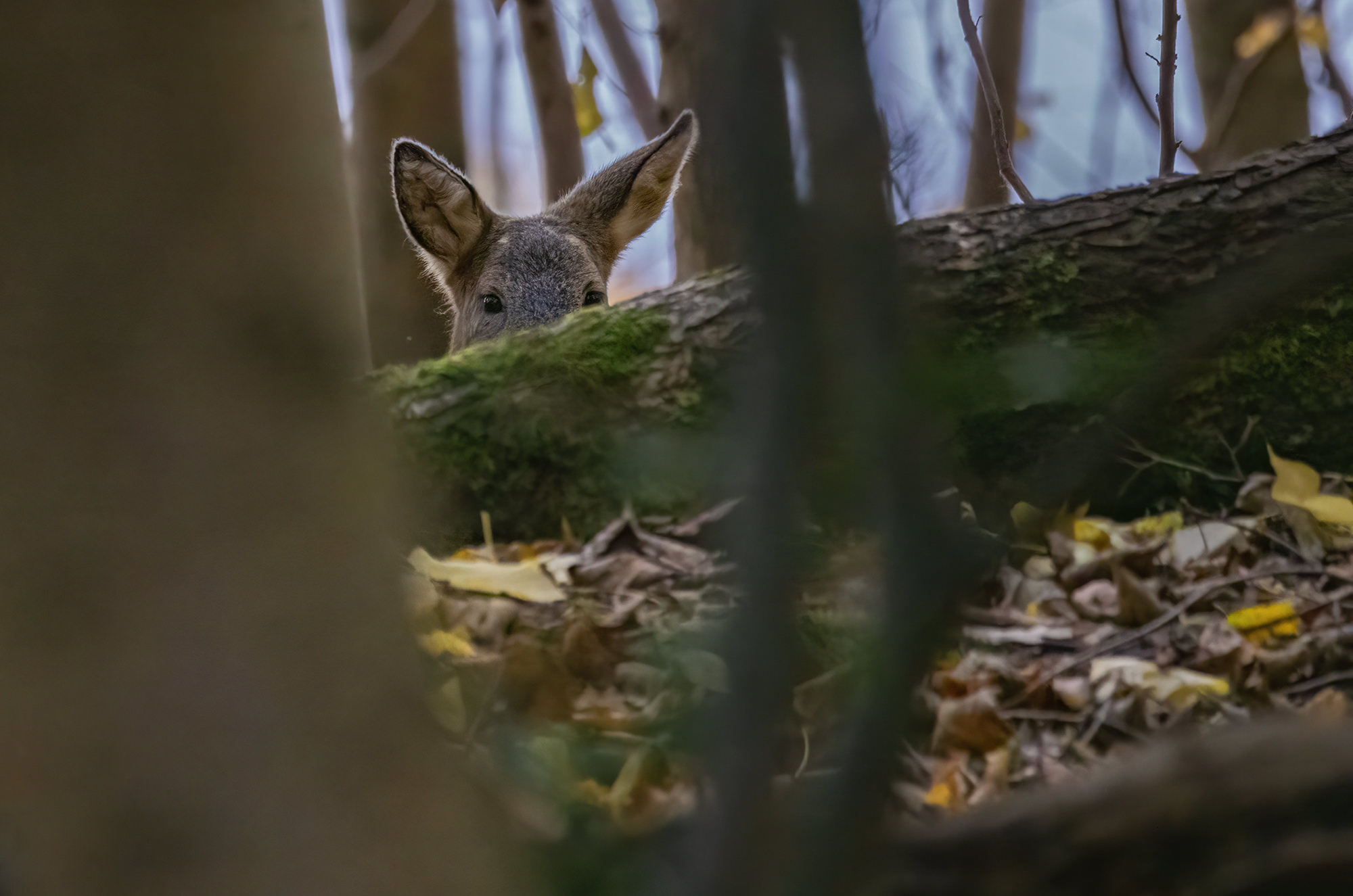
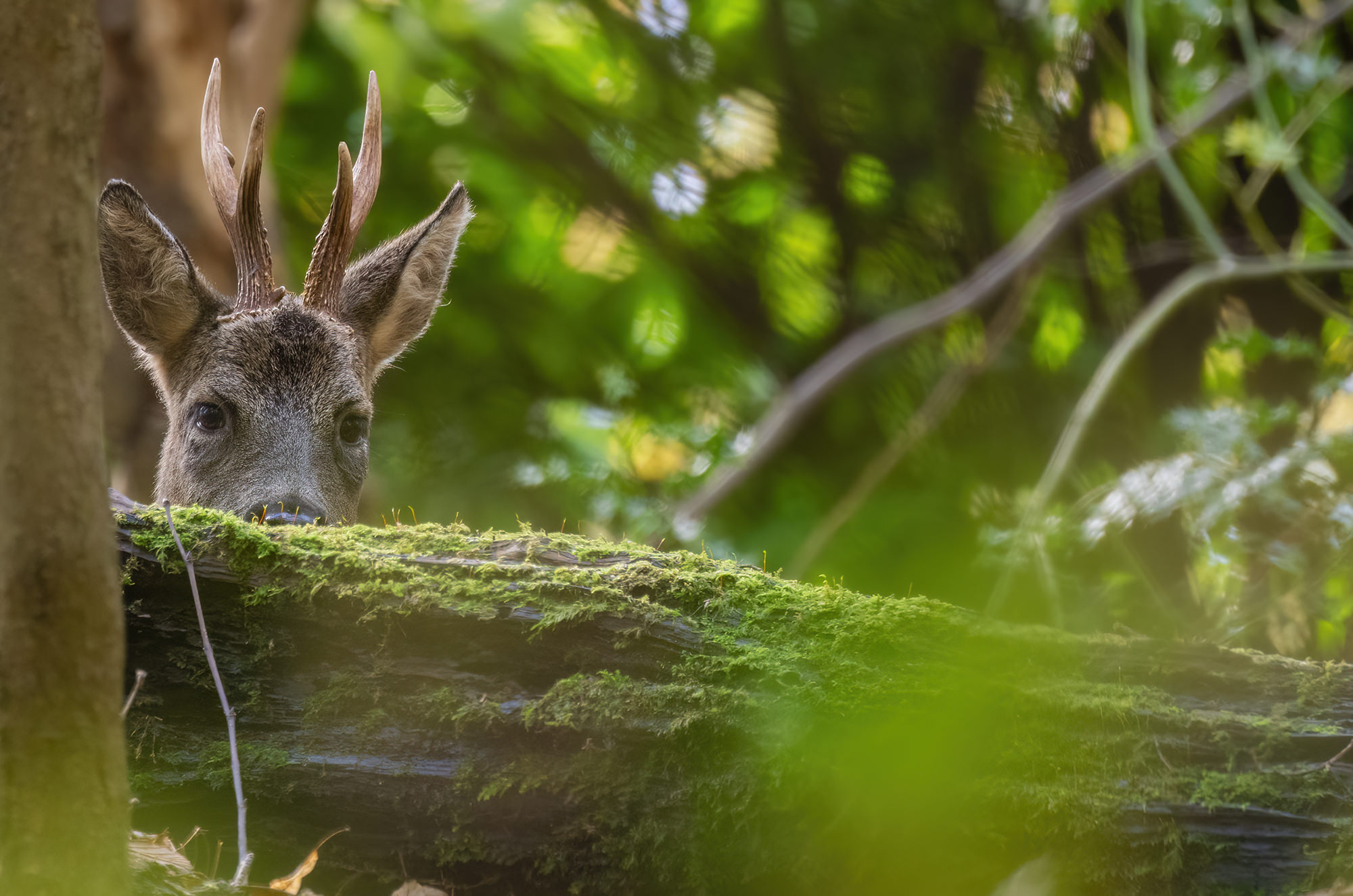
That was certainly the case when I captured the image below of Russet. He was sitting on the ground, hidden by a fallen tree, and I was able to spot the heat from the top of his head just above the trunk using the thermal monocular. But without walking slowly and quietly enough to notice it, I would still have missed him. The technology helped me to see what my eyes couldn’t. My fieldcraft allowed me to see it without disturbing him.
Putting the pieces together
Eventually, I began to feel less like someone wandering through the woods looking for deer and more like a very amateur deer detective. The thermal monocular helped me to spot the deer from a distance when they were there, while identifying the field signs helped me to keep track of them when they weren’t around to watch.
Over time, I built a mental map of the woodland. Not just where I’d seen deer, but where I’d seen evidence of them. I didn’t use this evidence to capture images of the deer, as such. Instead, the clues they left behind sustained me when I hadn’t seen them for a while. This became something I relied on more during the last year of my time with the deer, as my encounters with them became less regular than they’d been in previous years.
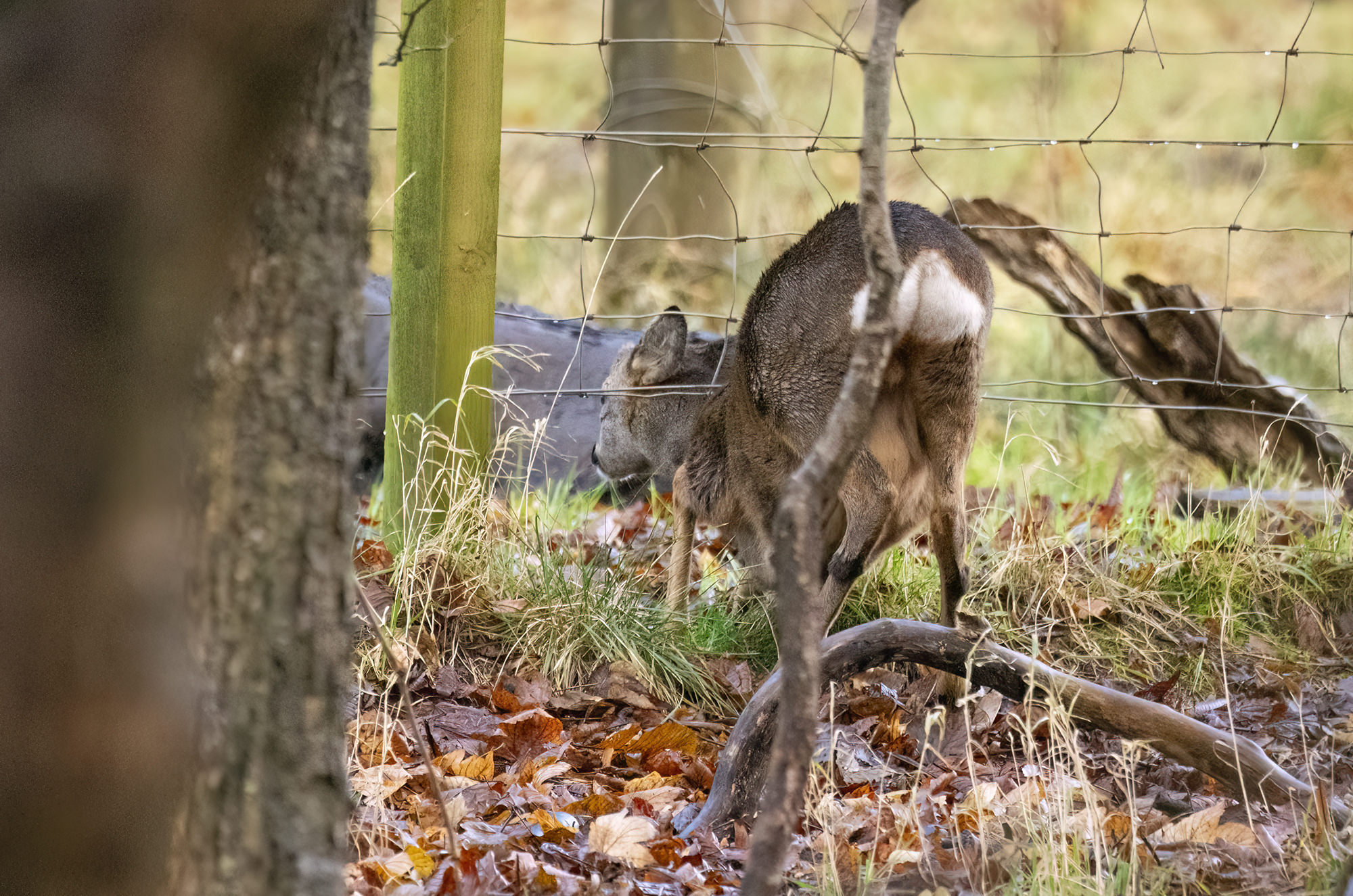
I also began to notice changes in the woodland itself. More people were taking shortcuts through the wooded areas, and more dogs were being walked off the established paths. Well-worn human paths began to appear where there had previously been little sign of regular foot traffic.
Coinciding with this, my encounters with the deer became less frequent. I wondered whether they were being flushed from their usual haunts before I arrived, or whether they had begun avoiding some of them altogether. I’ll never know for certain. But after spending so long learning the patterns of the woodland, it was difficult not to notice the change.
However, I no longer needed to see an animal to feel that I’d had a successful visit. Knowing that a deer had slept beneath a particular tree the night before, or passed through a familiar trail earlier that morning, was enough to make me feel connected to what was happening in the woodland. The deer didn’t need to be visible for their presence to be felt.
Hidden in plain sight
Perhaps the most unexpected thing about becoming a deer detective was that I stopped seeing the woodland as simply the place where I photographed deer. It became part of the story. The landscape told me where the deer felt safe. The vegetation told me where they were feeding. The paths they created revealed how they moved through their environment. And the places they chose to rest told me something about the way they used their surroundings.
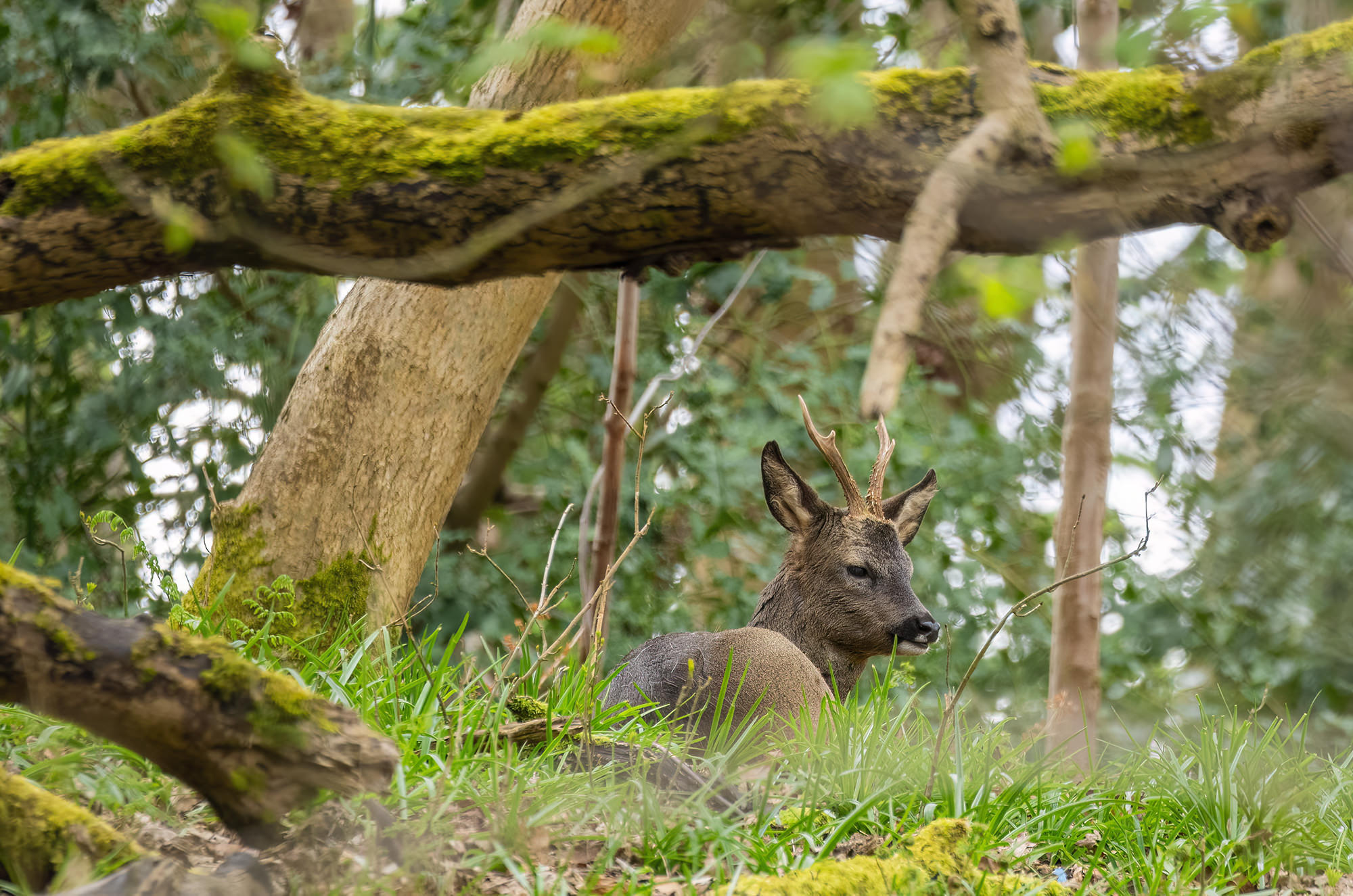
This also changed my photography. I became less interested in simply finding a deer and getting a photograph. Instead, I started thinking about what the photograph could tell me about the animal and the environment around it.
I became increasingly interested in images showing deer hidden in plain sight. I wanted to show how easily roe deer can seemingly melt into their habitat, sharing images that show them partially obscured by vegetation and in harmony with their surroundings. I also love the challenge of shooting through leaves and beyond branches using back-button focus. The resulting out-of-focus vegetation can create a beautiful sense of depth and make the deer feel even more immersed in their surroundings. To capture images like this, the surroundings became as important as the animal itself.
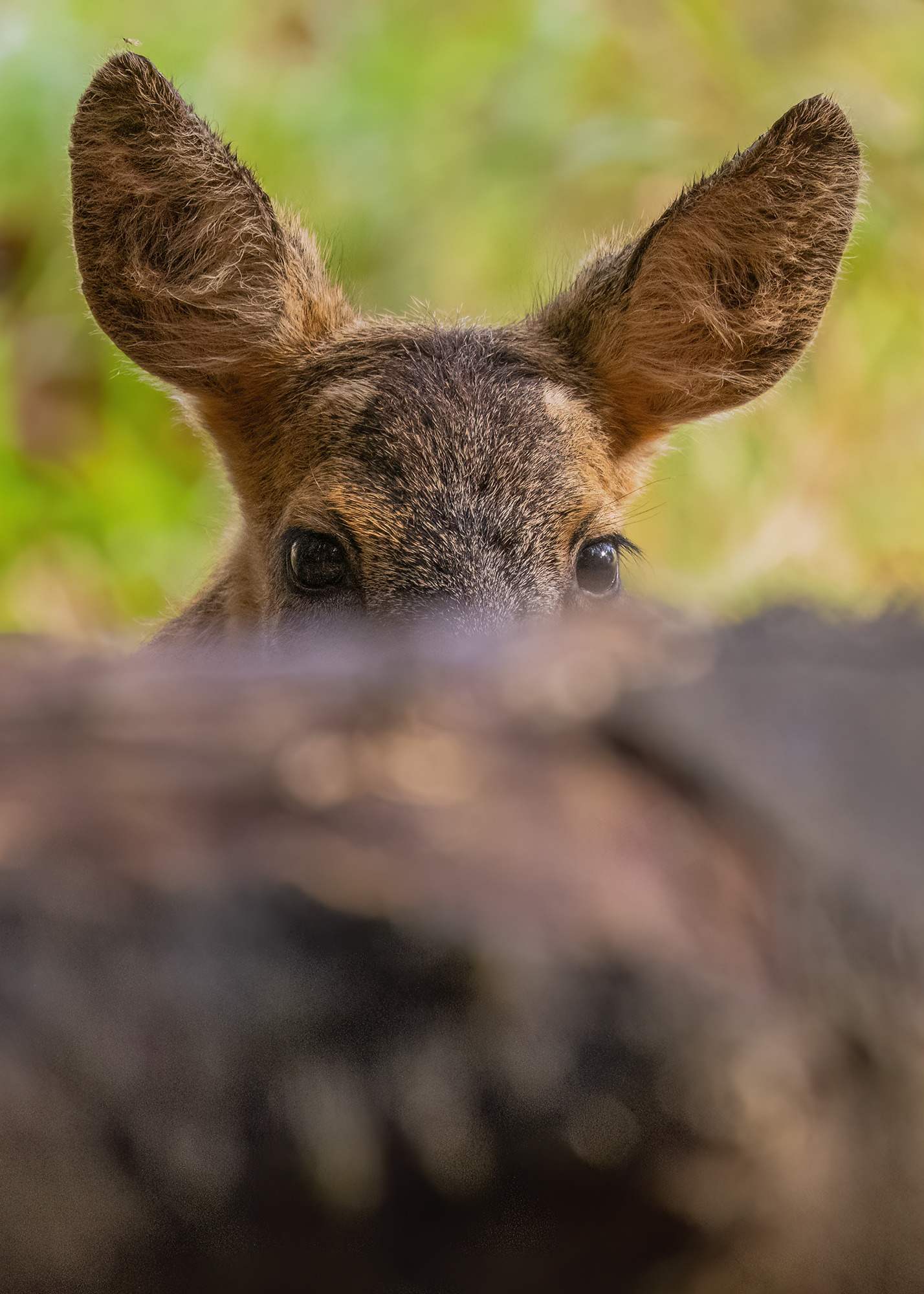
Looking back, becoming a deer detective was really just another way of learning patience. I had started this project by looking for deer. Then I learned to watch deer. Eventually, I learned to look for the places where deer had been. That shift seems small, but it changed everything.
The woodland was no longer an empty space between sightings. It was a record of everything that had happened there. Every hoofprint, bedding area and browsed plant was another small piece of the puzzle. And the more pieces I found, the better I understood the animals I had spent so many lunch breaks trying to photograph.
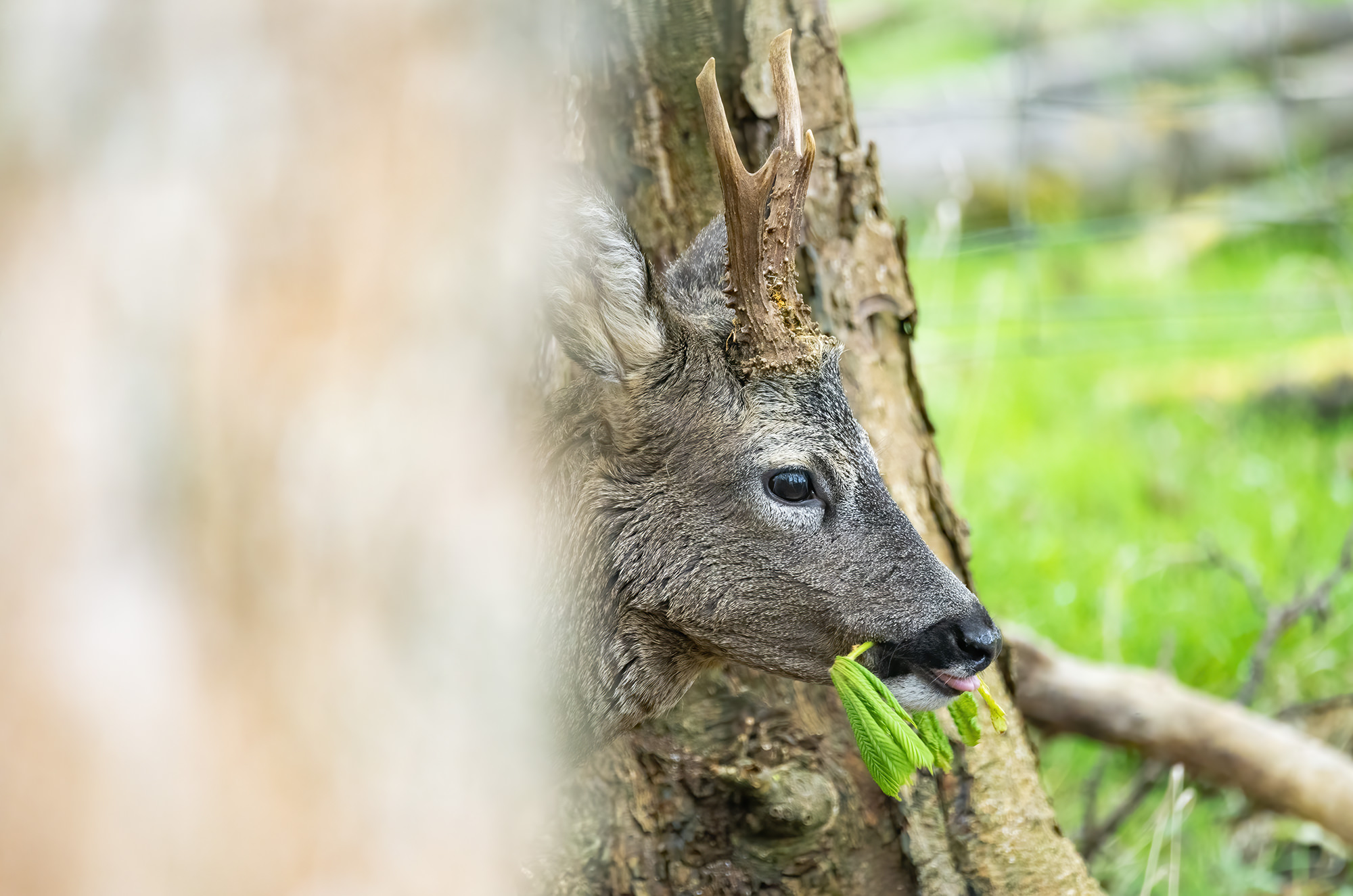
The irony is that the better I became at finding the deer, the less important it became to actually find them. Even though I missed spending time with them, I had learned to see their presence even when they weren’t there. And perhaps that was one of the greatest lessons they taught me.
In the final part of this series, I’ll look at what the roe deer ultimately taught me – not just about photography and fieldcraft, but about patience, failure, opportunity and the photographs that very nearly didn’t happen. Most importantly, I’ll say goodbye to the deer dynasty that started it all.